Last week, I helped a client write a "Guochao (national trend) marketing plan for pet supplies." I first submitted it to GPT, who suggested, "Recommend cat scratching posts/dog toys, using 'mythical creatures from the Classic of Mountains and Seas' as design elements, and highlighting 'traditional cultural IP collaborations' as the main marketing point, keeping the cost under 40 yuan." I thought that was too ordinary, so I asked Claude to try it out. He suggested, "You could make 'pet Hanfu' (traditional Han clothing), printing 'My Imperial Cat Master' and 'Dog Guards,' with copywriting like 'Raising pets is also cultivating culture,' and promoting a 'Show off your pet wearing Hanfu' campaign on Xiaohongshu/Douyin." Finally, not giving up, I asked Gemini, who immediately came up with the idea of "pet blind boxes": "Make 'dragons, phoenixes, and unicorns' into interlocking pet accessories, and give away 'traditional cultural story' cards with every blind box purchase. Young people will pay for 'collecting cards'!"“
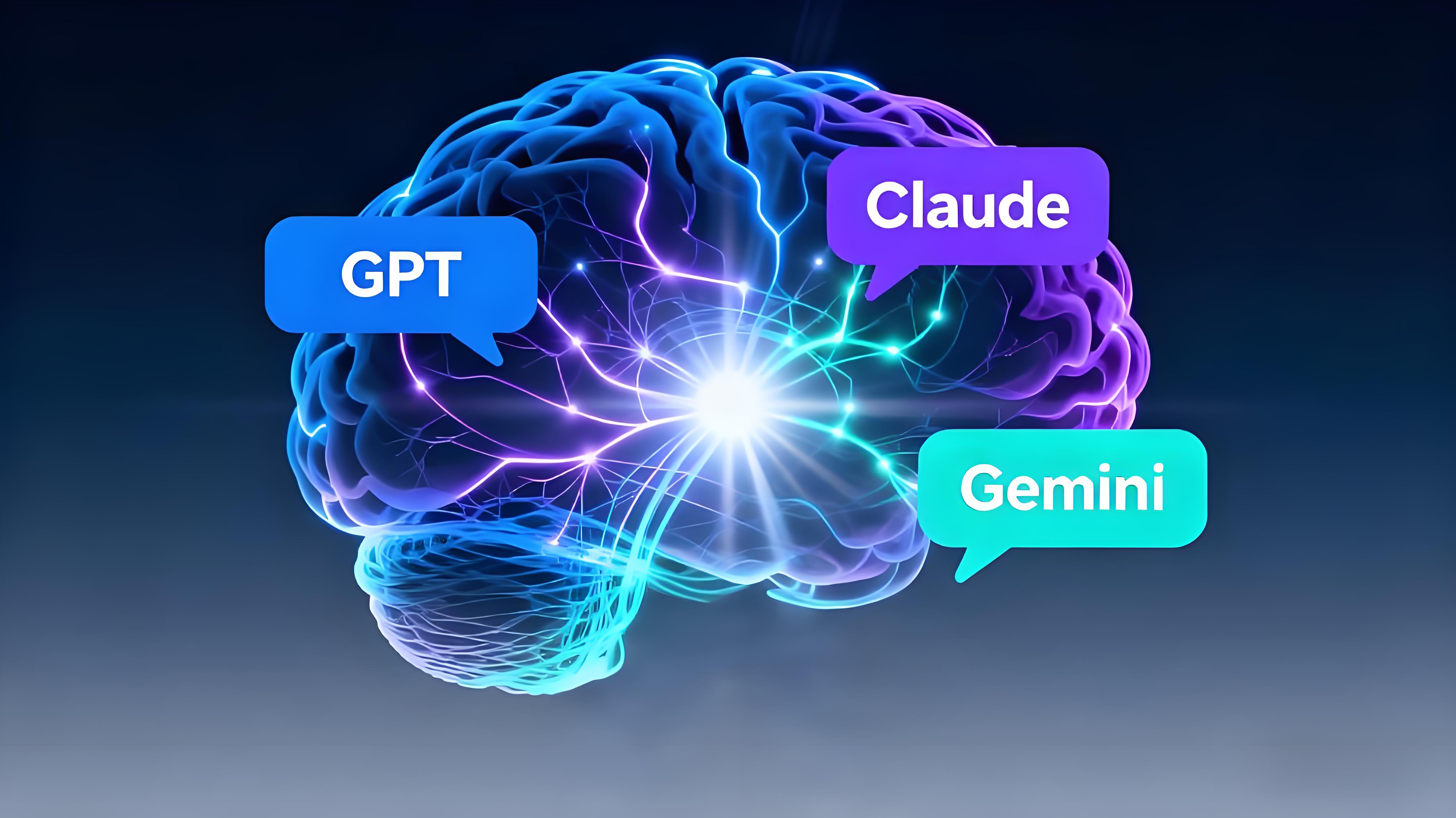
At that moment, I suddenly understood:ChatGPT, Claude, and Gemini are not "tools," but rather "thinkers with different personalities." Using a single model is like borrowing only one eye to see the world—you'll only ever see a partial view.
I. Limitations of Single-Model AI: One eye can only look in one direction.
The AI on the market is essentially determined by the "thought patterns learned during training," which defines its "areas of expertise."
- GPT is like a "rigorous researcher".“It breaks down problems, lists data, and provides standardized processes. For example, if you ask "write a report," it will first list an outline and then write the main text. The logic is correct, but it lacks a bit of "surprise."
- Claude is like a "thoughtful advisor".“It excels at using storytelling to explain logic and even considers your "emotional needs." For example, if you ask "how to comfort a friend who has just broken up," it will empathize first and then offer advice, which is warm but may not be practical enough.
- Gemini is like a "creative and unconventional leader".“They like to use popular culture and humor to package their viewpoints and are good at capturing the points that young people care about. For example, if you ask about "marketing plans", they will say, "Young people nowadays love the 'gap moe' thing, such as having pets wear 'emperor's robes' to shoot short videos." It's interesting, but they may overlook the cost details.
A single AI's answer is like showing you only the "tip of the iceberg"—you never know how many possibilities lie "underwater."
II. DiffMind in a succinct way: One question, multiple perspectives.
DiffMind It's not a "replacement of ChatGPT" or "smarter than Claude," it's a **"multi-model comparison workbench"**: you put a question in, and GPT, Claude, and Gemini will all give you the answer at the same time. You don't need to switch between platforms; you can "see" different thinking paths directly in the same interface.
It doesn't solve the problem of "having more choices," but rather "helping you find the one that best suits you among multiple options."
III. Real-world examples: What are the differences in the outputs of the three models for the same problem?
Prompt: "Write a 'Workplace Attire' article for women aged 20-30, focusing on 'achieving a sophisticated look with a budget of 500 yuan per quarter'."“
- GPT's answer (leaning towards rationality):
“"Divided into 3 parts: commuter wear (white shirt + suit pants), casual wear (knitwear + wide-leg pants), and date wear (dress + blazer); budget allocation: shirt 200 yuan, pants 150 yuan, accessories 50 yuan; matching formula: 'basic items + 1 highlight item', suitable for newcomers to the workplace."‘
(Keywords: categorization, budget, formula; it's like a "fashion guide," but lacks "emotional resonance.") - Claude's answer (leaning towards emotion):
“"You could write, 'Before I turned 30, it took me 3 years to understand: sophistication isn't about being expensive, it's about being effortless.' Start by talking about how you filled your closet with fast fashion when you first started working, but later streamlined your wardrobe and became more confident. In the middle, recommend '5 versatile items: a white shirt (choose a natural fabric) + black cigarette pants (with a good drape) + a beige knit cardigan (loose fit) + loafers (soft leather) + pearl earrings (small)', keeping the budget under 500 yuan. Finally, say, 'True sophistication is about letting clothes enhance you, not you enhancing the clothes.'"‘
(Keywords: story, self-expression, emotional resonance, like a "career growth article", but without specific shopping channels and matching details) - Gemini's answer (more creative):
“"The title uses '500 yuan = 30 days of non-repeating outfits'? I've uncovered the blogger's secret 'capsule wardrobe formula'!"‘
The article begins by saying, "The secret to 30 days without repeating outfits: it's not about buying more, but about spending 500 yuan on items you'll wear repeatedly." It then recommends "black, white, and gray outfits with one bright color: a white shirt + black pants + a red scarf (5 days), a knit sweater + a white skirt + white sneakers (5 days), and even making accessories the 'main focus' (like a pearl necklace with a basic piece). Finally, it says, 'Don't be intimidated by the "high-end" vibe; you can achieve an "I'm expensive" aura with just 500 yuan.'"“
(Keywords: numbers, suspense, practical tips + memes, like a "viral Xiaohongshu post", but lacking some "practical details")
IV. The Value of DiffMind: More Stable, More Comprehensive, and Faster Judgment
After comparing the three answers using DiffMind, I found that its value was more important than "having one more AI":
- More stableA single AI might only provide the "right side," for example, GPT overlooks the "emotional value of clothing," Claude doesn't provide specific budget allocation, and Gemini lacks a certain "workplace formality." DiffMind, on the other hand, helps me "see the biases," such as knowing "choose Claude for emotional resonance, choose Gemini for creative communication, and choose GPT for detailed implementation," thus avoiding "falling into pitfalls based on a single AI judgment."
- More completeThe key is to combine the strengths of the three models: GPT's budget allocation, Claude's emotional opening, and Gemini's creative headline, to create a piece of copy that is "full of stories, details, and witty remarks," something that a single model cannot achieve.
- FasterPreviously, when I wrote copy, I had to "copy each AI's answer separately and then manually integrate them." Now, I can directly mark "this point is useful" and "that part needs to be supplemented" in DiffMind, and it only takes 10 minutes to complete, saving me an hour compared to before.
V. Not using vs. using: The difference isn't efficiency, it's "judging the sense of security".“
When not using DiffMind:
- I need to open three AI platforms, copy three sets of answers, and then "guess which one is more suitable for the customer" myself;
- The client might say, "This isn't unique enough," or "That's too rigid," and I can only readjust each individual AI and iterate repeatedly.
- Sometimes I even wonder, "Did I not express my needs clearly?"“
After using DiffMind:
- Without switching platforms, you can view the outputs of three AIs on the same screen, and the "strengths/weaknesses" of each model are clear at a glance;
- Simply mark the comparison interface with "Select GPT's budget section, Claude's beginning, Gemini's title," and the client will nod in approval.
- There's no need to worry about the "limitations of a single AI" anymore, because "multiple perspectives have covered all possibilities for me."
VI. Conclusion: DiffMind is not an "AI tool," but a "judgment amplifier."“
ChatGPT and Claude are "excellent assistants," but DiffMind is "a tool that enables assistants to collaborate better." Its value lies not in letting you "use more AI," but in letting you "use AI smarter."When you see multiple thought processes at the same time, the decisions you make will naturally be more stable, more comprehensive, and more suitable for yourself.