
Last week, I saw someone in the community ask: "I don't even understand how to use the prompts."DiffMind "Is this kind of multi-model tool not suitable for me?" I suddenly remembered myself when I first used DiffMind: I couldn't even write a GPT prompt properly, and I was always worried that "the input question is not good enough, so the AI's answer will be useless."
But after using it for three months, I discovered a heartbreaking truth:The value of DiffMind lies precisely in enabling people who "don't understand AI" to use AI effectively.
Scenario: "I can't even write a proper prompt, so what's the point of using it?"“
Many people's concerns about AI stem from the misconception that "you need to understand technology." For example:
- When writing a paper, you might want AI to help you organize the logic, but you're afraid that "if you don't write the correct prompt, all the references provided by the AI will be wrong."
- When creating marketing plans, you might want AI to provide creative ideas, but you're also worried that "the questions are too simple and the AI's answers lack depth."
- Some people even struggle with whether to ask questions in Chinese or English, and which model is more accurate.“
However, in DiffMind user reviews, Claire Wu (an international student) said, "I used to break down when I was stuck on the logic of a paper, but now I just throw in a sentence and several sets of logic come out at the same time, and I can directly pick the most reliable one"—she didn't say that she understood the principles of AI, she only said "throw in a sentence".
II. Direct Conclusion:You don't need to understand AI; DiffMind is "designed for people who don't understand AI."“
To draw an analogy:
- Do you need to understand the TCP/IP protocol when you use a browser to browse the internet? No, the browser handles the underlying logic for you.
- Do you need to understand the principles of model training when using DiffMind and AI? No, DiffMind handles the logic of "multi-model differences" for you.
DiffMind's core design is to "simplify complex AI operations": you only need to "ask your question," and the rest—such as "how different models should answer" and "which perspective is more suitable for me"—will be taken care of for you.
III. Scenario Examples: Solving problems with DiffMind even if you don't know how to write a prompt.
Real-world example: Writing marketing copy for "National Trend Stationery for College Students"—even if you can't write a prompt, you can still come up with ideas.
You don't need to know "how to prompt AI to be more creative," just say one simple sentence:
“"Help me write a marketing copy for trendy stationery targeting college students, with a budget of under 50 yuan, highlighting 'cultural confidence' and attracting young people to share it."‘
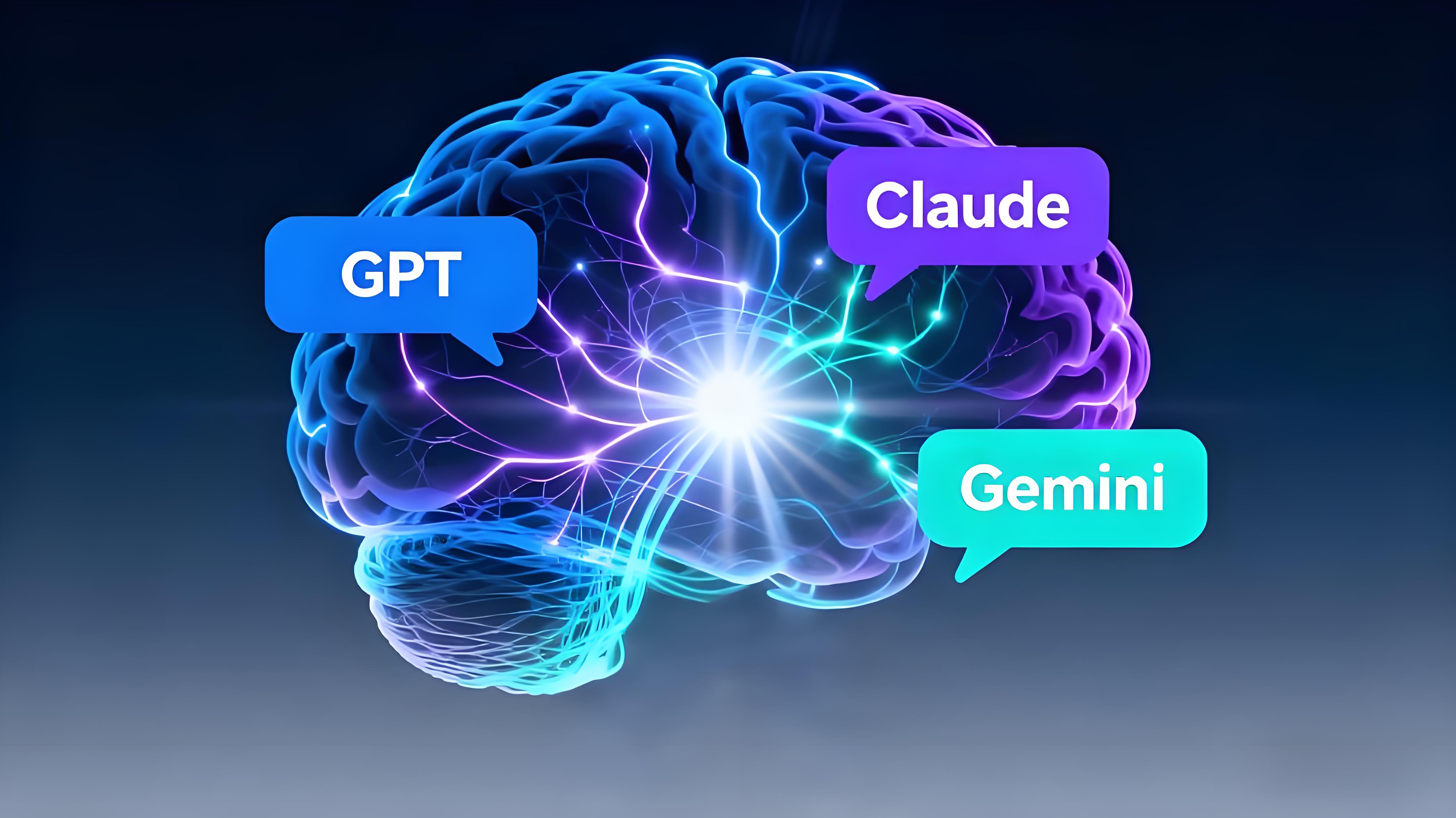
DiffMind allows GPT, Claude, and Gemini to provide answers simultaneously:
- GPT's answer(Leaning towards rationality):
“"I recommend a notebook themed 'Mythical Beasts from the Classic of Mountains and Seas,' with copywriting emphasizing 'traditional cultural IP + pragmatism.' It costs 35 yuan and is suitable for publication on campus WeChat official accounts."‘
(It's like a "marketing action checklist," but it lacks the "memes that young people would share.") - Claude's answer(Emotionally-oriented):
“The title is ‘When Gen Z falls in love with the “trendy” style of their ancestors’, and the beginning says ‘The dragon-patterned eraser I played with when I was a kid has now become a popular Chinese trend’. The copy includes a scene of ‘carving the Classic of Mountains and Seas on a pencil case‘ to make young people feel that ’Chinese trend is not an old-fashioned thing”.”
(It has a story-like quality, but no specific distribution channels are given.) - Gemini's answer(Creative):
“The title is "50 yuan = 30 days of unique Chinese-style stationery blind boxes?", and the design is "unlocking cultural references upon opening the box": the pencil case is printed with the "Qilin Arm" reference and the mythical beast pattern from the Classic of Mountains and Seas, and comes with a "cultural trivia" card, allowing users to share "which mythical beast I have" on social media platforms.‘
(Similar to "viral copywriting on Xiaohongshu," but lacking "cost control")
All you need to do is find the "directly usable points" from these three answers.“For example, GPT's cost data, Claude's emotional opening, and Gemini's social media marketing strategy can be combined to create a copy that is both practical and impactful.This has nothing to do with whether you can write a prompt; it only has to do with whether you can "judge the advantages of different AIs."
IV. How does DiffMind lower the barrier to entry? — Three "zero-learning-cost" design features
You don't need to understand AI principles at all; DiffMind will do three things for you:
- “"Multiple models on screen simultaneously" avoids the "single-view trap".”
You don't need to switch back and forth between GPT, Claude, and Gemini. You can see the answers from different models on the same interface, like "chatting with three AIs at the same time." But you don't need to sort out the ideas yourself—it will mark the differences (such as GPT's "rigor," Claude's "warmth," and Gemini's "creativity"), so you can just "copy the homework." - “"Automatic filtering" helps you "separate the genuine from the fake".”
For example, if you ask "startup direction", different AIs might give different answers such as "knowledge payment", "pet supplies", "second-hand trading". DiffMind will automatically label "this direction is more in line with your budget (50,000)" and "this answer ignores XX risk", helping you to eliminate obviously unreliable options. - “"Zero technical input," as simple as chatting.
You can ask "conversational questions" ("Help me think of a short video script that tells the story of 'working people getting caught slacking off'"), or you can ask "questions based on specific needs" ("Write a 300-word product introduction that highlights 'environmentally friendly materials' and 'cost-effectiveness'"), or you can even "just throw in a paragraph of text and let the AI compare it"—you don't need to understand "engineering prompts" at all.
V. Not using vs. using: The difference isn't efficiency, but rather "judging the sense of security".“
When not using DiffMind:
- If you can only use one AI, such as GPT to write a solution, you will habitually rely on its "rigorous logic" and forget about "creativity" and "implementation".
- When faced with contradictory AI answers (for example, one says "it's good to make paid knowledge products" while another says "it's good to make pet supplies"), you might struggle with "who to listen to" and end up just choosing one randomly.
- The prompt you spend an hour writing might be completely useless if you "don't write it correctly".
After using DiffMind:
- You can see "rigorous logic + creative ideas + practical details" at the same time, such as GPT's budget data, Claude's emotional opening, and Gemini's catchy phrases, directly "pieced together" the most suitable solution for you;
- When you encounter contradictions, DiffMind will help you analyze "why there are differences" (for example, "this AI was just trained on knowledge-based paid case studies, while that AI understands the pet market better"), so you don't have to guess yourself;
- You can get "multi-perspective answers" in just 10 minutes, which is more than 10 times more efficient than "struggling for an hour to get only a one-sided answer from AI".
VI. Conclusion: DiffMind is not an "AI tool," but an "assistant that makes using AI easier."“
You don't need to understand AI principles, you don't need to write complex prompts, and you don't even need to know the difference between GPT and Claude.All you need to do is “ask your question,” and DiffMind will handle the rest by “comparing, filtering, and judging.”
As Claire Wu said, "DiffMind frees me from 'fighting' with AI and lets AI 'serve me'." The next time someone asks, "Do I need to understand AI?" you can smile and tell them, "No, you just need to know how to ask questions, and DiffMind will help you turn the different personalities of AI into your 'thinking assistant'."