
Turnitin 飘红怎么办?留学生 DDL 前快速安全降重的实操步骤

What to do if your Turnitin score is in the red? Practical steps for international students to quickly and safely lose weight before a deadline.

When Turnitin's plagiarism report shows a similarity rate of 35% or even higher, and there's only one day left until the deadline, panic is instinctive, but calm handling is the way out. This article provides a guide for international students to reduce their similarity scores in emergency situations. We will break down the common reasons for inflated plagiarism rates, provide a three-step practical process for reducing plagiarism without crossing academic integrity red lines, and demonstrate how to use DiffMind's multi-model tool for compliant rewriting and logical enhancement, helping you turn a crisis into an opportunity to improve your paper's quality.

DDL 还剩 6 小时:留学生从零到交稿的真实操作记录(附可复用冲刺流程)

6 Hours Left Until the Deadline: A Real-Life Account of an International Student's Journey from Zero to Submission (with Reusable Sprint Process)

Faced with a mere 6 hours left on the Canvas or Blackboard, anxiety won't solve the problem, but tactics can. This article provides international students with a detailed "Urgent Assignment Help" manual, revealing how to build a passable paper from scratch in just 6 hours. We'll break down common pitfalls in speed writing, provide a timeline accurate to the minute, and demonstrate how to utilize DiffMind's multi-model AI comparison feature to ensure logical rigor and format compliance at the last minute, achieving a perfect "minimum deliverable version."
简历越改越像模板?用 DiffMind 多模型同屏“润色+挑刺”,把一份简历改到能投

Is your resume becoming more and more like a template? Use DiffMind's multi-model simultaneous "polishing and flaw-finding" to revise your resume to the point where you can apply.

With application deadlines looming, is your resume becoming increasingly hollow despite revisions? This article reveals why a single AI rewrite can easily lead to "template-based" and "overly packaged" resumes, and shares a workflow based on DiffMind's AI resume tool. Through a multi-model AI assistant, you can simultaneously "polish with one hand and nitpick with the other," improving ATS optimization (ATS pass rate) while ensuring the authenticity and credibility of your interview introduction, helping you create a practical resume that can withstand in-depth scrutiny.
同一文案要投放多个渠道?用 DiffMind 让 6 个 AI 同时改写不同风格,一次搞定

Need to distribute the same copy across multiple channels? Use DiffMind to have 6 AI programs simultaneously rewrite it in different styles, getting it all done in one go.

Are you facing the nightmare of content repurposing? A single product description needs to be simultaneously transformed into official website copy, social media posts, emails, and video scripts. This article will break down the common pitfalls of multi-version rewriting, provide a standardized marketing copy workflow, and demonstrate how to leverage DiffMind's multi-model AI tool to allow multiple top-tier models to simultaneously generate and compare AI outputs on the same screen, efficiently producing high-quality content with diverse styles but a unified core.
提升课程成绩的隐藏技巧合集:留学生从 Pass 到 Distinction 的系统打法

A collection of hidden tips for improving course grades: A systematic approach for international students to go from Pass to Distinction.

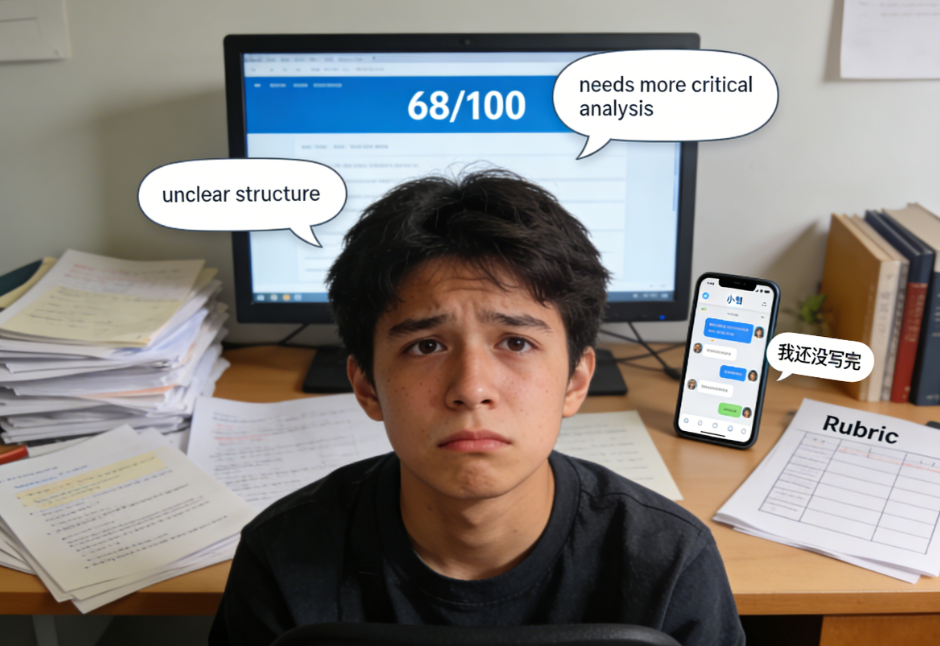
International students often work very hard, yet their grades consistently hover around 60-70; they can't understand feedback, and revisions don't improve their scores; they're dragged down by teammates in group projects and then blamed for it—the problem often isn't "insufficient learning," but rather a failure to use rubrics to deliver high-scoring work. This article uses real-life,吐槽-style scenarios to break down the key variables affecting grades (rubric interpretation, argument depth, critical thinking, structure, citations, presentation, participation, group work), and provides a "personal safety net" process from the first week of the semester to the final exam: using rubrics to plan learning and delivery, and treating each assignment as an iterative version. It further explains how DiffMind integrates class notes/reading/feedback to create an actionable improvement checklist, uses rubrics to fill in argument gaps and for comparative reflection, and maintains a consistent writing style to make assignments closer to high-scoring models.
冷门但巨好用学术工具推荐:留学生提效不靠熬夜靠工具链

Recommendations for underrated but incredibly useful academic tools: International students can improve efficiency not by staying up all night, but through a toolchain.

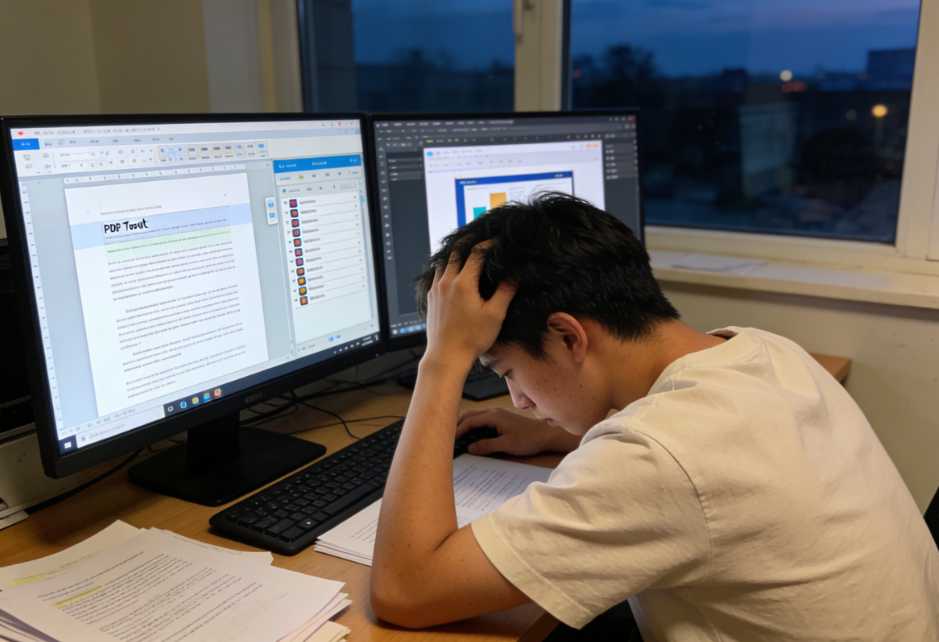
For international students, the most time-consuming part of assignments is often not "not being able to write," but rather the often-overlooked steps like formatting, batch processing PDFs, handling unsearchable notes, rearranging paragraphs, and preparing oral presentations. This article uses real-life,吐槽-style scenarios to review a batch of "niche but incredibly useful" academic efficiency tools and their usage. It provides personal fallback tool combinations categorized by assignment type (essay/report/presentation/reading), and explains how DiffMind integrates scattered materials and tool outputs, bridges the logical gap between "tool results" and "gradeable content," and standardizes terminology, tone, and structure, making the final product resemble a high-scoring assignment rather than a hastily cobbled-together piece of work. A weekly maintenance and self-help checklist is also included.
查 Fake Ref / 引用神器盘点:留学生如何避免引用翻车与学术诚信风险

A Roundup of Fake Ref Checking Tools: How International Students Can Avoid Citation Mishaps and Academic Integrity Risks

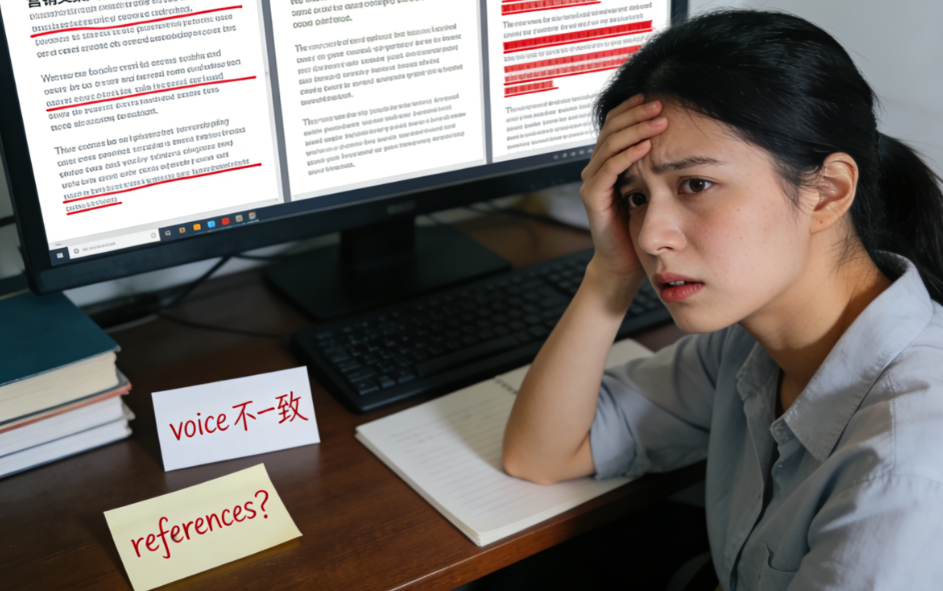
For international students, the biggest fear in writing isn't staying up all night, but discovering just before submission that: a reference doesn't exist, the DOI/year/author is wrong, the in-text citation doesn't match the reference list, or inconsistent citation style leads to point deductions or even academic integrity risks. This article uses real-life scenarios to break down common citation problems (fabricated references, incomplete information, incorrect meta-information, inconsistencies between the text and references, and mixed styles), providing a "personal safety net" process (collecting → recording meta-information → inserting citations → standardizing format → pre-submission verification). It also explains how DiffMind performs citation consistency checks, identifies missing or insufficiently supported arguments, and standardizes more academic citation expressions. A checklist of 12 citation verification items before submission is attached.
文献阅读与总结工具合集:留学生如何把 reading list 读成可写作的论点

A collection of literature reading and summarizing tools: How international students can turn reading lists into arguments for writing.

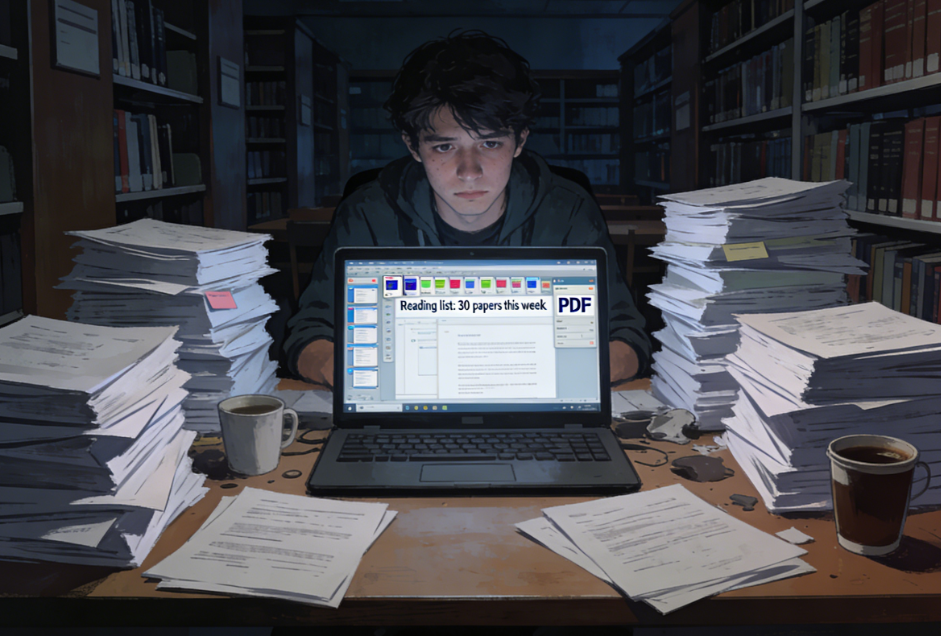
Reading 30 papers a week, only to find yourself saying "I've read it," yet unable to recall the research questions, methods, and contributions when writing your own literature review? Common stumbling blocks for international students in literature review include: failing to grasp the research question, not understanding the methods section, being unable to extract contributions/limitations, and having unsearchable notes that prevent comprehensive comparison. This article uses a real-life,吐槽-style scenario to provide a replicable "personal fallback process" (screening → speed reading → close reading → structured notes → topic clustering → writing-ready synthesis), and explains how DiffMind can quickly integrate key points from multiple papers, generate thematic summaries and comparison matrices, fill in logical gaps in the review, and unify academic expression, transforming fragmented notes into paragraphs directly usable in literature reviews.
CV/CL 求职神器合集:留学生投实习/校招怎么快速出高质量版本

A collection of CV/CL job-seeking tools: How international students can quickly generate high-quality applications for internships/campus recruitment.

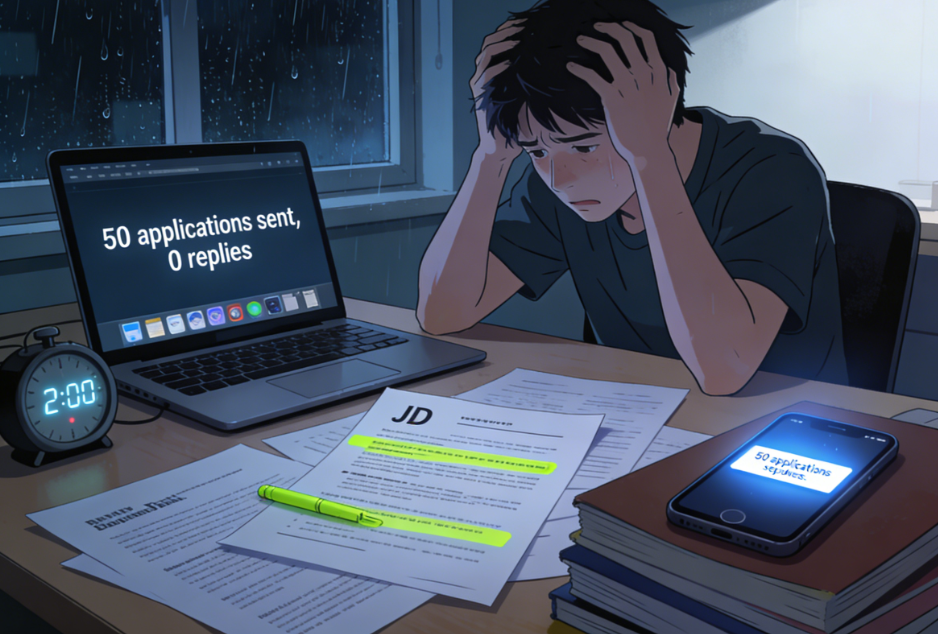
The most common obstacles international students face when applying for internships/campus recruitment are: not understanding the key points of the job description, not quantifying the CV bulletin, not including all the STARs, missing keywords leading to failing the ATS (Application Test for Trusted Graduates) test, and writing a cover letter that reads like a chronological account with a template feel. This article uses real-life scenarios to break down common CV/CL (Cover Letter) problems and provides a replicable "personal fallback process" (JD analysis → keywords → experience breakdown → one-page CV → customized CL → ATS self-check). It also explains how DiffMind can quickly integrate experience with the job description, fill in narrative logic gaps, and maintain a consistent professional tone. Finally, a pre-application self-help checklist is provided.