Real-world scenario: Why does "multiple submissions of the same manuscript" always result in dismal data?
You have a great product (such as "homework tutoring service for international students" or "workplace English course"), and you've painstakingly written an in-depth article about it.
- I posted it on my WeChat official account: the readership was decent, but no one added me on WeChat to inquire.
- Copying to Xiaohongshu: Because of the large number of characters and the lack of emotional hooks, the number of likes is in the single digits.
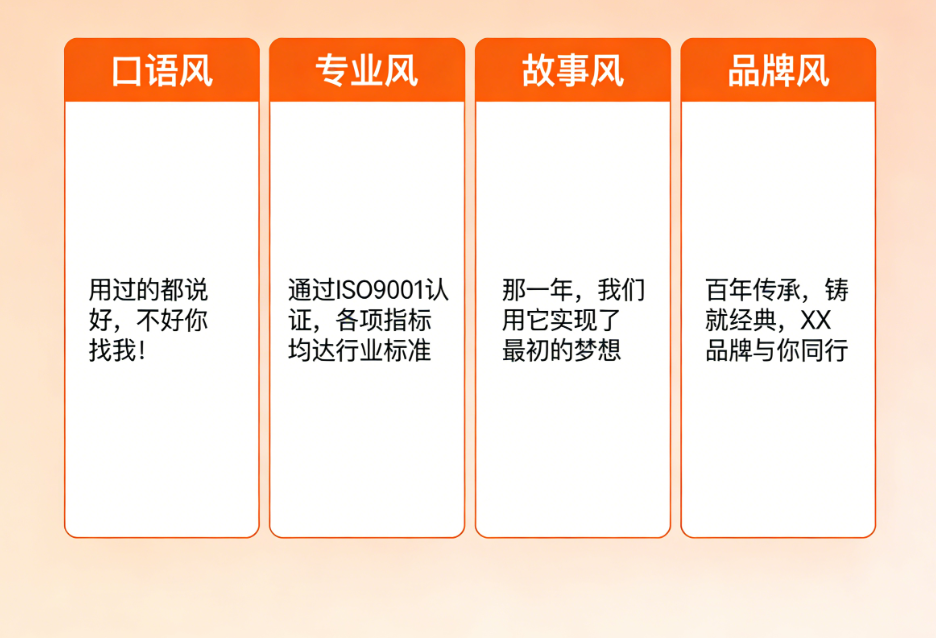
This is the dilemma faced by most self-media creators and operators:They only know one writing structure and try to work on all platforms.
Even if you are an independent creator, your brain is often "fighting" internally:
- Operational personalityI want an exaggerated headline and a viral content structure.
- Editor PersonalityTo maintain the brand's professionalism and image.
- Projecting personalityThey only care whether the final "Click to Buy" tag is compelling enough.
The result is that we can't decide on a topic, we revise the draft repeatedly, and the final product is neither appealing nor insightful. To solve this problem, we can't rely on "straining," but on "screening."
My "Personal Safety Net Process": 6 Ways to Uncover the Same Selling Point
To address the issue of Xiaohongshu's content structure.和To address the conflict between various WeChat official account writing tips, I established a standardized AI collaboration workflow.
Step 1: Define your unique selling proposition (USP) and target audience.
Don't try to list all the advantages in one article.
- Example selling points: “Group assignment help international students”.
- Audience: International students whose native language is not English and who are afraid of letting their teammates down.
Step 2: Setting Platform Goals
- Xiaohongshu: Add to favorites (as a reference book), send a private message (to inquire about prices).
- Official WeChat account: Deep trust, QR code conversion.
Step 3: Have 6 AIs produce 6 blockbuster structures in parallel.
This is the core. Don't let the AI write code randomly; instead, specify the following six classic frameworks:
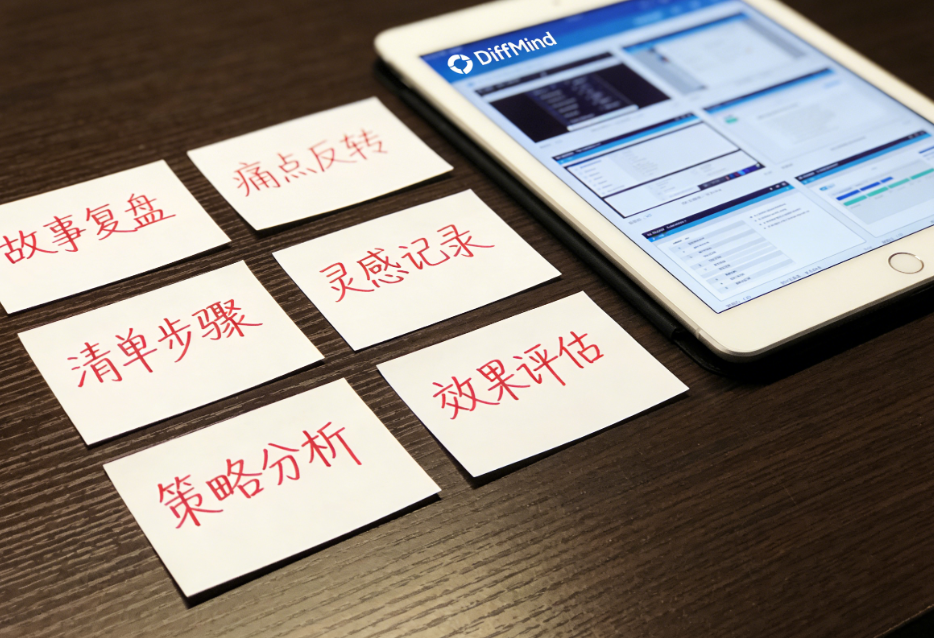
- Pain Point Reversal: “"You think it's your teammates who are bad, but actually it's because you don't know how to communicate?" (A direct hit on anxiety)
- List of steps: “"5 Standard Operating Procedures (SOPs) that got an A in group projects." (Highly collectible)
- Comparative evaluation: “"A comparison of the efficiency of self-study versus seeking tutoring." (Highlighting its value)
- Story Recap: “"From almost failing to getting the highest score in the whole group, what did I do right?" (Highly relatable)
- Debunking Myths: “"Stop believing in 'clinging to powerful figures,' what you need is..." (A mind-blowing revelation)
- FAQ: “"10 Lifesaver Questions and Answers about Group Projects." (Search traffic)
Step 4: Landing Schedule and A/B Testing
Select 2-3 structures that are most suitable for the current situation, publish them separately, and follow whichever one performs well in terms of data.
DiffMind How can we use tools to achieve "dimensional reduction attack"?
Manually having ChatGPT write six times is very tiring and makes it easy to forget words. Using... DiffMind Such AI social media post generator comparison toolThis process can be completed extremely quickly.
1. Parallel generation: Rejecting the practice of repeatedly modifying the same model.“
In DiffMind, you can activate models such as ChatGPT, Claude, Gemini, and Llama simultaneously. Enter the same command: "Based on [selling point], please write a Xiaohongshu (Little Red Book) copy using 'pain point reversal' and 'checklist steps' respectively."“
- Advantages: Within seconds, six different versions in different styles will appear before you. Claude may be better at writing detailed story recaps, while ChatGPT is better at creating logically clear lists.
2. Enhanced Questioning: Driving Out "Hooks" and "Key Phrases"“
Many AI programs fail to generate viral content because their prompts are too weak. By utilizing DiffMind's "Question Enhancement" feature, each model is forced to output the following modules:
- Hook at the beginning: You must retain users within the first 3 seconds.
- Content skeleton: The logic must be coherent.
- Golden Line: A sentence suitable for a poster.
- CTA (Call to Action): Encourage comments or private messages.
- Comment section guidance: The first witty comment is already in the works.
3. The Frankenstein's Monster Strategy: Creating the Ultimate Hit
Here comes the most exciting step. Don't use any AI's original manuscript directly. By using a comparative perspective, you can do this:
- extract Model A (Claude) That empathetic "opening story".
- extract Model B (ChatGPT) A very clear summary of essential information.
- extract Model C (Gemini) That highly inflammatory "CTA conversion phrase".
By combining them, you'll have a final piece of writing that is emotionally resonant, logically sound, and highly effective at driving change.
Conclusion
In the AI era, the competition for content is no longer about who types the fastest, but about who has the most...Structured thinkingMore powerful. With this "6 Models x 6 Structures" workflow, you're no longer a writer plagued by creative blocks, but a content director in complete control. Let DiffMind handle the massive "permutations and combinations" for you; you only need to choose the version that resonates most deeply.