
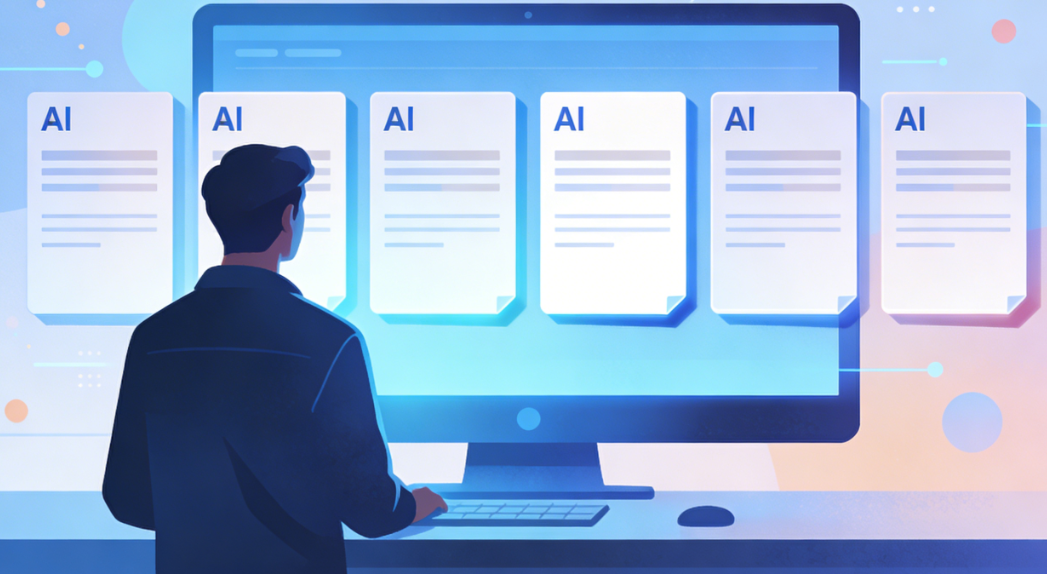
Trust Crisis in the AI Era With the popularization of artificial intelligence, we've become accustomed to asking AI questions. However, experienced users are gradually discovering an awkward reality: AI isn't always the embodiment of truth. It often confidently fabricates historical events, invents data sources, and even uses fallacies in logical reasoning. This phenomenon is known as "AI illusion." In serious settings such as medicine, law, or academic research, blindly trusting a single AI can lead to serious consequences.
I. Why is a single model unreliable?
From a technical perspective, large language models are essentially probabilistic "word chain" experts. Their answers stem from the statistical patterns in the training data, rather than from a true understanding of the real world.
- Data blind spotsThe different training datasets for each model result in differences in knowledge coverage.
- Algorithm preferencesSome models excel at creative writing, while others excel at logical coding; a single model cannot encompass all these abilities.
- randomnessEven for the same question, asking it at different times may yield different answers, indicating a lack of stability.
II. The core of breaking the illusion: multi-model cross-validation
In human society, we judge facts by "listening to all sides"; the same logic applies to the use of AI. Cross-model verification refers to simultaneously posing the same question to multiple different AI models and comparing their answers to determine the truth.
DiffMindThe emergence of these tools is precisely to address this pain point. Its core logic lies in:
- Consensus is factIf GPT-4, Claude 3, and Gemini give highly consistent answers on a factual question, then the accuracy of that information is extremely high.
- Disagreement is riskIf the answers from different models are vastly different, this often indicates the complexity of the problem, or that a particular model is experiencing a hallucination, prompting the user to conduct further manual verification.
III. Real-world case studies: How DiffMind helps you avoid pitfalls
Imagine you are looking up obscure programming code or historical details.
- traditional methodsOpen an AI webpage, ask a question, copy and paste, and then use it with trepidation.
- DiffMind methodEnter your question in a single window, and the system will simultaneously call multiple mainstream models. You'll clearly see: Model A provides code but no explanation; Model B points out potential bugs in the code; Model C offers a more optimized approach. Through comparison, you not only avoid the risk of writing incorrect code but also learn more comprehensive knowledge.
IV. Establishing Rational AI Usage Habits
The value of a tool lies in how the user wields it. Instead of viewing AI as a "standard answer generator," we should see it as an "opinion provider." By using DiffMind for multi-dimensional reference, we can enjoy the efficiency of AI while maintaining control over the truth.