
1) Why is AI copywriting prone to homogenization?
Many AI-generated writing tools appear highly efficient, but problems become apparent as soon as they are released:
- Similar headline patterns: strong contrast, strong conclusion, strong slogan.
- Unified paragraph rhythm: general-specific-general, excessive use of bullet points
- Lack of emotion and detail: It reads like a "correct summary" rather than a genuine expression.
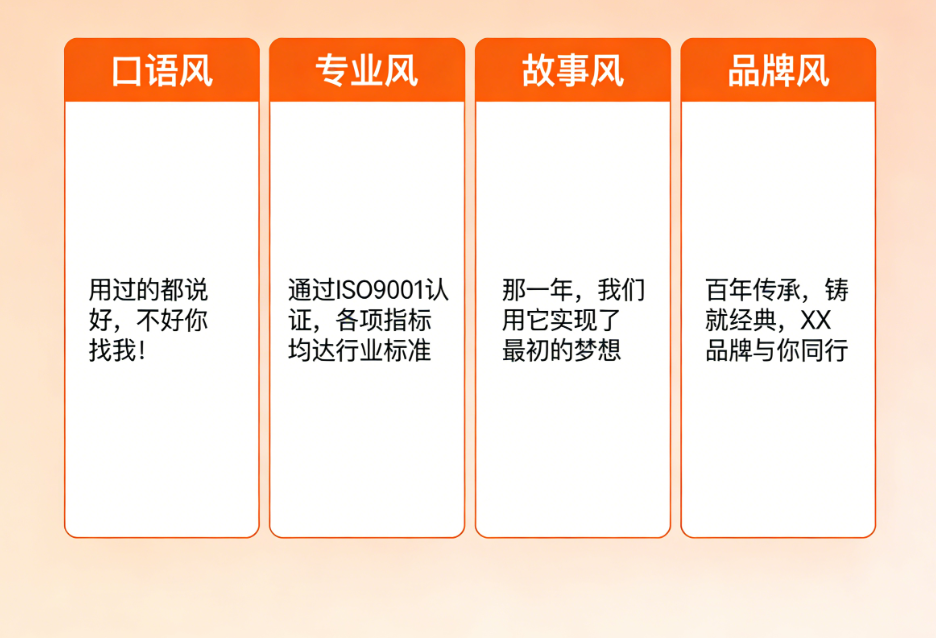
- The tone is inappropriate for the platform: it's too formal where it should be colloquial, and too boisterous where it should be restrained.
The root cause is that a single model gives you "a default way of writing". The more you rely on it, the more your expression becomes fixed on the same track.
2)DiffMindMulti-model comparison: See multiple "releaseable versions" at once.“
In DiffMind-style comparisons, you'll get an effect more like an "editorial discussion":
- Model A excels in clear frameworks and is suitable for long articles on WeChat official accounts.
- Model B is better at storytelling and is suitable for short video scripts.
- Model C uses more restrained language, making it suitable for brand websites or B2B introductions.
- Model D is more witty and suitable for social media interaction.
When these versions appear side by side, it's easier for you to do what creators should really be doing:Choose a style, modify the structure, add details, and unify the character design.。
3) Three steps to turn AI output into "your work"“
Step 1: Ask three different ways to write the same brief.
For example, for the same topic, the requirements are as follows:
- Version 1: Professional explanation + structured subheadings
- Version 2: Story beginning + conflict and turning point
- Version 3: Short Sentences + Strong Rhythm
Step Two: When making comparisons, do only two things: identify strengths and eliminate unnecessary details.
Mark the most worthwhile sentences, analogies, and structural paragraphs in each version, and then delete repetitive empty words and general conclusions.
Step 3: Add materials that are unique to you AI's weakest point is your real-life experience and specific data. (Add:)
- Your case studies and failure experiences
- Your product details and user feedback
- Your industry context (terminology, boundary conditions)
This step determines whether the content "looks like it was written by a human."
4) Use multi-model comparison to conduct a "title and introduction test".“
The title and opening are key to conversion, but they're also the easiest to become formulaic. The approach is:
- Have each of the different models provide 10 titles, and indicate the applicable platform and tone.
- Then, have the model write three types of opening statements based on the title: question-based, scenario-based, and counterintuitive.
- Choose the sentence that most likely will make your target reader stop reading.“
The advantage of multi-model comparison is that you don't have to blindly try a style, but can directly obtain multiple directions.
5) List of applicable scenarios (more creative)
- Brand introduction, product selling points and FAQ
- Social media articles, scripted broadcasts, live stream outlines
- Long-form articles, course outlines, and case studies.
- Distribute multiple versions of the same theme (different tone on different platforms)
In conclusion: The core of creation is not generation, but selection and editing.
AI can provide you with "raw materials," but the distinctiveness of a work comes from careful selection. Multi-model comparison increases the number of "options" and reduces the "judgment cost," ultimately making you more like a creator than a copyist.