
1) Why are “single AI answers” becoming increasingly insufficient?
AI can indeed quickly generate explanations, outlines, text, and suggestions, but many people encounter the same problem after using it for a long time:
- When the same question is asked again the next day, the conclusions drift.
- The details may seem complete, but the key facts may be misattributed.
- The expression is fluent, but the chain of arguments is not rigorous enough.
- The use of templates in the style leads to repetitive content and a lack of personal judgment.
The essence of these problems is that most model outputs are more like "high-probability text generation" and are not inherently equivalent to "verifiable conclusions." When you only look at one model, it is easy to mistake "one version of the statement" for "the standard answer."
2)DiffMindIts core positioning: Transforming "questioning" into "comparison".“
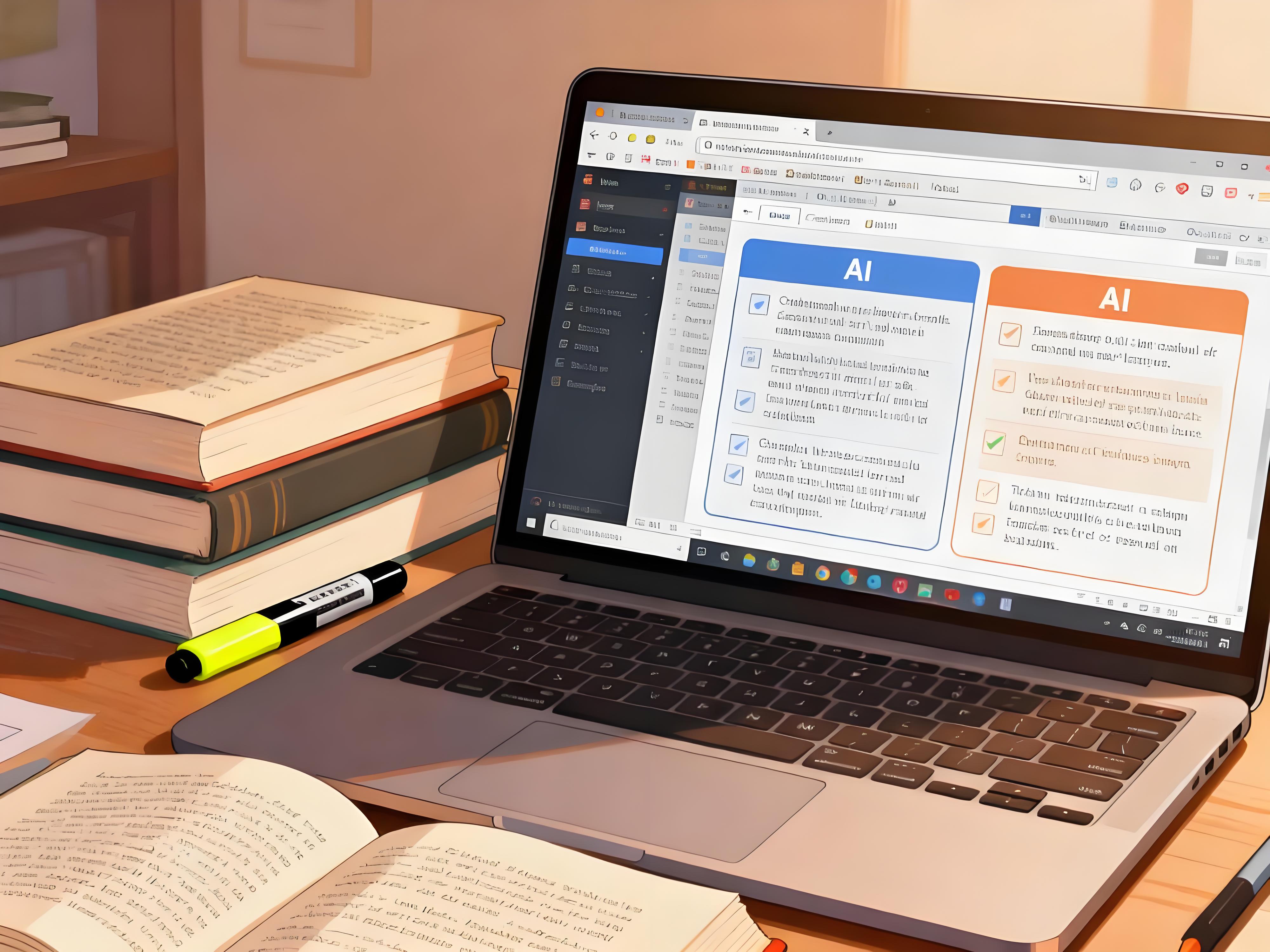
What DiffMind does can be summarized in one sentence:Multiple AI answers to the same question are displayed side-by-side on the same screen.。
The traditional approach involves switching back and forth between different platforms, repeatedly pasting questions, and manually sorting out the differences; while multi-model comparison compresses these steps into a single action, allowing you to focus more on "judging the content itself".
3) Core Function Breakdown: What differences can you see intuitively?
In a structure where multiple models output side-by-side, you can usually capture three types of information more quickly:
- Differences in thinkingSome models draw conclusions first, while others list conditions and boundaries first.
- Expression differencesThe same viewpoint may be written in an academic style, a conversational style, or a framed style.
- Differences in conclusionsDisagreements often indicate that "further verification/supplementation of premises is needed here."“
When multiple models are highly consistent on key points, you will be more confident in the answer; when they show obvious conflict, you will be more alert: the problem may not be so simple, or the way the question is asked needs to be supplemented with additional constraints.
4) DiffMind's value lies not in "thinking for you," but in "reducing the cost of judgment."“
Many people mistakenly believe that stronger AI equals less thinking. DiffMind is the opposite: it's more like a "comparison table," allowing you to quickly accomplish three things:
- Find a consensus (parts that can be temporarily adopted).
- Mark the disputed part (the part that needs verification).
- Rewrite (reorganize the output in your own words)
5) Who is it suitable for?
- People who frequently use AI for learning explanations, writing outlines, and data organization
- People who want to reduce the risks of AI errors and don't want to blindly trust a single answer.
- People who need to express themselves from multiple perspectives (copywriting, scripts, social media content)
- People who value "judgment and trade-offs" rather than just "delivering quickly".
In conclusion, the more important question is not "which AI is stronger," but "how you can make more reliable judgments."“
As AI becomes an everyday tool, the difference in capabilities often manifests in who can identify unreliability faster and who can translate output into their own understanding. The significance of multi-model comparison lies in making this process more intuitive and efficient.