
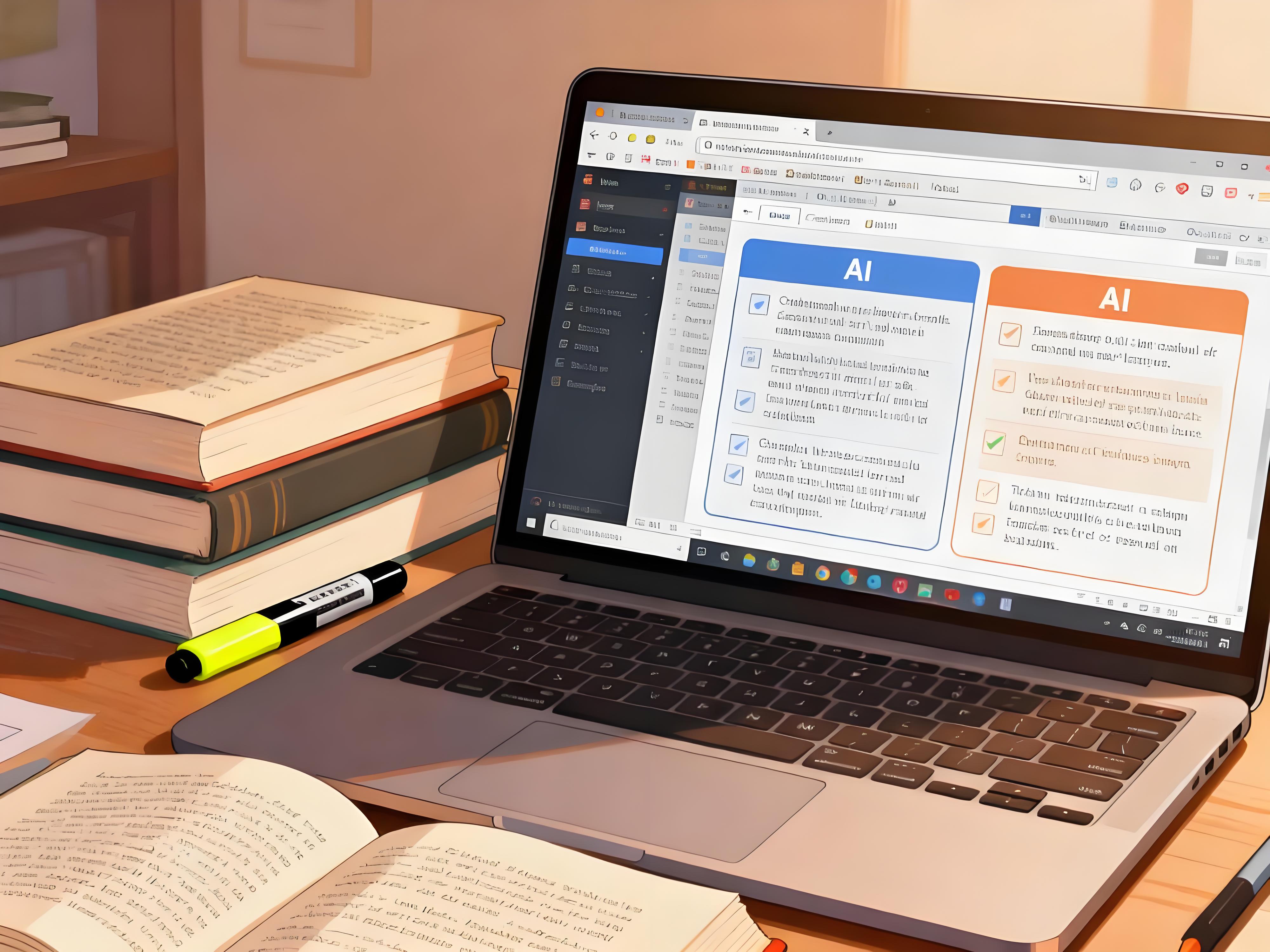
OpenDiffMindOn its official website, you'll find its interface is exceptionally simple: a single input box and several side-by-side display windows. Behind this seemingly simple design lies a profound understanding of user psychology and AI interaction logic.
In the field of product design, there is a core concept called "interaction cost." For AI products, the biggest cost is not the input of text, but the significant effort users need to expend to verify whether the answer is correct after receiving it. All of DiffMind's functional designs are essentially aimed at minimizing this "judgment cost."
I. Core Function 1: Technical Advantages of Multi-threaded Concurrent Calls
DiffMind's most intuitive feature is "one question, multiple models answer." From a technical implementation perspective, this means that the backend needs to send requests to the API interfaces of multiple large models simultaneously and handle the response latency of different models.
The value of this feature goes far beyond simply "saving time":
- Synchronicity of thought: If a user needs to manually switch between three web pages to ask questions, the time difference in between can disrupt the continuity of their thought process. DiffMind's concurrent processing ensures the synchronization of information acquisition, allowing users to receive all information within a single thought slice.
- Optimization of response speed based on the "weakest link" effect: In single-model usage, if the model lags, the user can only wait. However, in DiffMind, faster-responding models produce results first, allowing users to read them immediately and filling the waiting period, thus improving the perceived smoothness of the system.
II. Core Function Two: Cognitive Psychology of Parallel View
Why does DiffMind insist on displaying answers "side by side" instead of "top to bottom"? This involves the "comparison effect" in cognitive psychology.
- Scrolling up and down vs. Scrolling left and right: When information is arranged vertically, users often forget the details of the first answer when they look at the second answer, requiring them to scroll back repeatedly, which increases the burden on short-term memory.
- Advantages of side-by-side views: Side-by-side layout allows the user's eye to quickly swipe horizontally (Saccade). This visual flow is best suited for discovering differences. For example, a user can immediately see that three models handle the same code segment with different indentation, or that there are discrepancies in the records of the same historical year.
DiffMind's UI design is actually to provide the human brain with an external "working memory extension slot," allowing humans to utilize their best ability to "spot the difference."
Third, lower the threshold for judgment: from "fill-in-the-blank" questions to "multiple-choice" questions.“
In traditional AI interaction, users are faced with a "fill-in-the-blank" or "question-and-answer" problem—you ask, it answers, and you have to judge whether it is right or wrong yourself, which is difficult.
DiffMind transformed this problem into a "multiple-choice question" by introducing multiple frames of reference—there are three options, A, B, and C, and you should choose the one you think is the best, or combine them.
Product logic analysis:
- Anchoring effect: If there is only one answer, users are easily "anchored" to believe that it is the truth.
- Decentralization: Multiple answers eliminate a single authority, forcing decisions to be made based on logic rather than blind faith.
DiffMind did not add new algorithms to "detect" authenticity, but instead changed the information.Presenting structureThis activates the user's innate judgment. This is the power of excellent product design.
IV. Specific optimizations for learning and writing scenarios
DiffMind emphasizes its application in learning and writing scenarios because these scenarios have extremely high requirements for "diversity".
- Structured output: When processing long texts, the product strives to maintain paragraph alignment to facilitate paragraph-level comparison for users.
- Pure Mode: The complex sidebars and recommendation ads native to each model have been removed, leaving only plain text output, allowing users to focus entirely on the content itself.
V. Summary: DiffMind's Tool Philosophy
DiffMind's goal is not to create a stronger model, but to create a better "lens".
It acknowledges the imperfections of current AI and leverages these imperfections (differences between models) to create value for users. Its technical logic is not complex, but its product logic is very clear:Trade concurrency for efficiency, and use comparison to uncover the truth.
For users frustrated by AI's seemingly nonsensical pronouncements or seeking more diverse inspiration for their creative work, DiffMind offers what appears to be the most intuitive solution for humans. It's not just a website, but a "breakwater" that helps us stay grounded amidst the deluge of AI.