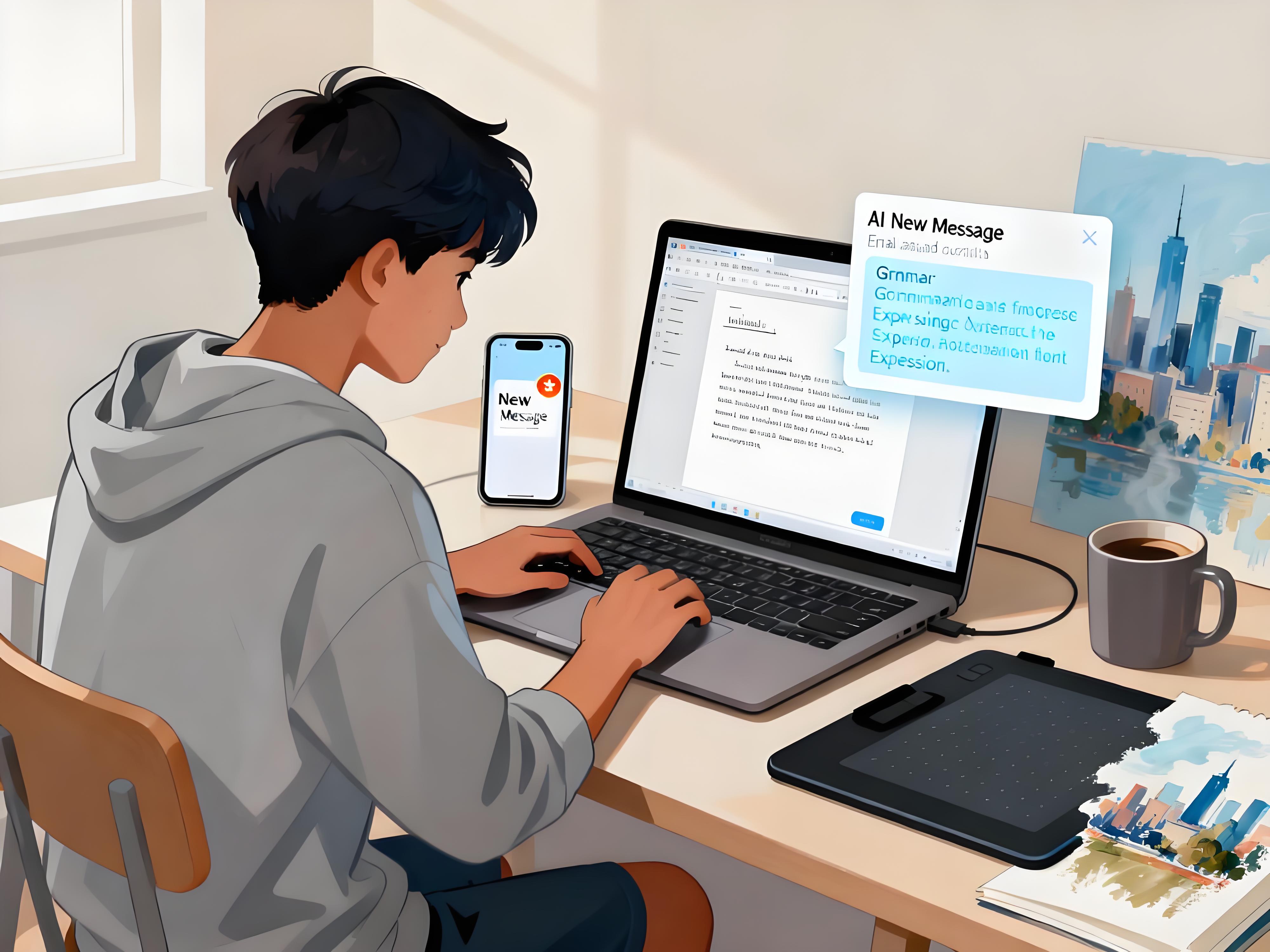
For those of us living abroad, the mountain of "English" weighs not only on our papers, but also on our every word and action in daily life.
Have you ever experienced these "breakdown moments"?
- I wanted to email my professor to ask for leave. I spent 20 minutes writing and 10 minutes deleting, still worried that my tone would be too "aggressive" and be considered "impolite".
- When messaging the landlord to urge him to fix the water pipes, if the wording is too "soft," he might not take it seriously; if the wording is too "hard," he might retaliate.
- In a group discussion, you want to express a complex point of view, but what comes out is "Chinglish," leaving everyone looking at you with expressions of "I don't get it."
This kind of pressure is no less than writing a thesis.
Three major pain points in daily communication: What are we really afraid of?
Academic writing mistakes can be corrected, but daily communication is "instant," and a mistake can be "socially fatal." Our pain points ultimately boil down to three:
- Hesitation in a non-native language: Our brains require a Chinese-English translation process. This process is not only slow, but also frequently gets stuck. Someone has said a string of words, and you're still trying to figure out the meaning of the first word.
- Inaccurate expression (especially in tone): This is the most fatal flaw. It's incredibly difficult to strike the line between "politeness" and "offense" in English. You might mean to say "I need your help," but accidentally end up saying "You must help me," which is a disaster.
- Prone to errors, details expose weaknesses: Even the simplest tenses, singular and plural forms, and articles (a/an/the) are often mistaken when we're tired or nervous. These "small mistakes" accumulate and make us appear "unprofessional" or even "silly" in communication.
DiffMind Solution: Your "24/7 Personal Translation Team"“
Many people will use GPT-5 He came to edit the email, but he was like a "top student friend"—his answers were very standard, but not necessarily suitable for all situations.
而 DiffMind It's a "multi-model AI comparison workbench." It's not a friend, but...An "AI translation team"“(Also includes GPT-5, Claude 4.5, Gemini 2.5 Pro, etc.)
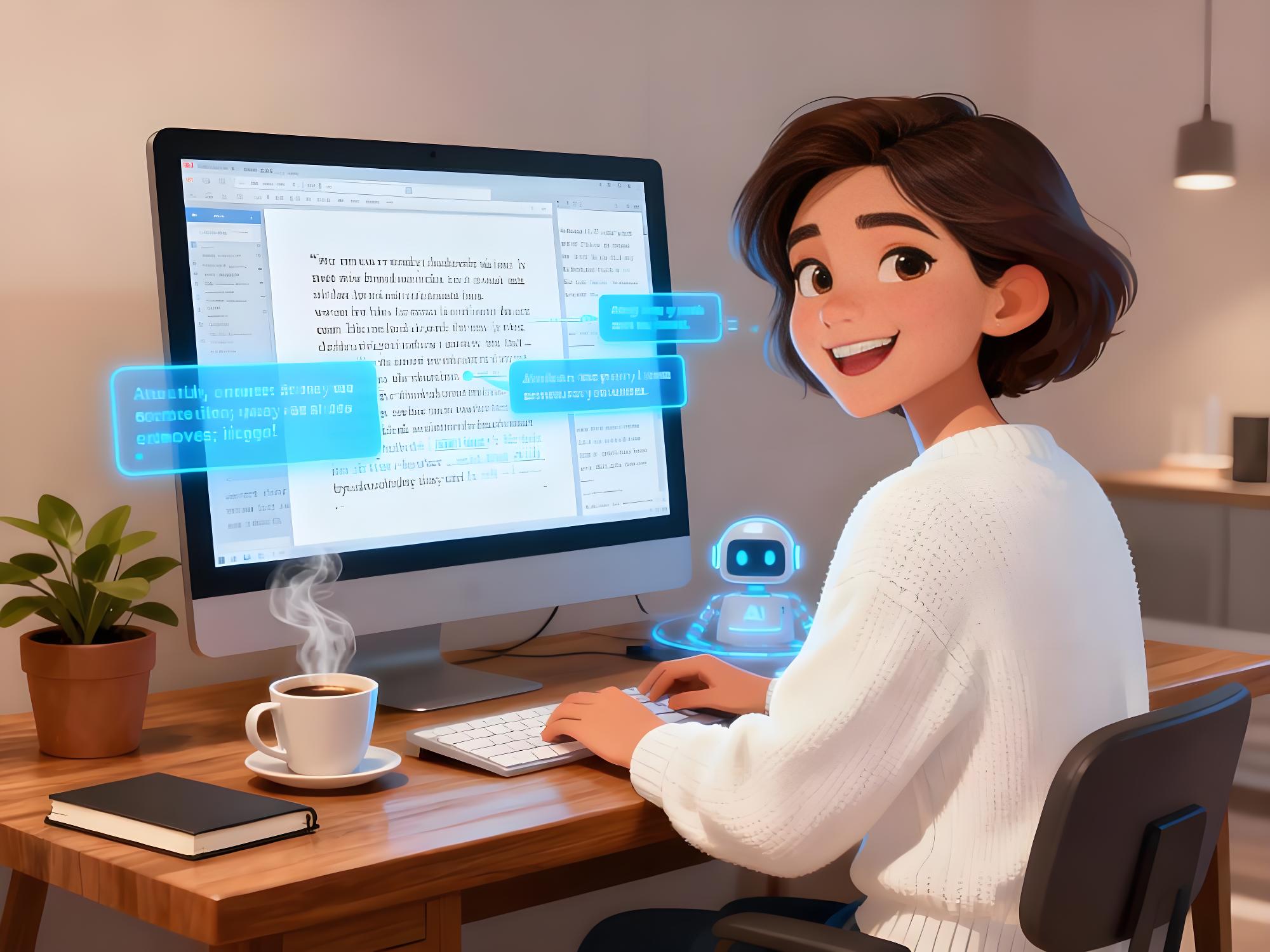
When you need help, they will offer suggestions "on the same screen":
- Email and messaging optimization (addressing tone issues): If you submit a draft in "Chinglish," DiffMind will give you several versions at the same time:GPT-5 We might provide the most "business/academic" official version;Claude 4.5 Perhaps the most "thoughtful/polite" euphemism would be given; while Gemini 2.5 Pro This is probably the most "authentic/colloquial" and concise version. You can use it as needed.
- Expressing suggestions and automatic error correction (solving "error" problems): You're no longer relying on just one AI. When three AIs point out the same grammatical error, you can be absolutely certain it's wrong. This is like having "triple insurance," completely eliminating careless mistakes.
Practical Skills: From "Chinglish" to "Native Speaker"“
Let's look at two of the most common "everyday" scenarios:
Scenario 1: Writing a "high-EQ" leave request email to the professor
Your draft of "Chinglish":
“"Hi Professor Lee, I'm sick today and can't attend your class. Could you please send me the PowerPoint presentation? Thanks." (Pain points:) Using terms like "command" is impolite and incomplete.
Your question in DiffMind (Prompt):
“"Please rewrite this into a formal leave request email to the professor. It should be very polite and ask how you can make up the missed classes."”
(You will see):
- GPT-5 (Strict Version): “"Dear Professor Lee, Please accept my apologies as I am unable to attend today's [Class Name] lecture due to illness. Would it be possible to obtain the slides (PPT) from today's class? I will also reach out to a classmate for notes…"”
- Claude 4.5 (Euphemistic Version): “"Dear Professor Lee, I'm writing to inform you that I unfortunately need to miss your class today, [Date], as I am feeling unwell. I was hoping I might be able to get a copy of the lecture slides to review? I will do my best to catch up on the material…"”
Your choice: Both are great! You just need to copy, paste, and send. The whole process takes less than 30 seconds.
Scenario 2: Sending a message to group members to urge them to make progress (without ruining the relationship).
Your draft of "Chinglish":
“Hey Tom, did you finish your part? I'm waiting for you. Please send it to me. (Pain points:) Like "debt collection," it creates a strong sense of pressure and easily offends people.
Your question in DiffMind (Prompt):
“"Please change this into a 'casual' text message to remind students to submit their homework, but make it friendly and stress-free."“
(You will see):
- Gemini 2.5 Pro (Spoken Version): “"Hey Tom! Just checking in on the group project. How's your section coming along? Let me know if you need anything!"”
- Claude 4.5 (Considerate Version): “"Hey Tom, hope you're doing well. Just wanted to quickly check in on your progress for the project. No rush, just trying to see where we're at!"”
Your choice: Gemini's version is the most authentic! It changed "I'm waiting for you" to "How's it coming along?", instantly transforming it from "urging" to "caring".
Summary: From "Difficulty Speaking" to "Confident Communication"“
This is the value of DiffMind. It doesn't let you "take it easy," but rather helps you "calibrate" your expression.
The appeal of using DiffMind lies in:
- Confident in communication: You'll never have "sending anxiety" again. Because you know that every word you send out has been "pre-screened" by the "AI mentor team," ensuring it's absolutely authentic and appropriate.
- Reduce errors and misunderstandings: Say goodbye to the embarrassment, misunderstandings, and even conflicts caused by "Chinglish".
- Saves a huge amount of time (and brain cells): Stop spending 20 minutes scrutinizing an email. Save that time for a coffee, socializing, and enjoying your time as a student.
Let AI become your 24/7 "native English speaker" friend, and your study abroad experience will be significantly easier.