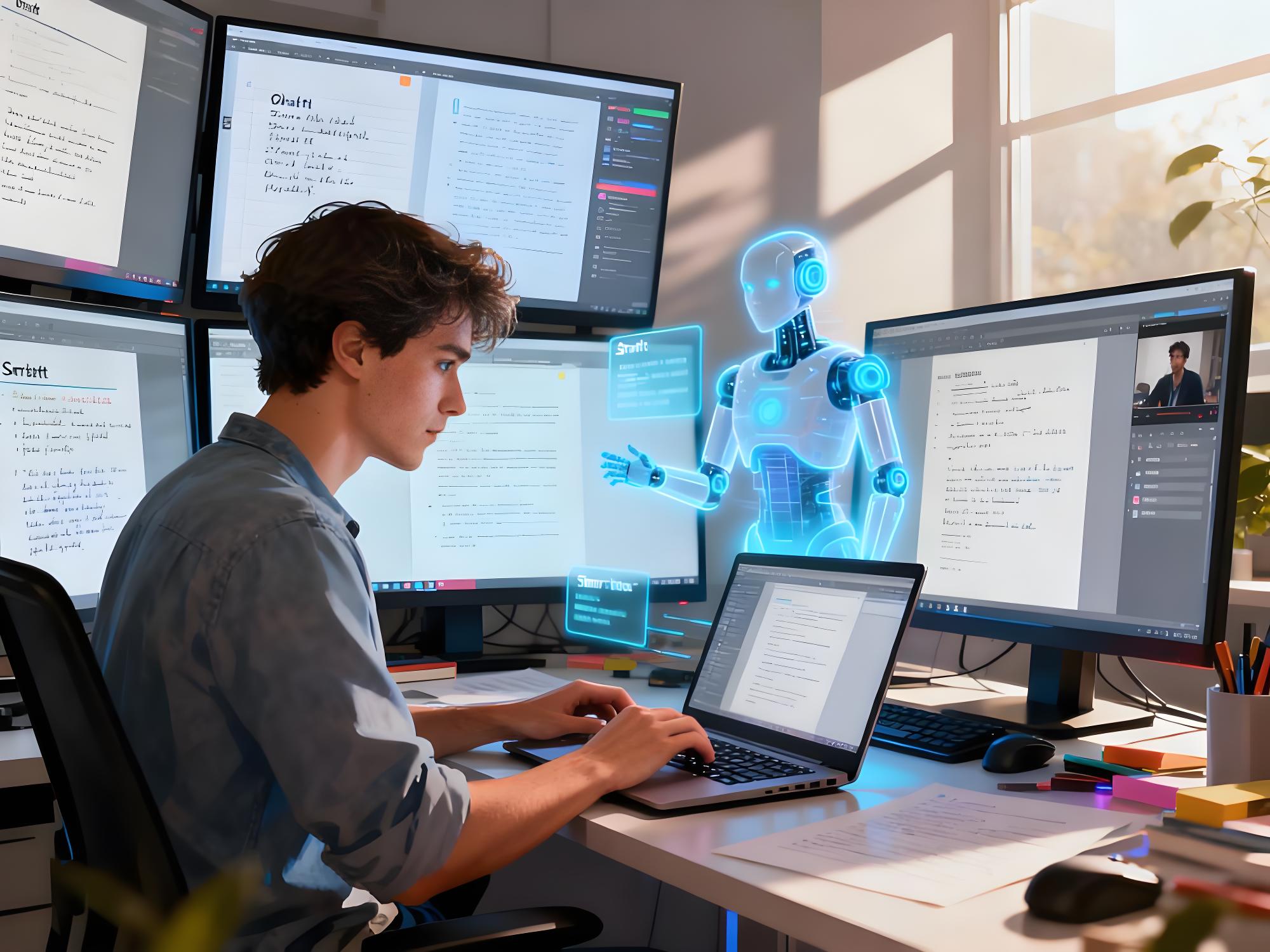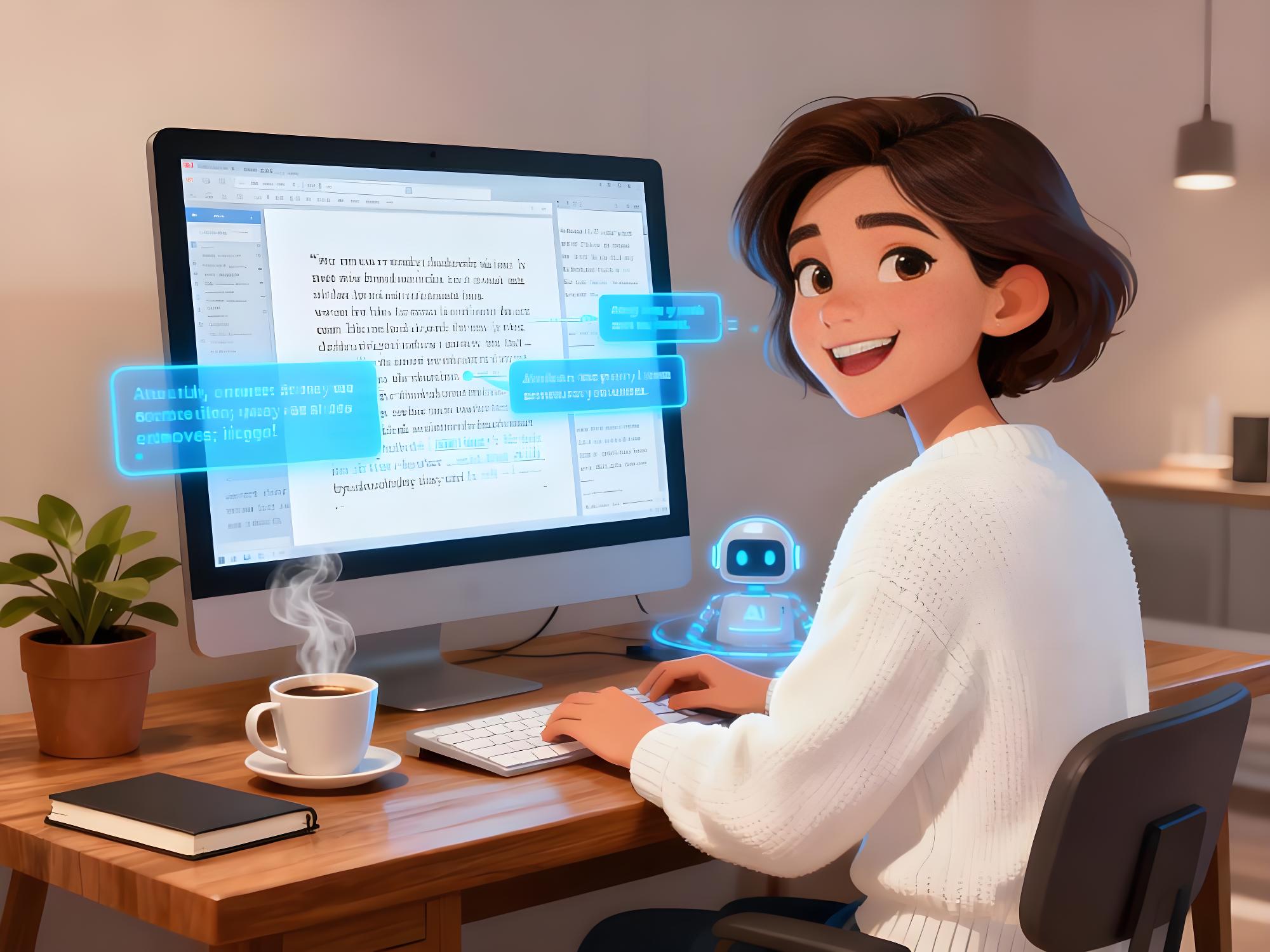

For those of us studying abroad, nothing is more frustrating than "Academic Papers".
The deadline weighed heavily on our chests, and the professor's demands were almost "abnormal." We not only had to deal with a completely new knowledge system, but also had to perform high-intensity, high-density logical output in English, a language other than our native tongue.
The feeling is like dancing in shackles—you have ideas in your head, but what you write just doesn't sound right. After finally pulling an all-nighter to finish, you hand it in, only to be criticized by your advisor for "unclear logic" or for "overly Chinglish." Who understands that kind of pressure?
Does your thesis also fall into these three categories?
After being "tortured" by countless papers, we found that the writing pain points of international students are highly concentrated:
- The “Chinglish” Curse: We think in Chinese logic, which often clashes with English grammar. We frantically pile up "advanced vocabulary," resulting in long, grammatically awkward sentences. The worst thing is for your tutor to immediately see through your "poor" English skills.
- The “Messy” Structure is chaotic and logically inconsistent. Academic papers prioritize logic. Often, we write whatever comes to mind, resulting in a disconnect between the introduction and conclusion, and a lack of transitions between paragraphs. The entire paper appears disjointed, lacking a clear argument.
- Time spent on research and literature review (The “Drowning” Research): Writing a paper requires reading dozens of papers. Getting lost in a sea of information is common. How to quickly grasp the core ideas and compare, analyze, and summarize the viewpoints of papers A, B, and C? This seems like an impossible task.
DiffMindSolution: It doesn't write for you, it "commands" the AI to write.
Many students will use AI (for example)GPT-5Using this method to aid writing will soon reveal a new problem:The "AI Illusion" of a Single AI“。
If you ask it to polish your work, it might give you an AI-sounding expression that you can't even understand; if you ask it to summarize your work, it might "talk nonsense in a serious manner."
That's why I recommend DiffMindIt is not another AI, but a "multi-model AI comparison platform".
Its logic is simple: you ask a question, and more than 20 top AIs, such as GPT-5, Gemini 2.5 Pro, and Claude 4.5, answer you "on the same screen".
For academic writing, this is simply a "dimensional reduction attack":
- Optimization outline for "structural chaos" -> Multi-model approach Different AIs have different "personalities":GPT-5Skilled in logical reasoningClaude 4.5Possesses critical thinking skills. When they simultaneously outline your work, you can immediately discern which structure is the most robust and in-depth.
- Addressing "unnatural expression" -> Comparative language polishing Throw in your "Chinglish" paragraph and see how 5 AIs rewrite it. You're no longer "listening" to one AI, but rather choosing the most authentic and academic expression from the suggestions of 5 "senior teaching assistants".
- For "Literature Review" -> Cross-validation and Idea Extraction DiffMind can help you quickly compare different AI interpretations of the same paper, or compare the core viewpoints of different papers. This can help you avoid being misled by a single AI and gain a deeper understanding of the overall research.
Practical Tips: Three Steps to Create a High-Quality Paper Draft
Talk is cheap. Let's get down to business and see how to actually use DiffMind:
Step 1: Generate the perfect outline using "AI Brainstorming"
Let's say your topic is: "The impact of social media on adolescent mental health".
You no longer need to rack your brains; just ask questions directly in DiffMind:
“"Please generate an outline for an academic paper on 'The Impact of Social Media on Adolescent Mental Health,' which should include an introduction, three main arguments, a counter-argument, and a conclusion."‘
(You will see):
- GPT-5 It might present a very standard, logically rigorous 5-segment structure.
- Claude 4.5 They may incorporate more in-depth "sociological" or "psychological" perspectives into their arguments.
- Gemini 2.5 Pro It may offer some very novel (or even tricky) counterarguments.
What you need to do: By combining the advantages of these three elements, an A+ level syllabus is created.
Step 2: Optimize core paragraphs using "contrast-based polishing".
You've written a piece of "Chinglish" that even you can't stand to read? Like this one:
“In China, many students study very hard. They want to get good grades. This makes them feel very stressed.
Put this passage into DiffMind and ask:
“Please help me polish the following paragraphs in more academic and idiomatic English for an education paper: [Paste your paragraphs]”
(You will see):
- AI 1 (GPT-5) might say: “"Academic pressure is a significant concern among Chinese students, who often dedicate substantial effort to achieving high grades, leading to considerable stress levels."
- AI 2 (Claude 4.5) might say: “"The pursuit of academic excellence in China often compels students to rigorous study habits, though this intense focus on grades can be a major source of psychological stress." (The pursuit of academic excellence...)
See? You immediately have two replacement, extremely "native" expressions. You're no longer AI's "repeater," you've become AI's "editor-in-chief."
Step 3: Use "cross-validation" to check citations and facts.
When writing a literature review, you worry that you may have misunderstood a particular paper, or that AI may have fabricated information.
You can ask questions in DiffMind:
“"Based on the [author, year] paper [title], what is its main argument?"”
DiffMind uses multiple AIs to search and summarize. If the answers from all three AIs point to the same core idea, you can safely cite it. If the answers differ, you know you need to personally consult the original text.It helps you accurately pinpoint the pitfalls of "AI illusions".。
Summary: From "Paper-Study Laborer" to "AI Commander"“
DiffMind cannot do the thinking for you in 100%, but it can save you 80% of "repetitive work" and "ineffective error correction" time.
The appeal of using DiffMind lies in:
- Soaring Efficiency: What used to take 3 days to write, can now be done in 1 day, producing a high-quality draft.
- Quality improvement: You can “stand on the shoulders of giants”, making your paper more rigorous in structure and more authentic in language.
- Modifications and reductions: Say goodbye to your supervisor's "red-inked" comments, because before you submit, 20 AIs have already done a "pre-review" for you.
For us international students, time is incredibly precious. Stop working alone! Learn to use comparison workbench like DiffMind to transform from being "tortured by papers" to "efficiently managing AI"—that's the real secret to high-achieving students.