1. Do you do this when you write your thesis?
Last week, I was helping an international student friend revise her thesis. She stared at the computer screen and sighed, "I've written three versions of the literature review. GPT says the logic is messy, Claude says there aren't enough case studies, and Gemini says the data sources are problematic. I get a headache just looking at those three names now. I keep copying and pasting, and I can't even put together a complete sentence in half a day."“
This is a typical day for many students writing papers: When reviewing the literature, they need to find the "theoretical framework," requiring Claude to dig into the details; in the discussion section, they need to find "data support," requiring them to switch to Gemini to search for novelty research; and in the conclusion section, they need to achieve a "logical closure," requiring them to go through GPT again—I spend one hour each day on "switching AI" and "integrating answers".The actual time for writing papers is severely squeezed.
Until she used DiffMind Only then did I realize:Writing academic papers is not about "outsmarting a single AI," but rather "letting multiple AIs help you simplify."“。
II. How does DiffMind help you write your paper? In short:
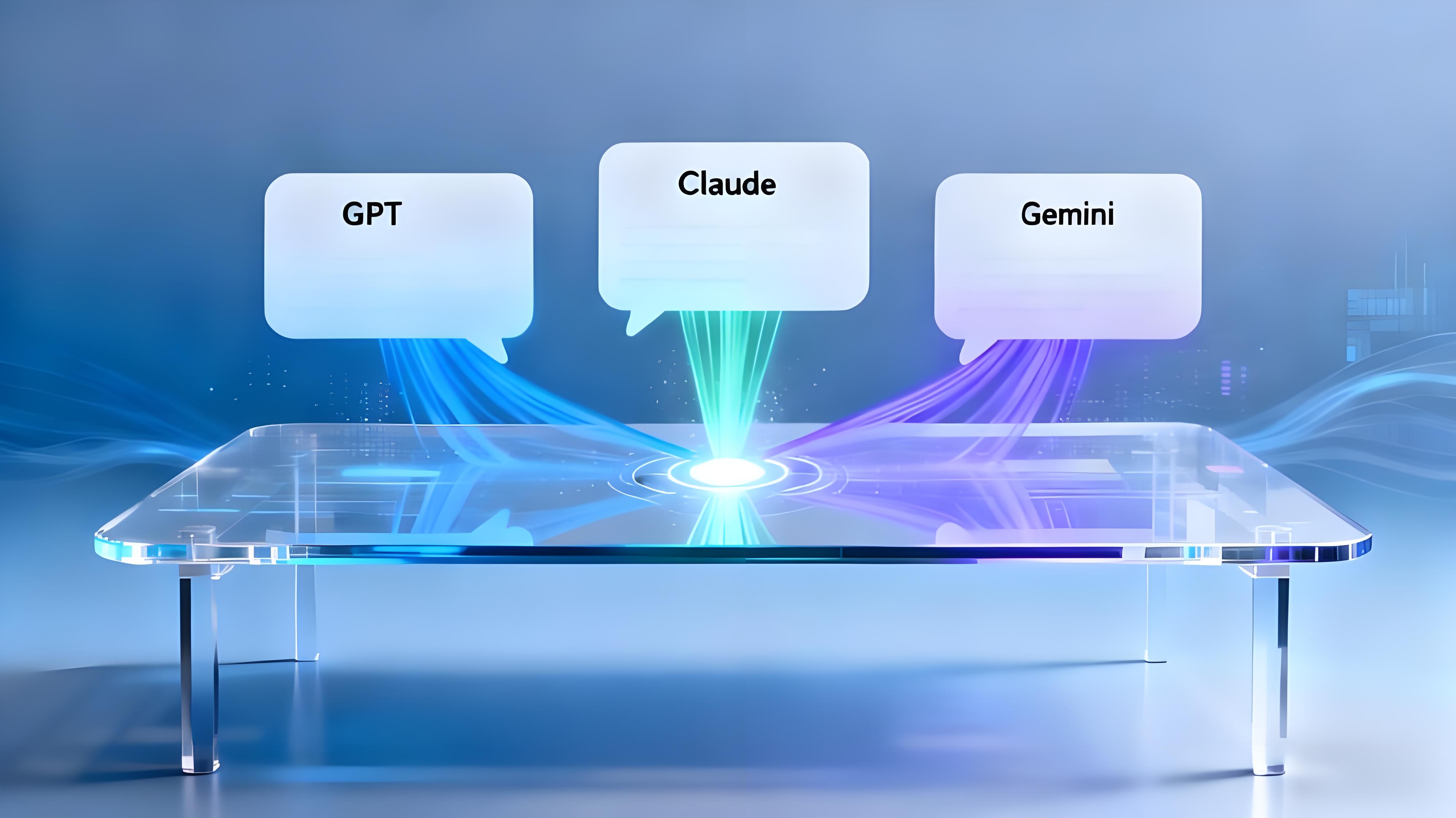
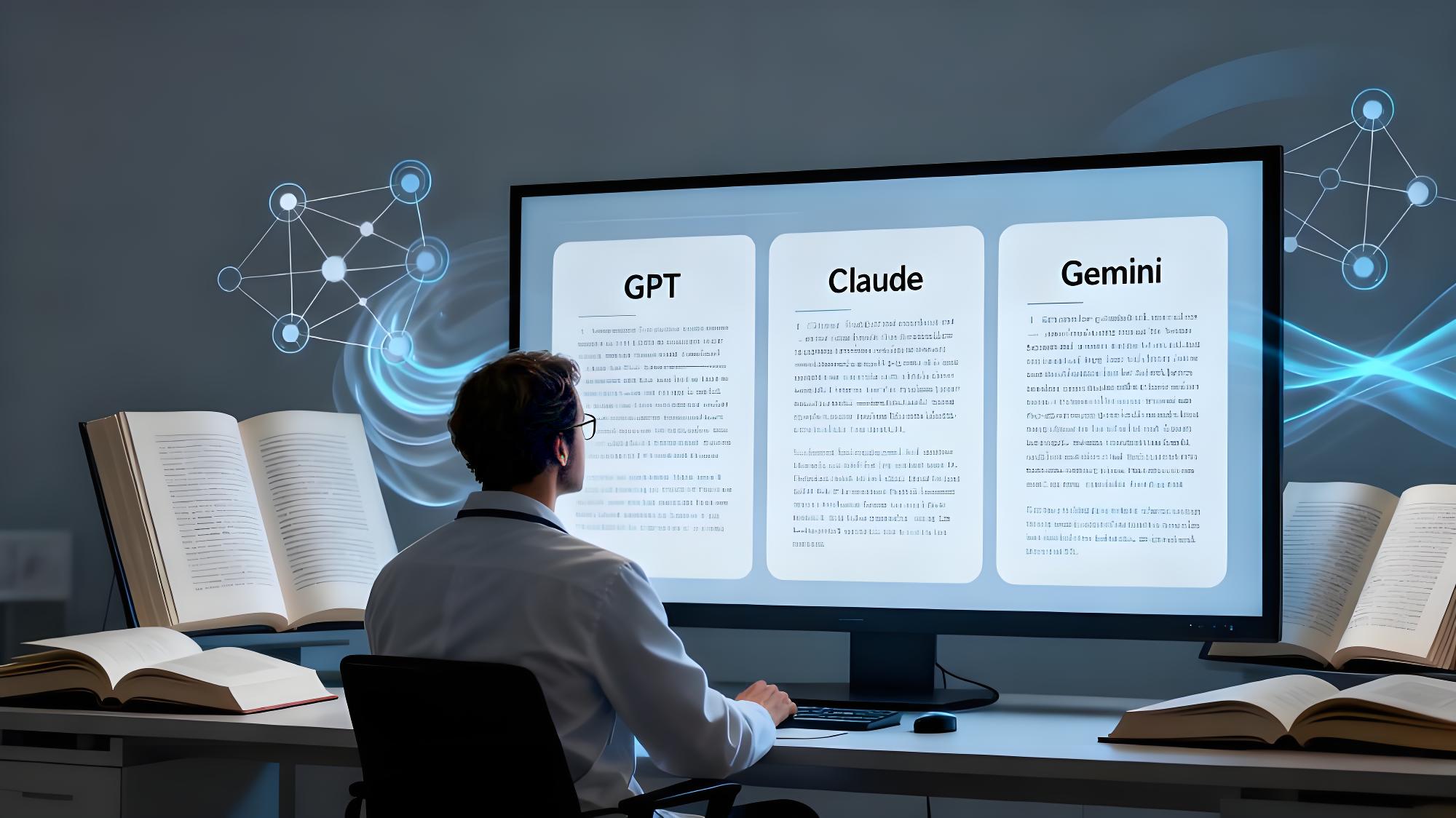
Within the same interface, GPT, Claude, and Gemini simultaneously provide you with the key parts of your paper—you don't need to switch platforms or judge "which AI is reliable" yourself; you can directly "piece together" the most complete ideas from answers from different perspectives.
III. Real-world scenario: Breaking down the entire academic paper writing process using DiffMind“
Taking a research paper titled "A Study on the Impact of Social Media on College Students' Learning Behavior" as an example, we use DiffMind to break down several core components:
1. Literature Review: From "Scattered Information" to "Structured Framework"“
needTo write a literature review, you need to analyze the "advantages and disadvantages of social media for learning" and find three authoritative theoretical supports.
Multi-model output comparison:
- GPTThe literature is listed chronologically (research from 2018 to 2023), divided into "positive impact (information acquisition)" and "negative impact (attention distraction)". It cites "delayed gratification theory" and "social impact theory", but does not mention "differences between different platforms" (such as short video vs. long article platforms).
- ClaudeThe paper uses a "theoretical framework + case study" structure, divided into "theoretical foundation (social penetration theory)," "empirical findings (comparison between Facebook and TikTok)," and "points of contradiction (differences among students of different grades)." However, it only mentions one case study from 2020 and lacks data from recent years.
- GeminiThe study integrated "quantitative data + visualization," listed "4 meta-analysis results" (such as "no significant impact from daily use of <2 hours"), and suggested "combining with self-determination theory," but did not analyze "differences in research methods" (such as questionnaires vs. experiments).
How to use DiffMind:
The outputs of the three AIs are pieced together to form a complete framework:
- Theoretical sectionClaude's "social penetration theory" + Gemini's "self-determination theory" (because the former focuses on relationship building, while the latter focuses on motivation, making it more comprehensive);
- Case Studies: GPT timeline + Gemini meta-analysis data (supplemented by recent research);
- ContradictionClaude's "grade differences" + GPT's "platform differences" (avoiding discussions of only a single group).
resultThe literature review section has been transformed from "scattered viewpoints" into structured content with "theory, data, and contradiction analysis," eliminating the need for cross-verification by searching for papers.
2. Discussion Section: From "Simply State the Conclusion" to "Closed Logical Loop"“
needThe discussion section should analyze "why the research results are consistent with/inconsistent with the hypotheses" and point out "the limitations of the research".
Multi-model output comparison:
- GPTThe statement directly states that "the results support the hypothesis," but does not mention "sample bias" (only science and engineering students were selected, ignoring humanities students).
- ClaudeThe study mentioned "potential confounding variables" (such as "students' academic background"), but did not provide "suggestions for follow-up research".
- GeminiThe study used a funnel plot to visualize the sample distribution and pointed out that "insufficient sample size" was a limitation, but did not analyze the "effectiveness of the research methods" (such as whether the questionnaire design was guiding).
How to use DiffMind:
The comparison revealed:
- From the outputs of GPT and Claude, she discovered two vulnerabilities: "sample bias" and "confounding variables."
- Judging from Gemini's visualizations, "insufficient sample size" is the key issue;
- Finally, combining the three findings, the discussion section reads: "The results of this study support the hypothesis that 'social media use is positively correlated with learning efficiency,' but there is bias due to the sample's concentration in STEM fields. Future research needs to expand the sample coverage and control for the 'major background' variable..."“
EffectThe discussion section is no longer just "conclusion + platitudes", but "data support + logical reasoning + actionable suggestions". The professor directly commented "in-depth analysis, specific suggestions".
3. Conclusion Section: From "Summary of Results" to "Contributions + Future Prospects"“
needWhen writing the conclusion, summarize the core findings and point out the "research contribution" and "practical significance".
Multi-model output comparison:
- GPTThe summary only states that "the results support the hypothesis," without mentioning any contributions.
- ClaudeThe text mentions "theoretical contributions (supplementing the application of social penetration theory in the digital environment)," but does not mention "practical significance" (such as suggestions for university management).
- GeminiThe suggestion was to "promote 'social media time management tools' at the policy level," but no specific guidance for students (such as "how to balance study and entertainment") was mentioned.
How to use DiffMind:
The three components:
- Contributions: Claude's "theoretical contributions" + GPT's "supplement to existing research" ("first validation of the differences between STEM and humanities students");
- Significance: Gemini's "practical recommendations" + Claude's "reference to higher education policies" ("recommendation to offer 'digital literacy courses' to improve efficiency").
resultThe conclusion section was praised by the professor as having "a comprehensive perspective, both academic depth and practical guiding value".
IV. Three Core Values of Using DiffMind for Writing Papers
1. Reduce time spent "switching AI": from 1 hour to 5 minutes.
When international students write papers, they often have to interact with 2-3 AI programs in each section—literature review, discussion, and conclusion. After using DiffMind:
- Enter "Write a literature review 'The impact of social media on college students' learning,' requiring 3 theories and case studies." After 3 seconds, the outputs of the three AIs appear simultaneously on the screen.
- Without copying and pasting, you can directly filter paragraphs in DiffMind using the "Comparison Mode" (e.g., "This case study is more specific about Claude, this data is an update of Gemini").
- On average, each paper saves 1-2 hours of switching tools.This allows for an additional 2000 words of writing.
2. Automatic error filtering: Avoiding the "blind spots" of a single AI system.“
AI is not a panacea: GPT may overlook "cultural differences," Claude may miss "methodological limitations," and Gemini may fabricate data. DiffMind lets you:
- For example, in the discussion section, GPT says "the results support the hypothesis," but Claude and Gemini also point out "sample bias"—you immediately know that "you can't just trust one AI."
- For example, in a literature review, Gemini mentions "meta-analysis data," but GPT says "there is no meta-analysis in this field." DiffMind helps you discover Gemini's "incorrect data source" and avoids citing fake research.
- No more anxiety about whether AI-generated answers are reliable, because the three AIs will "find fault" with each other.“。
3. Build a "writing framework": make the paper structure more stable.
Many students feel their papers are "structurally disorganized" when writing, which is actually due to a "lack of framework references." DiffMind can help you:
- Comparing the "writing structures" of different AIs: for example, Claude excels at "theory + case study", GPT excels at "logic + data", and Gemini excels at "visualization + suggestions" - you can combine them to form a complete framework of "theory introduction → case analysis → conflict discussion → suggestions";
- Automatically generate a "paper outline": Based on the output of multiple models, DiffMind will extract "must-write modules" (such as the "theoretical comparison table" in the literature review and the "vulnerability analysis list" in the discussion) to avoid omitting key parts;
- From "not knowing how to write" to "filling in content according to the framework," writing efficiency doubles.。
V. Writing a Paper Without DiffMind vs. Writing a Paper with DiffMind: Two Different Approaches
| Without DiffMind | Using DiffMind |
|---|---|
| I open ChatGPT to write a literature review, then copy it to Word; then I open Claude to modify the framework, then copy it back; then I open Gemini to look up data, then copy it to a table… I spend two hours a day copying and pasting. | View the entire literature review, discussion, and conclusion in one screen, and directly combine them into a complete article. Write in 30 minutes what others take 2 hours to complete. |
| When writing the discussion section, GPT said "supports the hypothesis," while Claude said "there's a sampling problem"—I guessed which was correct, but when I included it, the professor pointed out that the analysis was "incomplete."“ | When three AIs simultaneously report "sample bias + variable confounding," you immediately know you need to supplement your analysis, and the professor praises the analysis as "logically rigorous."“ |
| The paper is poorly structured, with repetitive literature review and discussion sections, and the conclusion is reduced to a mere summary. | Using AI's structural comparison, a closed-loop structure of "theory – case study – contradiction – suggestion" was constructed. The professor said it had a "clear perspective and sufficient argumentation."“ |
VI. Conclusion: DiffMind doesn't "write your paper for you," it "helps you write a good paper."“
For international students writing papers, the biggest fear isn't "having no ideas," but rather "having too many ideas and not being able to integrate them." The value of DiffMind lies in piecing together the "fragments of ideas" from multiple AIs into a "complete puzzle"—you still need to think and judge for yourself, but you no longer need to spend time "verifying AI answers" or "integrating different viewpoints."
As Claire said, "I used to be on the verge of a breakdown when I was rushing to meet deadlines, but now DiffMind makes me feel 'reassured' for the first time - because I know that even if the AIs disagree, I can find the most reliable direction from their 'arguments'."“
The next time you get stuck while writing a paper, try letting DiffMind "be your academic partner": throw your questions in, let GPT build the framework, Claude dig into the details, and Gemini look up the data, while you are responsible for "selecting" and "combining" them—writing a paper should be "creative work," not "manual labor."