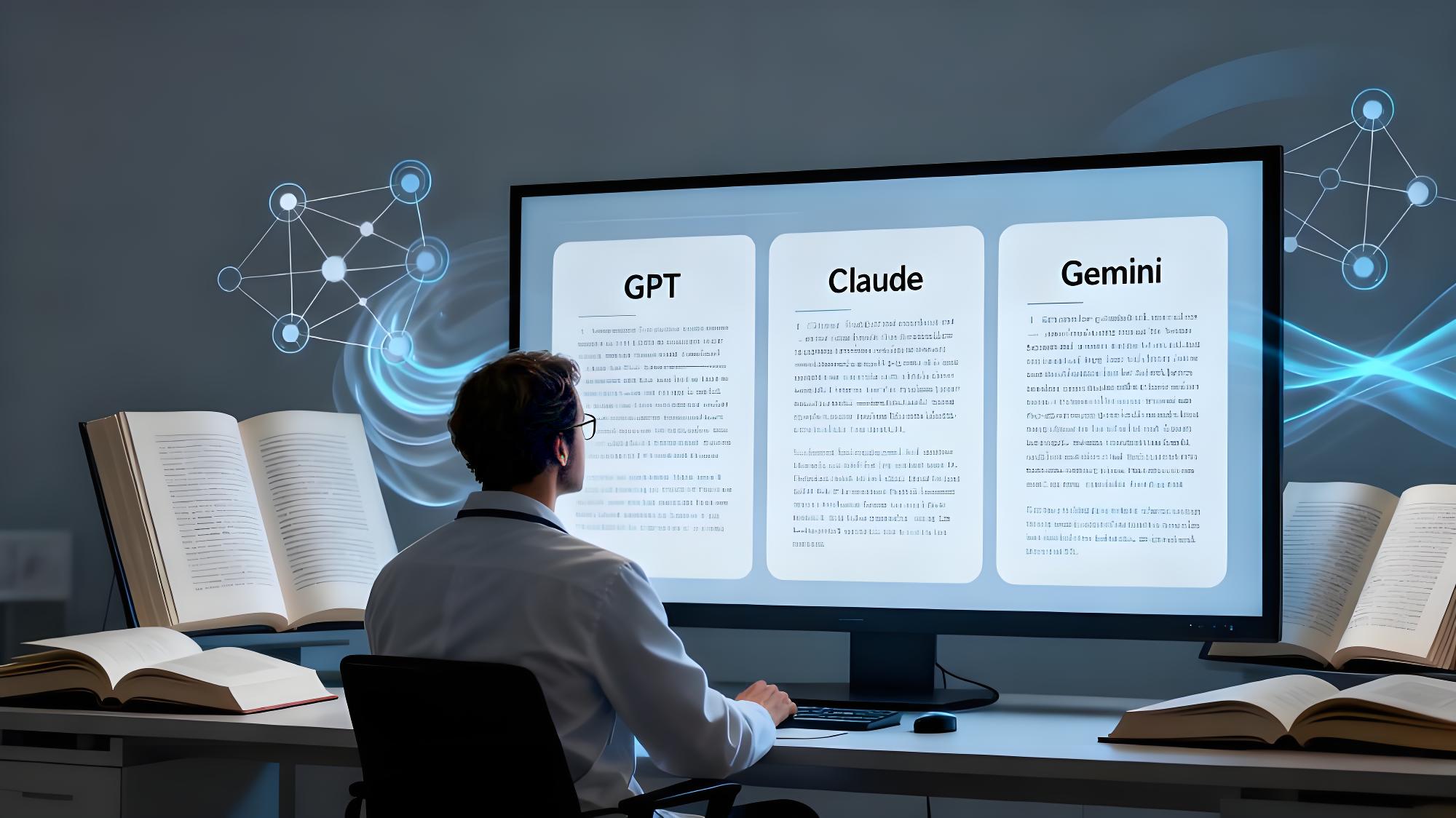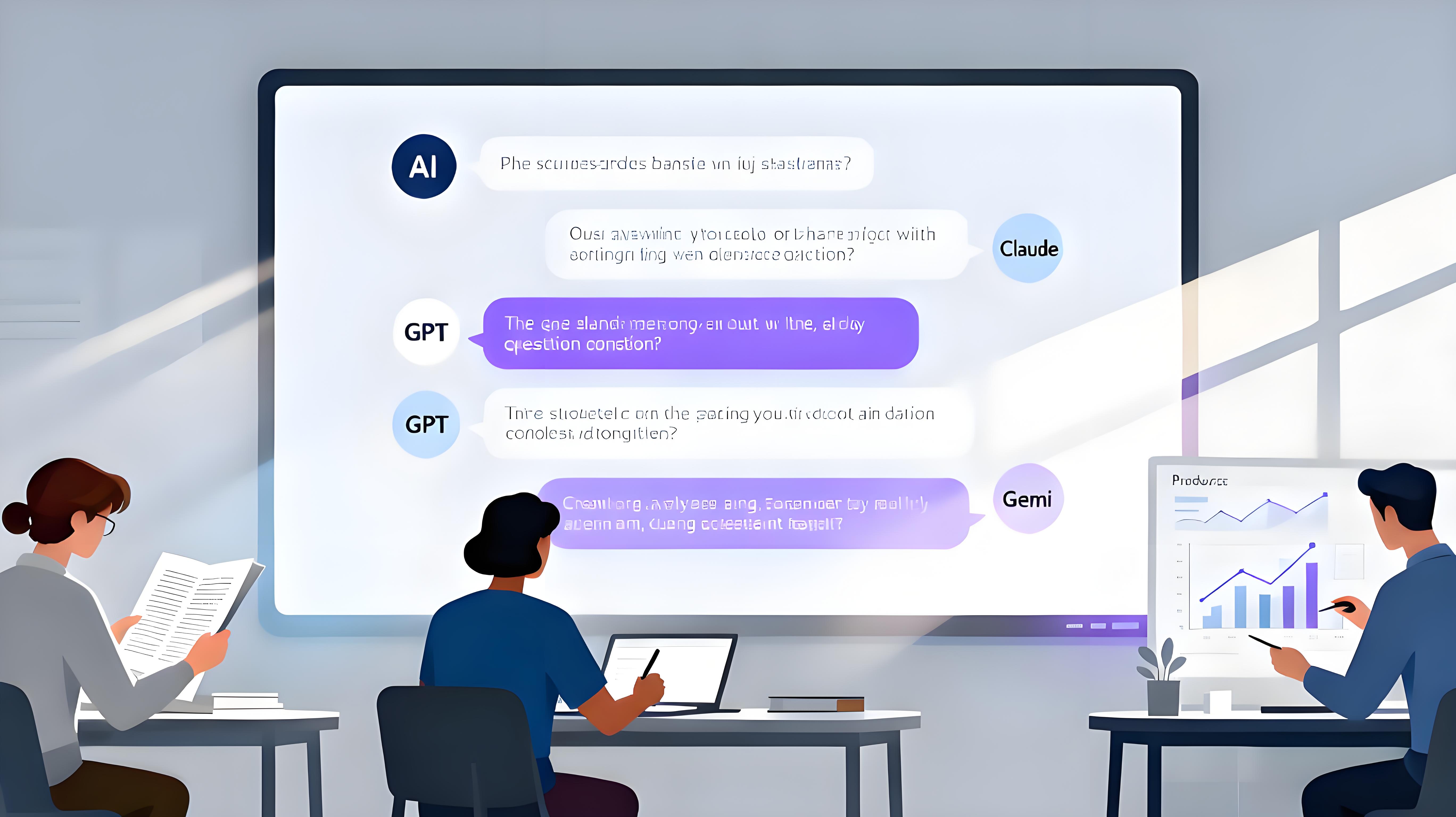
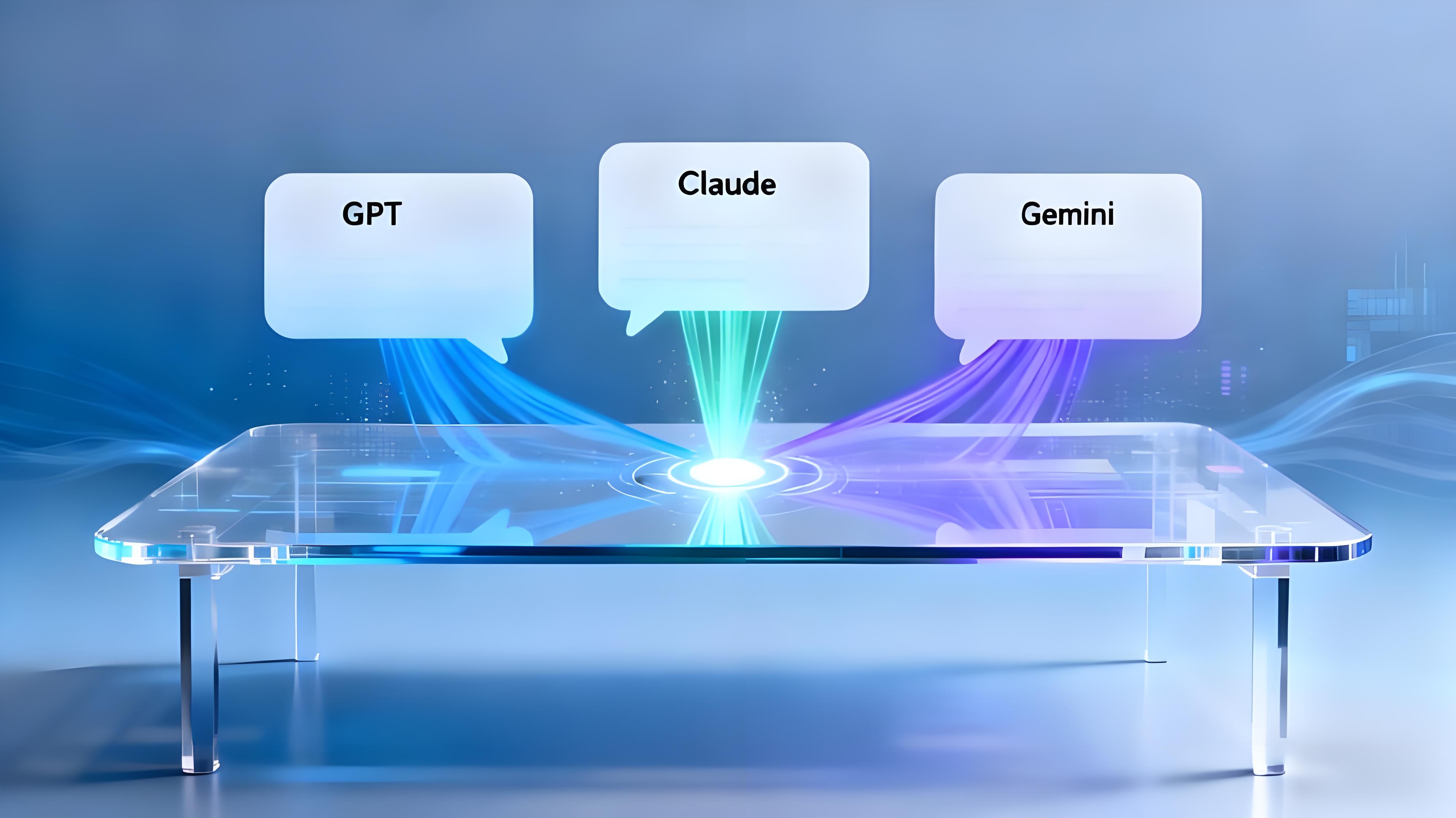
Last week, I had coffee with a friend who is an international student. He complained that his advisor always said his analysis was "superficial" when he was writing papers. I asked him how he solved this problem, and he said, "I just use GPT, but then my advisor asks, 'What year was that case study from?' and I can't answer." Later, he used DiffMind and found that GPT, Claude, and Gemini provided completely different answers—GPT's logical framework was very solid, but the cases were old; Claude's storytelling was strong, but the data was vague; and Gemini used a "young person's perspective" but was not rigorous enough.
It's not that you're using AI incorrectly, it's that you're not letting AI "talk more."“DiffMind acts like a "thinking magnifying glass," allowing you to hear the voices of different AIs simultaneously, avoiding the limitations of "walking with one eye."
1. Problem Scenario: Why do you always feel that AI is "not quite there"?
Those using AI for the first time might think, "Just choose the smartest model." But the reality is:
- When writing papers, GPT can outline but lacks case studies, Claude can tell stories but lacks data, and Gemini can use memes but has rigid logic.
- When developing a solution, DeepSeek is very accurate in calculating costs but doesn't know how to communicate effectively, while Claude writes heartwarming copy but doesn't mention inventory risks.
- When filming videos, Gemini's jokes were popular but lacked emotion, while GPT's analysis was rational but not interesting enough.
A single AI is like a "worker who only knows one tool".“They can lay the foundation, but they can't build a skyscraper that's "full of life."
II. DiffMind in a nutshell: A multi-model AI comparison workbench, letting "thinkers" of different styles work for you.
DiffMind isn't a "replacement for GPT/Claude," but rather allows you to bring out their "different personalities" in one window. GPT excels at logical frameworks, Claude at emotional resonance, and Gemini at meme-based dissemination—you don't need to remember "which AI is good at what," just ask questions, and let DiffMind "compare, filter, and piece together the answers" for you.
3. What specific problems can DiffMind solve for these three types of people?
1. International students: No more getting stuck on your thesis, no more switching back and forth!“
Real pain pointsThe single-model logic is rigid, lacks supporting cases, and the student cannot answer the tutor's questions.
When Claire Wu (an international student) wrote about "The Impact of the Metaverse on Education," GPT provided "sub-arguments + data," but the case study was from 2020; Claude discussed "VR classroom case studies," but the data sources were vague; Gemini started with "jokes about students playing VR in class," but lacked academic rigor. She combined the three answers: GPT's logical framework + Claude's specific case studies + Gemini's youthful perspective. After reading it, her tutor said, "This is 10 times more solid than the previous one."
2. Content creators: No more creative blockages, no more staring blankly at a document!“
Real pain pointsA single AI is prone to "exhausting its ideas," and as it writes, it ends up with only one style.
When Ava Fang (a popular online influencer) shoots short videos, she always worries about "running out of creative ideas." For example, when writing a script on "Rejecting Involution," she used Gemini to create 10 short clips, but her team felt they were "too ordinary and no one would share them." She then used DiffMind to ask, "Write a 30-second Douyin script on 'Rejecting Involution' for college students." GPT wrote "A rational analysis of the harms of involution," Claude wrote "An emotional story about 'Flowers by the roadside not blooming earlier than anyone else,'" and Gemini wrote "An interactive meme about 'Dare to @ your involutionary deskmate?'" She chose GPT's logical framework, Claude's emotional resonance, and Gemini's interactive guidance. The script received 20,000 shares the day after it was released.
3. Product & Business Analysis: The current approach is one-sided; we can no longer rely on "technology dictating costs, and marketing dictating communication."“
Real pain pointsA single AI only understands its own domain and ignores "multi-dimensional balance".
When Leo Park (product manager) was working on a "pet trendy products" plan, he first used DeepSeek to calculate costs and found that the collar supplier's quote of 200 yuan exceeded the budget. Then he asked Claude to write the copy, but was criticized for "not considering whether young people would buy it." He used DiffMind to ask for a "marketing plan for pet trendy products with a budget of 500 yuan." GPT suggested "wholesale collars on 1688 and KOC advertising on Xiaohongshu, with a total cost of 480 yuan." Claude wrote "emotional copy of 'pets and humans wearing the same style,' emphasizing that 'pets can also be trendy icons.'" Gemini suggested "'Shan Hai Jing mythical beast stickers' + 'collecting cards,' making young people pay for 'collecting cards.'" He pieced together GPT's cost breakdown, Claude's emotional selling points, and Gemini's communication strategies, and the plan passed the technical review and was even forwarded by the marketing department as a "case study of young user preferences."
IV. Using DiffMind vs. Not Using DiffMind: The difference isn't efficiency, but the "completeness of thought."“
When not using DiffMind:
- You will only ever get a "one-sided answer from a single model", such as a paper without case studies, a script without points of dissemination, or a solution without data;
- When faced with contradictions (such as "one AI says the cost is too high, while another says it will sell like hotcakes"), you can only "gamble based on your gut feeling," which will either waste time or lead to a pitfall.
- The prompt I spent two hours writing might not have been able to get a satisfactory answer because it "didn't cover the advantages of multiple models."
After using DiffMind:
- You can "integrate multiple perspectives at once," for example, a paper can include logic, case studies, and a youthful perspective; a script can include humor, emotion, and interaction; and a solution can include cost, selling points, and communication strategies.
- When encountering contradictions, DiffMind will indicate "This model understands costs better" or "Where does that data come from?" You only need to "nod and choose a direction" without having to guess.
- Previously, it required "writing in three separate parts using three AIs and then spending an hour integrating them," but now a result that "gets everyone's approval" can be produced in just 10 minutes.
V. Conclusion: Multi-model perspectives lead to more stable judgments and more accurate directions.
DiffMind is not an "AI tool," but a "thinking assistant that helps you hear different voices." International students can use it to address insufficient case studies in their papers, creators can use it to break through creative bottlenecks, and product managers can use it to balance multi-dimensional solutions.You're not just "using AI," you're "letting AI break down the problem for you from multiple angles."“。
The next time you use AI, try DiffMind: let "thinkers" of different styles work together for you, and you'll find that the "correct answer" was already hidden in the differences between the different AIs.