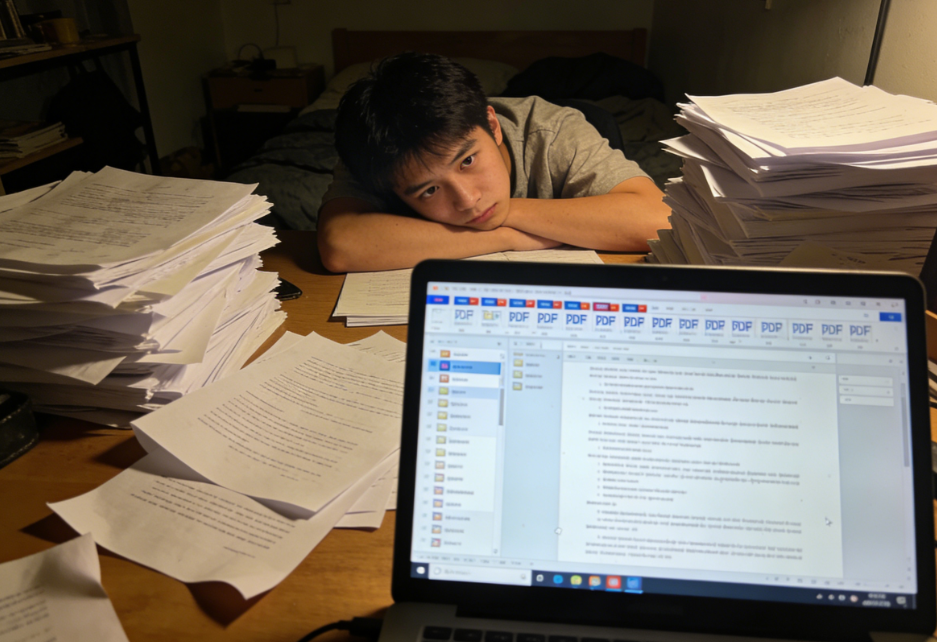
You've just finished writing a helpful article about "group assignment help for international students" and are ready to distribute it across the internet.
- On Douyin/Xiaohongshu (information feed): You titled it "Homework Tutoring Guide for International Students," but the number of views was dismal. Because this requires emotion, conflict, and curiosity.
- Searching on Google/Baidu: You changed the title to "Late Night Breakdown! What to Do When Your Teammates Are All Terrible?", but months later, the search engine didn't index it at all because it didn't include keywords that users would search for.
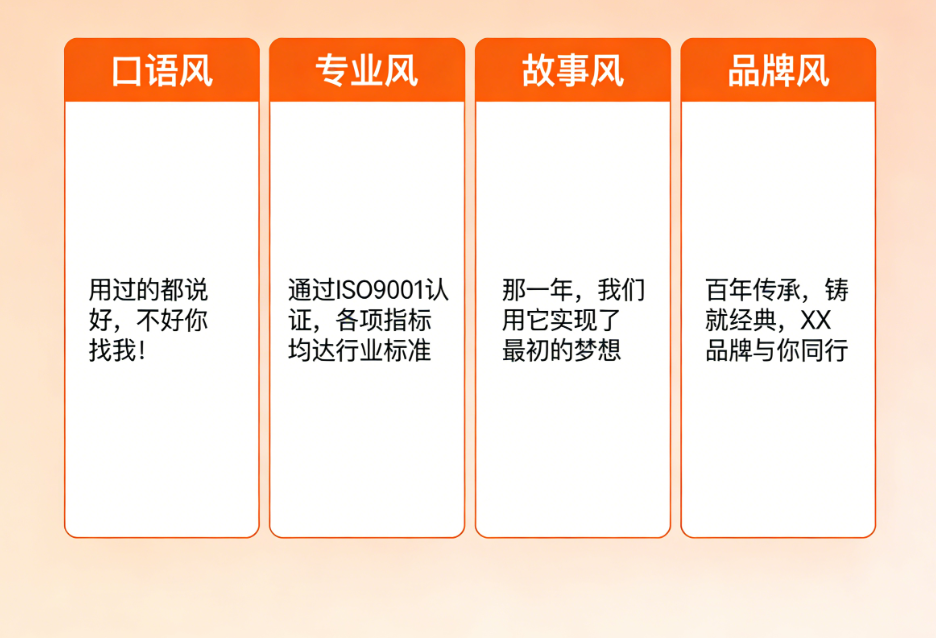
This is the "divided moment" for content creators:News feed titles aim to exploit "human weaknesses," while search engine titles aim for "precise matching." Manually making changes back and forth is not only time-consuming, but also prone to traffic restrictions due to inaccurate understanding of platform regulations (such as character limits and sensitive words).
Breaking down the pain points: Why are your headlines never good enough?
When using AI to assist in writing headlines, we often encounter the following problems:
- Clickbait Trap: AI can easily overdo things, creating sensational headlines that might get high click-through rates, but users who come in find the content doesn't match the description, leading to a very high bounce rate and negatively impacting the account's ranking.
- The search titles are too boring: In an effort to cram in keywords, the titles become like instruction manuals, offering no incentive to click.
- Decision paralysis: Fifty headings were generated, but I don't know which one is correct. SEO and Ad Headline Writing The optimal solution lacks scientific evaluation criteria.
My "Personal Safety Net Process": 3 Steps to Build an All-Around Title Library
To address this issue, I stopped letting AI generate data blindly and instead established a rigorous screening process.
Step 1: Decompose intent and define keyword pool
Before starting work, first identify two target audiences:
- The person recommended (Feed): While wandering around, it needs to be caught by a "hook". Keywords:Collapse, comeback, avoiding pitfalls, babysitting service, cutting-edge technology。
- People who actively search (Search): Come with questions and make clear commitments. Keywords:Tutorials, prices, institution comparisons, guides, templates。
Step 2: Have 6 AIs output 3 types of titles in parallel.
Don't just give one instruction. I usually ask the AI to produce three sets:
- Pure information feed version (10 items): It emphasizes emotional value, suspense, and visual impact.
- Pure search version (10 results): It focuses on long-tail keyword coverage and intent matching.
- Compromise version (10 items): Try incorporating emotional words into your keywords.
Step 3: Create a "Title Filtering Table"“
After receiving 30 titles, we scored them using the following criteria:
- Keyword coverage: Does it contain core keywords?
- Differentiation: An angle that our peers haven't used before?
- Credibility: Does it resemble a scam?
- Platform compliance: Are there any prohibited words?
DiffMind Overcoming "Inspiration Desire" Through Multi-Model Comparison“
Manually switching between different AIs to write these 30 headings is extremely inefficient. Using... DiffMind Such AI headline generator comparison toolThis process can be completed extremely quickly.
1. Parallel generation: Avoiding a single style
ChatGPT is often logically rigorous but somewhat bland, Claude excels at subtle emotional expression, while Gemini or Llama may have unexpected creative phrase combinations.
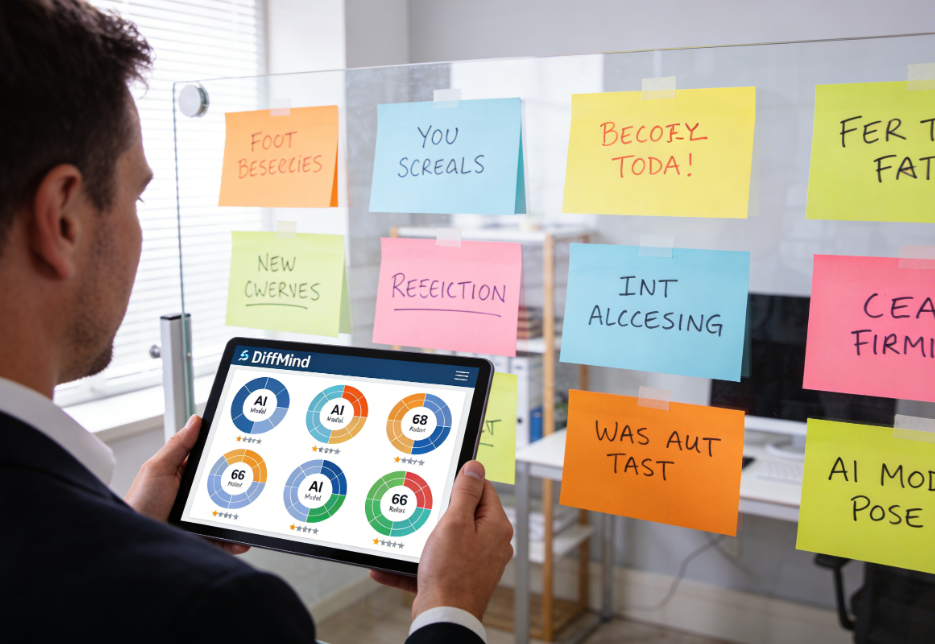
- Practical application: Enter "Brief" in DiffMind and you'll see six different interpretations of "feedback headlines" from six different models. You'll instantly realize that Claude captured the most poignant pain point, while ChatGPT provided the most precise keyword combinations.
2. Enhanced Question Query: Force Output of "Metadata"“
A simple list of titles is difficult to evaluate. Using DiffMind's "Question Augmentation," I required each model to include a description when generating a title:
- Applicable channels: (For example: suitable for Xiaohongshu covers, but not suitable for WeChat official accounts)
- Commitment Points: (e.g., promise to learn in 3 minutes)
- Potential risks: (For example: slight exaggeration, needs to be paired with a high-quality cover image) In this way, what you get is not a bunch of text, but a series of...Decision Analysis Report。
3. Quick Assembly: Assemble the "Hexagonal Warrior"“
By using a comparative perspective, you can perform "gene editing":
- 取 Model A The emotional word ("breaking down in the middle of the night").
- 取 Model B The core keyword is "homework tutoring for international students".
- 取 Model C Special symbols for typography (【】+ Emoji). Final output: "Late Night Breakdown ?? Homework Tutoring for International Students [A Guide to Avoiding Pitfalls] - This Article Saved My GPA!" - This post generated both search keywords and clicks in the news feed.
Conclusion
In an algorithm-driven era, the title is the "face" of the content. Don't entrust this key to random luck. Through meticulous... AI marketing copy (multi-model AI marketing copy) Workflow, and with the help of DiffMind With its parallel comparison capabilities, you can mass-produce high-quality titles that understand both algorithms and human nature, ensuring that good content is no longer buried.