
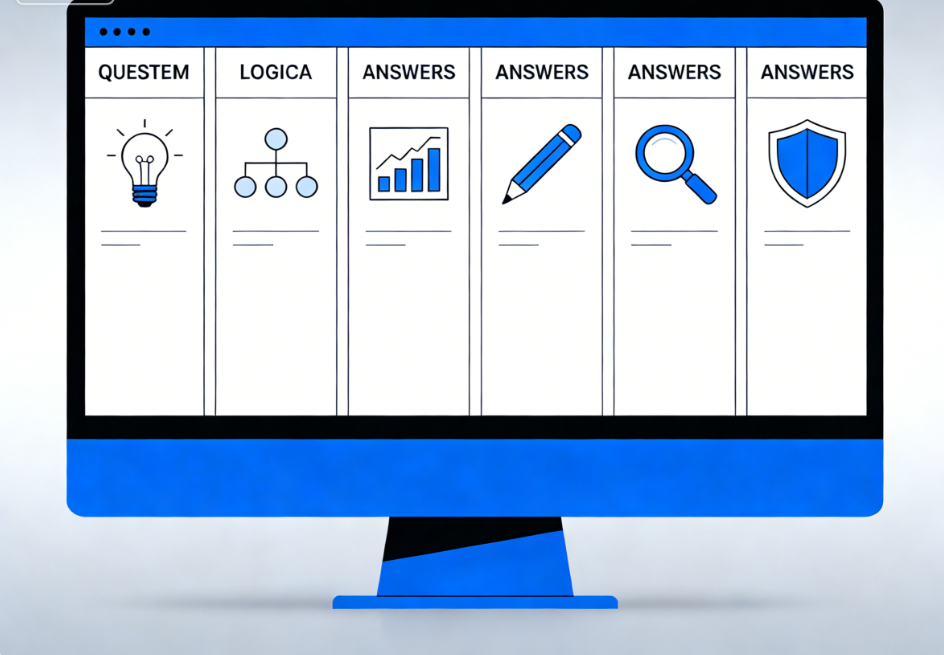
Benefit 1: Multiple solutions to the same problem, quickly achieving "more comprehensive coverage of approaches".“
A single model often gives you "a path that seems smooth," but you don't know if there are better paths. The value of displaying multiple models on the same screen is:Open up space with differences。
- In a learning context: for the same concept, some models excel at analogy, some at derivation, and some at examples. You can quickly find the version that best suits your understanding.
- In a writing context: on the same topic, some people are better at creating titles, some are better at building structures, and some are better at writing memorable sentences. You can "choose and combine the best".
- In a given scenario: with the same goal, some focus on growth, some on branding, and some on risk control, you can more quickly develop a "multi-dimensional balanced" solution.
You didn't get 6 duplicate answers, but 6 different roadmaps.It offers a more comprehensive perspective and fewer blind spots.
Benefit 2: Replacing "belief" with "comparison" significantly reduces the probability of being misled by a single answer.
Many people's pain point when using AI is that they are confident in their output, but they cannot judge whether it is correct or complete.
The key advantages of multi-model comparison are:Consistency and disagreement are signals in themselves.。
- When 6 AIs are highly consistent on key conclusionsThis usually indicates that the direction is relatively stable, and you can focus your energy on "implementation details and expression optimization".
- When 6 AIs show significant disagreementThis is a reminder that "the problem may have limitations or points of contention," requiring you to provide background information, clarify boundaries, and introduce data or cite supporting evidence.
When you see disagreements on the same screen in DiffMind, you'll more naturally enter "verification mode" rather than being led by the fluent text of a particular model.
Benefit 3: Write a "usable draft" faster, instead of rewriting it repeatedly.
The hardest part of writing isn't going from 0 to 1, but rather going from "almost there" to "deliverable": the structure is disjointed, the key points are not highlighted, the tone is mismatched, and the content is not specific enough.
The efficiency of multiple models on the same screen is that:Receive multiple writing components at once, and then assemble them into the final draft.。
You can write in this "disassembled" style:
- Let Model A provide the article outline (for the most stable structure).
- Let Model B be the starting point (a stronger hook).
- Let the C model provide a more specific case study.
- Let the D model generate catchy quotes and headlines (to make them more engaging).
- Let the E model offer a counter-argument and supplement (for a more comprehensive viewpoint).
- Let the F model perform a more rigorous "nitpicking review".
Finally, by comparing, selecting, and merging in DiffMind on the same screen, you will significantly reduce the cycle of "writing a version and starting over".
Benefit 4: Enhanced questioning, allowing you to move from "asking a question" to "asking for an answer."“
The root cause of most low-quality outputs is not a flawed model, but rather that the questions asked are not "actionable" enough. DiffMind's question enhancement feature's core value lies in making your questions more "actionable."Automatically complete key elementsAnd guide you to keep asking questions until a concrete solution is found.
For example, if you ask "Help me create an event plan", you will often get vague templates.
Enhanced questioning will prompt you to complete the question:
- Prioritizing objectives (customer acquisition/conversion/user activation/brand: which comes first?)
- Audience profiling and scenarios
- Budget, timeframe, channels, and resource constraints
- Risk and Compliance Boundaries
- KPI definitions and debriefing methods
The result is that you are more likely to get "executable solutions" rather than "text that looks like solutions".
Benefit 5: Safer usage: Reduces omissions, lowers risks, and increases controllability
In real-world work and study, the risks associated with AI typically fall into three categories:Factual errors, unclear boundaries, implicit bias/inappropriate adviceMulti-model comparison can significantly improve safety and controllability:
- Cross-validationImportant conclusions should be drawn by checking whether at least 2-3 models are consistent.
- Risk ExposureDifferent models will indicate different risk points (compliance, privacy, public opinion, ethics, cost);
- Clearer boundary conditionsWhen the model provides different premises, you will be more proactive in clarifying "under what conditions it holds true".
For high-risk scenarios (interviews, project proposals, business plans, external content), this process of "comparing first, then merging, and then asking follow-up questions" is often more reliable than "directly adopting a single answer".
A practical method: DiffMind Used as a "multi-role group"“
If you're unsure how to divide the tasks among the 6 AIs, you can use this general configuration (suitable for most tasks):
- Structural OfficerFirst, build a framework and list the key points.
- Case Officer: Provide specific examples and details
- Data OfficerProvide indicators, definitions, and verification methods.
- Expression OfficerOptimize tone, wording, and readability
- oppositionProvide counterexamples, vulnerabilities, and alternative paths.
- ReviewerCheck logic, risks, omissions, and executability.
Simultaneous screen comparison + enhanced questioning = you can complete "brainstorming, reviewing, revising, and implementing" in one window.
Conclusion
“The significance of "six AIs answering simultaneously" is not that it gives you six times the information, but that it allows you to complete the task in less time:Covering more ideas → Identifying disagreements and risks → Merging the best solutions → Asking follow-up questions until it becomes feasibleDiffMind has streamlined multi-model comparison and question enhancement into a user-friendly workflow, making it suitable for learners and professionals who want to use AI more safely and efficiently.