Last week, I helped a friend who had just started a business write a fundraising plan. She only used ChatGPT: "GPT's framework is very smooth, the logic is clear, and it's divided into 'market analysis – user personas – profit model.' I showed it directly to investors." But the investors asked, "Where did the data come from? How did you determine these conclusions like '70% young users, 1TP, 3T'?" She was stumped—it turned out that GPT's "user personas" were generated based on "hypothetical data" and had no real research to support them.
This reminds me of myself six months ago: I always thought "one AI is enough," until I used GPT to write event plans. The logic was complete, but it was "too rigid." I switched to Claude for polishing, and the emotions were strong, but the "data was vague." Only then did I realize:A single AI is like a "worker with only one hand," while multi-AI collaboration is the key to the efficiency of a "team assembly line."。
The "blind spots" of a single AI: Why you can't rely on just one AI.
AI is not "omniscient and omnipotent". Its "brain" is determined by training data and algorithms, and it naturally has "capability boundaries".
1. Every AI has its "specialization": those with strong logic "lack empathy," while those with strong emotions "lack data support."“
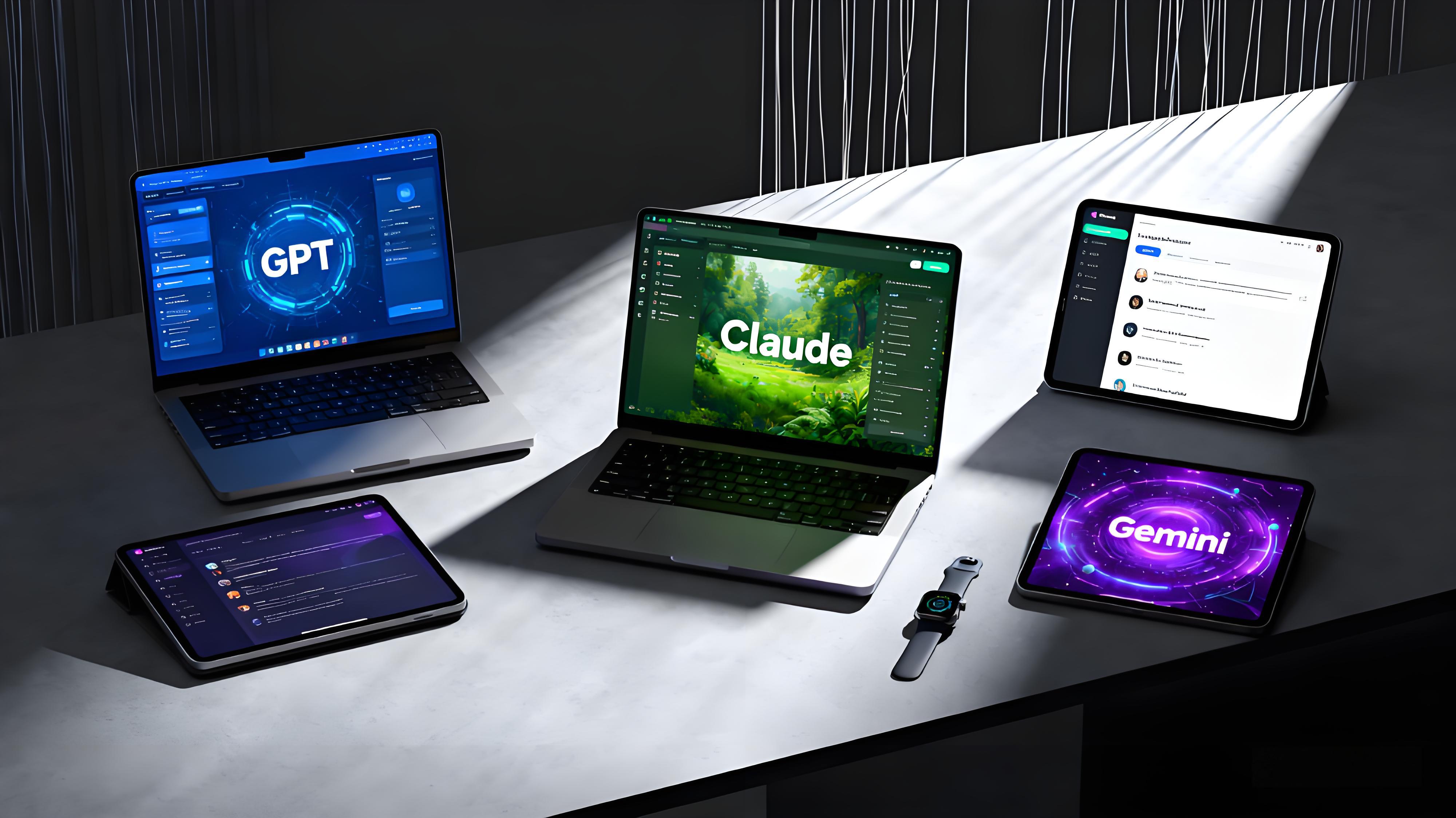
- GPTLike a "science student," they are good at building frameworks, calculating logic, and drawing conclusions. For example, when writing an "anti-involution activity plan," they will divide it into "goals - steps - budget," and the logical chain is as clear as building blocks. However, their weakness is that they are "too rational." When writing emotional copy, they will say "the more people participate in the activity, the better the effect," but they do not understand that "young people care more about being 'understood' than being 'persuaded'."
- ClaudeLike a "liberal arts student," they excel at digging into details, writing stories, and playing the emotional card. They previously helped a pet hospital write promotional copy, and they could write things like, "My hands were shaking when I fed my cat medicine at 3 a.m., just like the computer screen that was left on after working overtime—don't worry, we're here 24/7," which made pet owners want to share it. However, their weakness is that they are "too emotional." When analyzing the market, they would first talk about "the founder's story," then "product details," and only finally "data," which could easily break the logical chain.
- GeminiLike an "internet person," they are good at following hot topics, playing with memes, and catching trends. When writing short video scripts, they can immediately think of "@Wang Juan, please keep this anti-rolling guide," using "slacking off anti-rolling" jokes to make young people feel that "this AI understands me." However, their drawback is that they are "too detached." When calculating the budget, they may only write "total cost of 10,000" without explaining "where the money was spent," and the data details are vague.
Focusing solely on one AI specialty can lead to neglecting other aspects of your work.“Using GPT to write emotional copy is like "drawing with a ruler"; using Claude for data analysis is like "calculating costs with a paintbrush".
2. The "illusionary risk" of a single AI: It may "fabricate answers" without your noticing.
AI's "hallucination" is more prevalent than you might imagine. Once, a GPT-generated article described a celebrity's charity event, detailing how the celebrity "donated supplies to a mountainous area and interacted with children for three hours." However, it was later discovered that the celebrity hadn't actually gone to the mountainous area; it was a "fake itinerary generated by AI."
Even more insidious is the "data illusion": GPT writes "new energy vehicle sales increased by 501 TP3T in 2024", but the actual data may be "an increase of 201 TP3T"; Claude writes "a certain brand's user repurchase rate is 301 TP3T", but the actual repurchase rate may only be 151 TP3T.The "answer" from a single AI is like a "map without anchors"—you don't know if it's correct, let alone where it's wrong.。
Multi-AI Collaboration: Let each AI "do what it does best," doubling efficiency.
The core of multi-AI collaboration is not "using more tools", but "letting each AI play to its own 'expertise', and you acting as the 'integrator'".
1. "Division of labor and collaboration": Processing tasks like an "assembly line".
Breaking tasks down into "small modules" and having different AIs "manage a segment" while you are responsible for "assembling and verifying" will exponentially improve efficiency.
For example, writing a financing plan can be divided into 4 modules:
- Market Analysis Module→ To DeepSeek: “Use 2023 data to analyze the market size, user demand, and competitive advantages and disadvantages of the ‘battery swapping model” for new energy vehicles“ (DeepSeek calculates data accurately and excels at ”cold data”);
- User Profile Module→ To Claude: “Use 100 real user interviews to summarize the ‘3 pain points that battery swapping users care about most’ and describe them in a story-like way” (Claude is good at “emotional details”);
- Profit Model Module→ To GPT: “Compare the costs, risks, and benefits of the two profit models, ‘B-end cooperation‘ and ”C-end membership“, and illustrate them with data charts” (GPT excels at “logical breakdown + data visualization”).
- Hotspot Combination Module→ To Gemini: “Find the hot topics of ‘new energy policy’ and ‘battery swapping technology breakthrough” in 2024, and analyze how to leverage them for marketing“ (Gemini excels at ”grasping trends + playing with communication”).
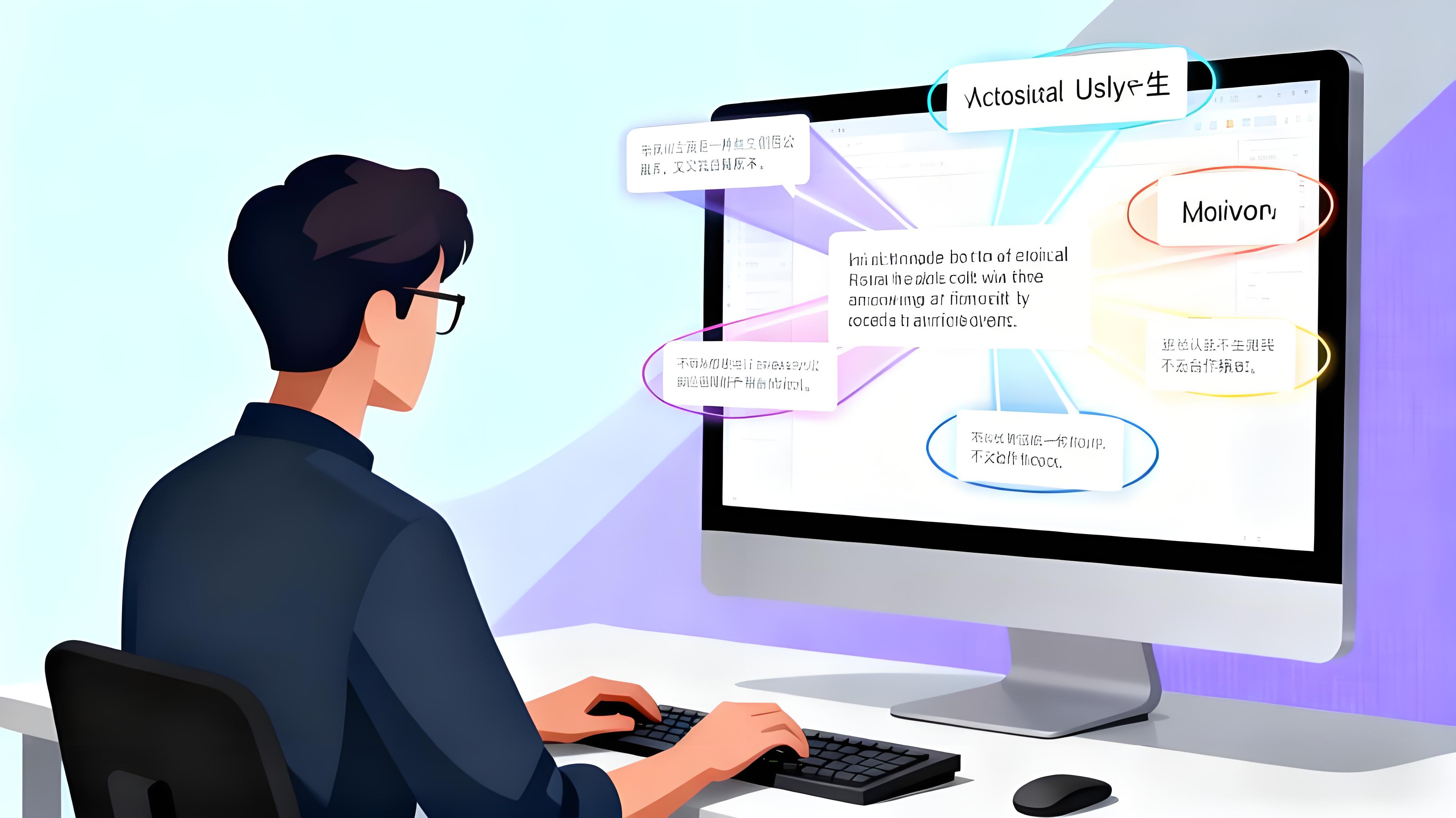
Finally, using DiffMind to "merge" the outputs of the four modules into a complete plan, you'll find that: the market analysis is "data-accurate," the user profiles are "compelling," the profit model is "logically clear," and the integration of trending topics "has a point of dissemination"—this is the power of "multi-AI division of labor":Each step is handled by the "most capable AI," so you only need to "integrate" rather than "write from scratch."“。
2. "Verification-based Collaboration": Like a "confrontation," it helps prevent AI from "making mistakes."“
Another value of multi-AI collaboration is "verifying answers from different perspectives," helping you to expose the "illusion of a single AI."
For example, when writing an "anti-involution activity plan," the outputs of the three AIs are:
- GPT: "Lectures + flyers + online check-ins, aiming to gain 1,000 followers" (logic is clear, but "too conventional");
- Claude: "Use emotional copywriting of 'anti-involution diary' to let users share their experiences of 'slacking off in learning', and then hold 'slacking off workshops' offline" (deep in detail, but "complex to execute");
- Gemini: "Initiated the '# Reverse Code' challenge, encouraging users to @friends with 'slacking off emojis' and then collaborating with campus KOLs to share it" (the topic is novel, but "data is difficult to track").
At this point, you don't need to "choose one," but rather "integrate strengths": use GPT's "follower growth goals," Claude's "emotional copywriting," and Gemini's "social topics," ultimately creating a complete solution of "online topics + offline activities + data goals."The "confrontation" of multiple AIs is essentially about helping you "nitpick"—GPT's "routineness," Claude's "complexity," and Gemini's "difficulty in tracing" are all resolved through your integration.。
3. "Capability Expansion": Breaking Through the "Knowledge Boundaries" of AI“
AI training data has a "time window." For example, GPT-4's training data ends in April 2023, and it may not be aware of "AI regulatory policies" or "latest technological breakthroughs" in 2024; Claude may not be sensitive to "popular memes in 2024."
Multi-AI collaboration can "fill in knowledge gaps": for example, when writing a "2024 Technology Trends Report", GPT can explain "2023 data and logic" (comprehensive knowledge), Claude can supplement "details of the impact of technology on ordinary people's lives" (emotional resonance), Gemini can find "the hottest technology products in 2024" (new hot topics), and finally DeepSeek can verify "whether the data is outdated".Multiple AIs are like "prisms," each reflecting different "information dimensions," and only when combined do they form a complete "picture of reality."“。
In conclusion: Collaboration among multiple AI systems is not about "piling up tools," but about "upgrading your mindset."“
I used to think that "multi-AI collaboration" meant "using more tools to make myself more tired," until I discovered:When each AI focuses its efforts on its own area of expertise, you are freed from repetitive tasks and can concentrate on higher-value judgments and integration.“。
DiffMind Make this collaboration simpler: open multiple AIs in one window simultaneously, assign tasks by module, compare outputs in real time, and integrate advantages with one click. It doesn't "replace your thinking," but rather "let you and AI think together"—you are responsible for "defining the problem," the AI is responsible for "solving part of the problem," and finally you use "critical thinking" to turn these "partial answers" into a "complete solution."
The ultimate goal of multi-AI collaboration is not "using more AI," but rather "using the differences in AI to push the boundaries of our own capabilities."“The next time you feel that "one AI is not enough", you might try having multiple AIs "team up", and you can be the "commander who commands the team".