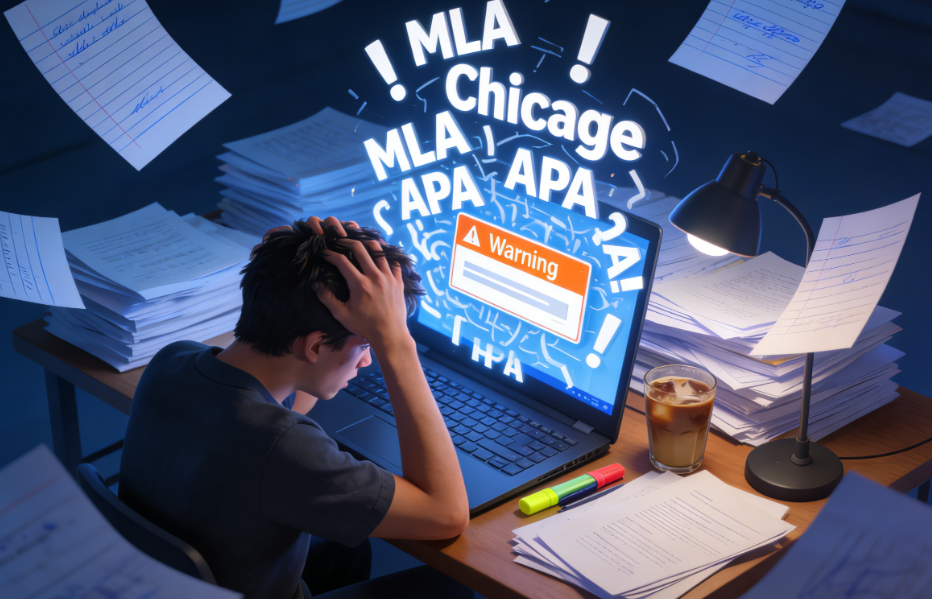
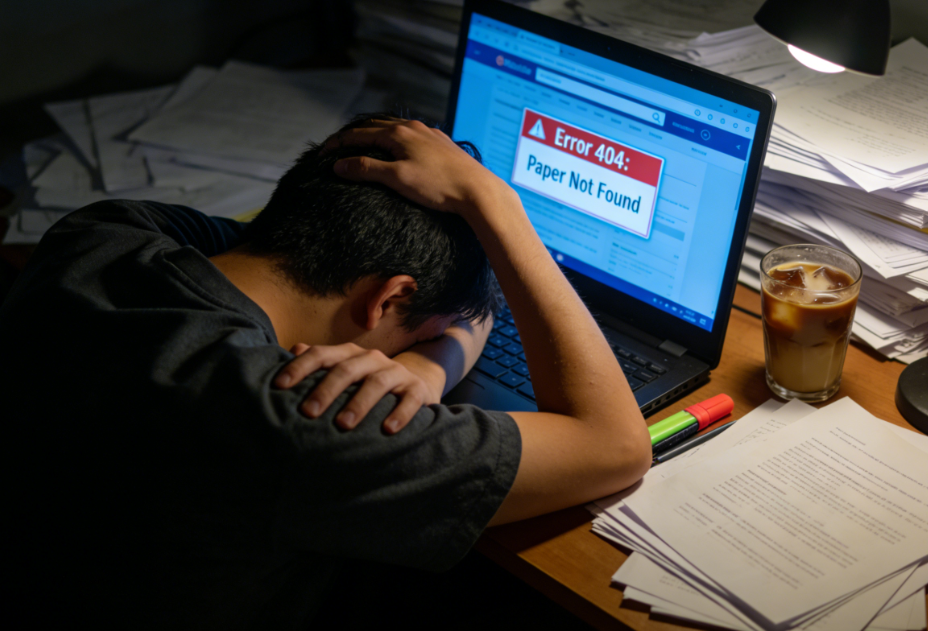
Have you ever experienced this moment of despair?
At 3 a.m. the night before the deadline, you're making final formatting adjustments when you suddenly feel like checking a reference. You copy the title and search it on Google Scholar—No such article foundYou thought it was a network card issue, so you tried different library databases, but it still didn't work. A cold sweat instantly broke out on your back: Where did this citation come from?
Or an even more frustrating scenario: Your tutor comes to the office during office hours, holding your essay, pointing to a line in the bibliography, and asks, "This article is very interesting, but I can't find it on the journal's website. Could you send me the PDF?"“
At that moment, I really wanted to disappear on the spot.
In academia, "fake references" not only mean a zero grade, but can also be considered academic misconduct. Often, we don't intentionally falsify data; rather, messy notes, incorrect formatting, or over-reliance on unreliable tools cause citations to become "ghosts."
Breaking it down: How did your citation become "fake"?
To solve the problem, we first need to know where the "poison" came from. Here are some common pitfalls international students often fall into:
- A jumbled mess of notes caused by "fragmentation": Writing a paper can take several weeks. In the early stages, I would jot down a point of view while reading literature, but forget to note the full author or year. When it came time to write the manuscript, I would piece it together from memory or attribute Zhang San's point of view to Li Si, resulting in a mismatch between the literature information and the original text.
- Secondary citations were not marked: You see B's point in A's article, think it's great, and directly list B in the references, pretending you've read B's original text. If your advisor checks B's original text and finds the page numbers don't match, or that B didn't actually say that, this becomes a serious citation violation.
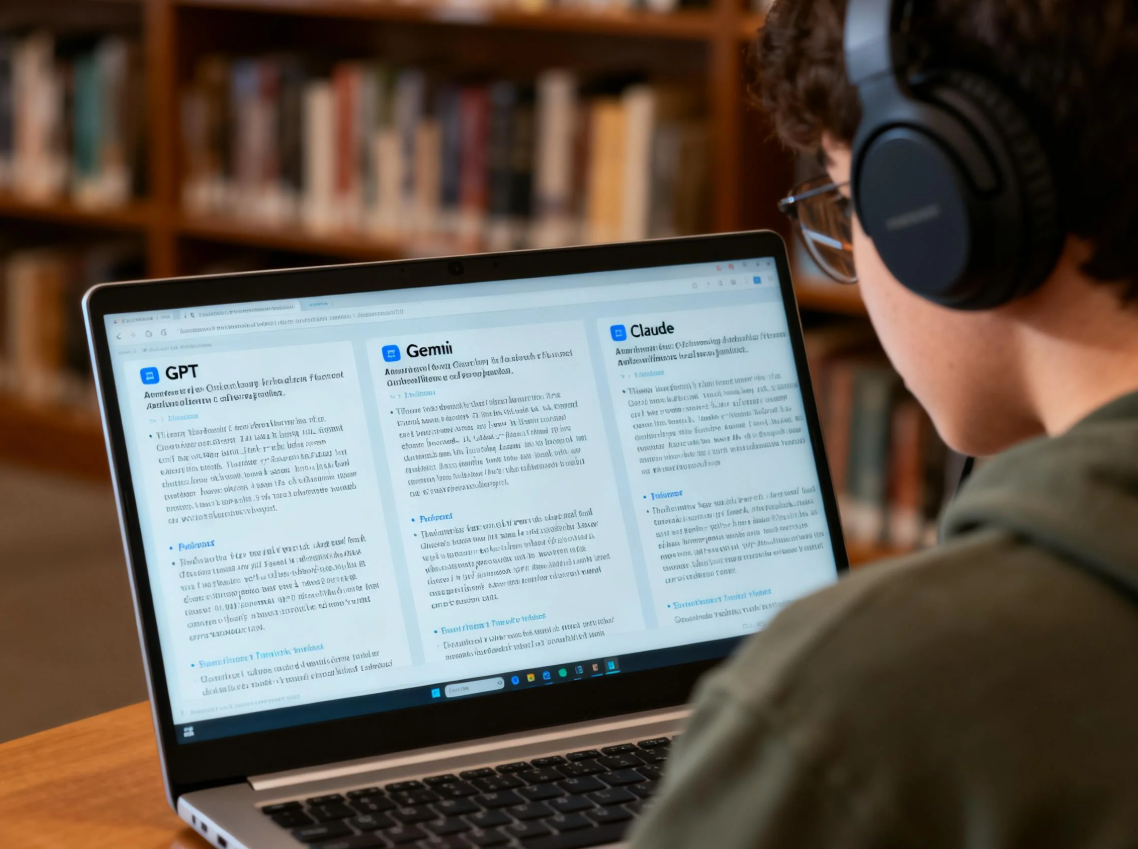
- The "illusion" of automated generation tools: Many AI writing aids (especially non-professional general-purpose models) nowadays spout nonsense with an air of seriousness. They can fabricate seemingly authentic authors, years, and even create a non-existent DOI (Digital Object Unique Identifier).
- A hodgepodge of formats: Using different formats like APA and MLA interchangeably can lead to misaligned volume, issue, and page numbers. To a supervisor, this extreme lack of formatting makes it look like a fabricated, fake document.
Personal safety net process: A manual self-rescue guide
Before submitting to Turnitin, please be sure to perform a manual "mine-clearing" process. Although it's tedious, it can be a lifesaver.
- Check each of the five elements one by one: Go to your Reference List and check each item:Author, Year, Title, Source (Journal/Publisher), Volume/Issue/Page。
- Ensure traceability: Don't just look at whether the title is correct. Try putting the DOI or title of each entry into Google Scholar. If you can't find it, or if the search result is a completely different article, delete it immediately or search again!
- Honest handling of secondhand citations: If you can't find the original text for B, just cite A directly. Mark it in the text as: "(as cited in A, 2023)". While this might make you seem like you haven't read enough, at least it's honest and won't be considered plagiarism.
- Clean up duplicates and formatting: Check if the same article appears twice (e.g., once only the first letter, and once the full name).
Advanced solution: Use DiffMind Batch scanning and cleaning
Manually checking dozens of references can be incredibly tedious, which is where professional academic aids come in handy. DiffMind That's when it comes in very handy. It doesn't help you "compile" literature, but rather helps you "verify" literature.
- Batch scan, mark "high-risk" items: Import your Reference List into DiffMind, and it will compare it against a database. If a reference is missing key information (such as page numbers) or cannot be found in the database (it may not exist), the system will immediately mark it in red as a warning. This helps you quickly identify "ghost references" created by AI illusions or note-taking errors.
- Automatic completion suggestions and formatting consistency: For genuine documents with incomplete information (such as only the title and author), DiffMind can automatically suggest completing the DOI, volume number, and publication year. It also supports one-click format unification (APA 7, MLA 9, Chicago, etc.) to avoid misunderstandings of "fake documents" caused by mixed formats.
- Cross-check for consistency between in-text citations and lists: This is the most easily overlooked step. DiffMind can help you scan the entire text to ensure that it contains...
(Smith, 2020)There will always be a corresponding entry in the list at the end of the article, and vice versa. This reduces the academic risks associated with "missed citations" or "excessive citations".
Self-Help Checklist: The Last Line of Defense Before Submission
- Traceability: The original link/PDF for each document can be found in the database.
- Spelling consistency: The author names cited in the text are exactly the same as those listed at the end of the text.
- Consistent years: This is the easiest point to get wrong, so please make sure to check it.
- Second-hand reference: For those who haven't read the original text, they are marked "quoted" or "as cited in".
- Standard format: Use only one citation format (such as APA 7) from beginning to end.
Conclusion: While citation checking may be tedious, it's the most rigorous aspect of academic writing. Don't let a single sloppy, fake reference ruin thousands of words you've spent countless nights writing. Utilize tools like DiffMind to aid in self-checking, ensuring your reference list is clean, accurate, and flawless.