Last week, I helped Xiaolin, a history graduate student, revise his thesis. He used GPT to write about "the division of labor in handicrafts in Bianjing (Kaifeng) during the Northern Song Dynasty," concluding that "Bianjing had 12 specialized handicraft districts, with an average of 30 workshops per district." I asked him to rewrite it using Claude, who said, "According to the *Dongjing Menghualu*, Bianjing only had 8 handicraft districts along 'east and west lines,' and 'the workshops were mostly small groups of 5-10 people; the claim of 30 workshops per district may be confusing data from the Southern Song Dynasty.'"“
Kobayashi was stunned: "The GPT is written in such detail, with every number clearly marked, how could it be wrong?"“
This is the dilemma many people face when using AI: a single AI's answer may seem "logically sound," but it can fall into a "cognitive blind spot" due to "training data bias" and "limitations of capability boundaries." DiffMind, as a "multi-model AI comparison platform," is helping more and more people solve this problem.A single question can be answered by multiple AIs simultaneously, allowing for side-by-side comparisons from different perspectives, transforming judgment from "single guess" to "comprehensive verification."“。
Method 1: Use "multi-model confrontation" to let the AI "explain its own logic".“
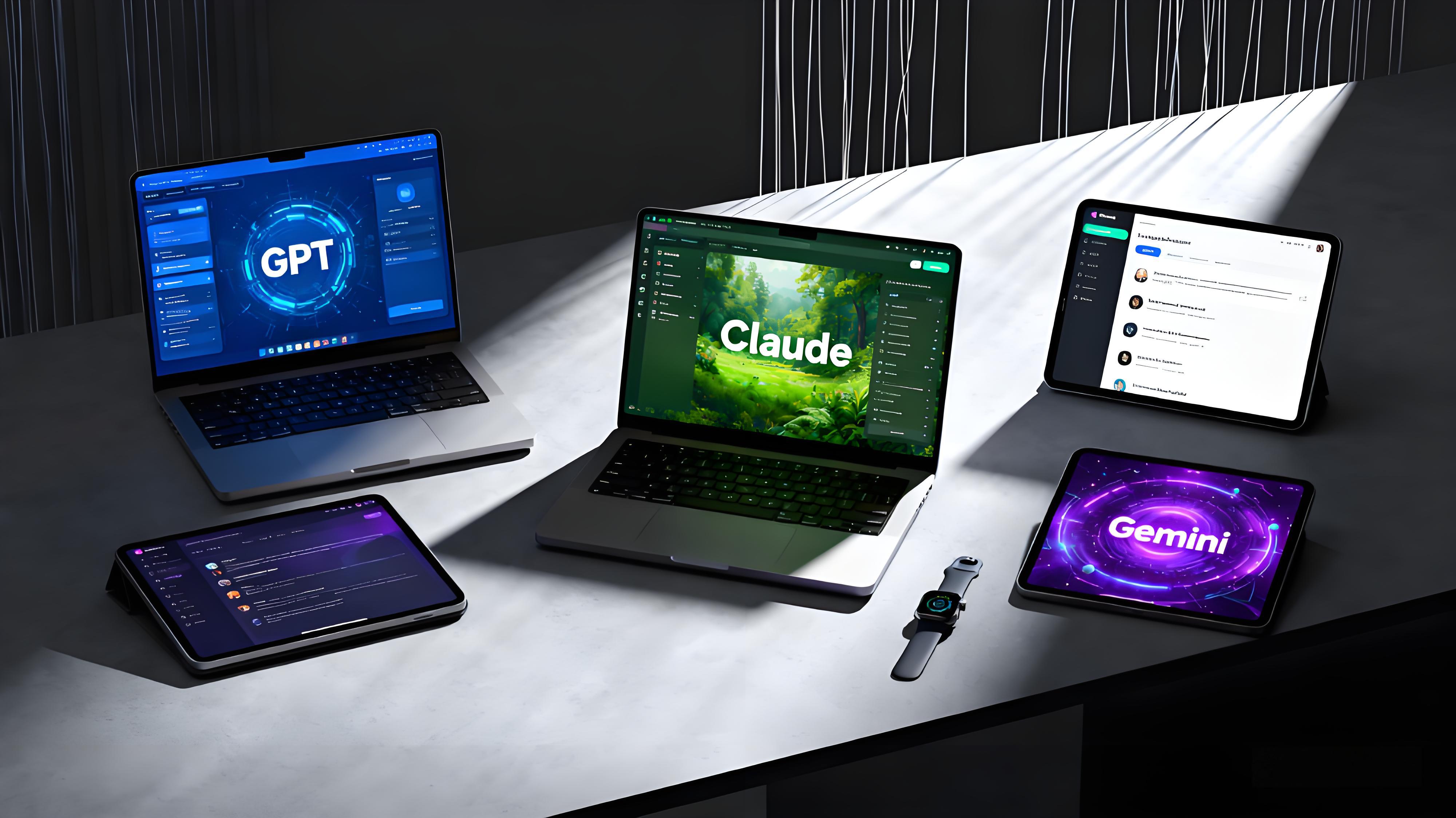
The advantage of a single AI is "quick answers," but its weakness is "one-dimensional perspective." For example, if asked about "reading techniques for the postgraduate entrance exam in English," GPT might say "use the 'keyword location method,' read the question stem first and then find the original text," Claude might say "combine 'sentence decomposition,' understand the main clause of the sentence first and then match the options," and Gemini might say "use the 'elimination method,' first eliminate obviously wrong options"—each of these three answers has its own emphasis. If you only believe one, it's like relying on only one person's testimony to judge a case.
DiffMind allows you to trigger these AIs simultaneously in one window. Input "postgraduate entrance exam English reading skills," and three answers will be displayed in real-time on the same screen: GPT's "keyword method" has clear steps, Claude's "complex sentence breakdown" provides specific examples, and Gemini's "elimination method" is highly practical. You can directly compare their "logical chains"—for example, GPT says "locate keywords in the question stem," but doesn't explain "how to determine if the keywords are accurate"; Claude's "complex sentence breakdown" is suitable for students with weak foundations, but "the breakdown speed is slow"; Gemini's "elimination method" is useful when "options are similar," but "it's easy to miss the correct option."
This kind of "multi-model confrontation" essentially allows AI to "expose its own thinking," and you can discover the "flaws in a single answer" from their differences—just like Xiaolin's paper, if GPT and Claude were to answer simultaneously in DiffMind first, they would not be misled by the erroneous data of "12 blocks."
Method 2: Use "screen-sharing workflow" to let AI help you "connect the dots" in your thinking.“
Many people use AI by switching back and forth between "asking questions → copying answers → organizing notes," which is inefficient and prone to missing information. DiffMind, on the other hand, is like an "AI workbench," where "asking questions → comparing → verifying → summarizing" are all done on the same interface, helping you turn fragmented thoughts into a "complete workflow."
For example, product manager Leo wants to analyze "the reasons for user churn." He enters "The user churn rate increased by 10% in Q3 2024, what are the possible reasons?" into DiffMind, and asks GPT, Claude, and Gemini to answer simultaneously.
- GPT lists three dimensions: "price, features, and services," and provides data charts.
- Claude cited "user interview records" and said that "30% lost users mentioned 'slow customer service response'";
- Gemini, on the other hand, focused on a hot topic: "After the platform update in June, there was a sudden increase in feedback that 'the operation process has become more complicated'."
Leo no longer needed to copy answers from different platforms; he could see them directly in DiffMind: GPT's "data dimensions" provided the framework, Claude's "specific user feedback" added details, and Gemini's "hotspot correlations" offered new perspectives. He could immediately identify "slow customer service response" as the most critical reason for churn, and then propose a solution to "optimize customer service response time in July"—this is the value of "screen-sharing workflows."Let AI help you connect inspiration, transforming scattered information into a complete solution in just one step.。
Method 3: Use "subscription-based invocation" to deliver top-tier AI capabilities "in one go".“
Many people think that "using multiple AIs is too troublesome," but DiffMind The "one-time subscription, simultaneous access to top global models such as GPT, Claude, Gemini, DeepSeek, and Qwen" completely solves the problem of "platform switching." You don't need to register different AI accounts separately, nor do you need to pay separately for each model. After subscribing on the official website (diffmind.ai), you can access the capabilities of all top models in one window—this is simply an "efficiency revolution" for people who need to use AI frequently.
Claire, an international student, once complained, "Before, when writing papers, I would use Google to search for information, GPT to write the outline, and Notion to organize notes. I had to switch between platforms 10 times a day, and the efficiency was so low it was unbearable." Now she uses DiffMind: "I just ask, 'Analyze the contradictions in the division of labor in the handicraft industry in Jiangnan during the Ming and Qing dynasties.' GPT provides the logical framework, Claude digs out historical details, and Gemini finds academic hot topics. All the information is on the same interface. When I'm rushing to meet a deadline, I feel for the first time—using AI can be so reassuring."“
Reliable AI needs to be verified from multiple perspectives.“
A single AI is like a "monocular telescope," seeing only a part of the scenery but always having blind spots; while DiffMind is a "prism," allowing you to see a more complete "truth" through the perspectives of multiple AIs. Whether students are writing papers, creators are brainstorming ideas, or product managers are analyzing requirements, DiffMind can help you "avoid the illusion of a single AI and seize opportunities from multiple perspectives"—after all, true AI capability is never about "making one AI always right," but about "using multiple AIs to help you get closer to being right."