
Why was my appeal email with error code 80% rejected instantly?
a lot of grade appeal email template They were ineffective because they violated the following rules:
- Emotional accusations: “"I think you're being unfair," "You didn't understand my assignment." (Professors are human too, and this can trigger defensiveness.)
- There's only grievance, no evidence: “"I really worked hard and stayed up many nights." (Effort does not equal output; the school only looks at results and evidence.)
- The reason given is not in accordance with policy: Use "I don't like this topic" as a reason, instead of "the grading did not follow the Rubric" or "force majeure".
- The timeline is confusing: It was written like a diary entry, and the judge spent a long time reading it without knowing what the main point was.
- The request is unclear: After writing for so long, you still haven't made it clear whether you want a "re-mark", a "resubmission", or a "withdrawal of charges".
Personal safety net process: A self-rescue guide from panic to order
An appeal is a battle of logic. Please follow these steps:
Step 1: Calmly study the "rules of the game"“
Don't write the letter immediately. Search on the school's official website. Academic Appeals Policy。
- Please confirm which category your situation falls into: Yes Procedural Error(Program error, such as incorrect addition of fractions)Mitigating Circumstances(Special circumstances, such as illness), or Academic Judgment(You generally cannot appeal simply because you are dissatisfied with your score, unless there is evidence that the scoring criteria were not followed).
- See clearly DeadlineIt usually takes only 5-10 business days.
Step Two: Organize Your "Evidence Package"“
Verbal statements are meaningless; evidence is king. Be prepared:
- Medical certificate: GP Note or counseling record (must cover the affected period).
- Event Log: News of breaking events, proof of traffic disruptions, etc.
- Email correspondence: Screenshots of previous communication with my supervisor regarding the assignment.
- Assignment Version: Edit history of Google Docs (proving that you wrote it yourself).
Step 3: Construct a "three-stage" appeal email structure
Don't write essays, write official documents.
- Header: Clear headings (e.g., Formal Appeal – [Course Code] – [Student ID]).
- Opening: Briefly state your identity and the purpose of the letter (I am writing to formally appeal the grade for…).
- The “Meat” (core logic):
- Background and Facts: Use a timeline to list what happened.
- Impact: How exactly did this event affect your performance?
- Remedy: What measures did you take at the time (such as contacting your advisor or trying to submit)?
- The Ask (Clearly State Your Request): Based on the above facts, I request… (Re-assessment / Late submission acceptance).
- Closing: Thank you for the time; stay professional.
Step 4: The Principle of Tone
Objective, Specific, and Verifiable. Never attack the professor, and never exaggerate or play the victim.
DiffMind Practical Application: Using AI to Help You Win "Logical Battles"“
In a state of extreme anxiety, it is difficult to write calm and objective words. At this time,DiffMind(Multi-model AI comparison tool) is your best "lawyer".
1. Enhanced Questioning: Transforming "Complaints" into "Appeals"“
You might just want to say, "I was sick that day and couldn't submit it." Using DiffMind...Enhanced Questioning,enter:
“"Please help me write an appeal email." Key facts: Two hours before the deadline, I suddenly developed acute gastroenteritis and have an emergency room certificate. Target: Requesting exemption from late submission penalty points. constraint: The quote regarding the school's 'Mitigating Circumstances' was formal, sincere, yet firm. AI will automatically translate it into a format that aligns with... academic misconduct appeal help A standard professional statement.
2. Multi-model comparison: Finding the most reliable tone
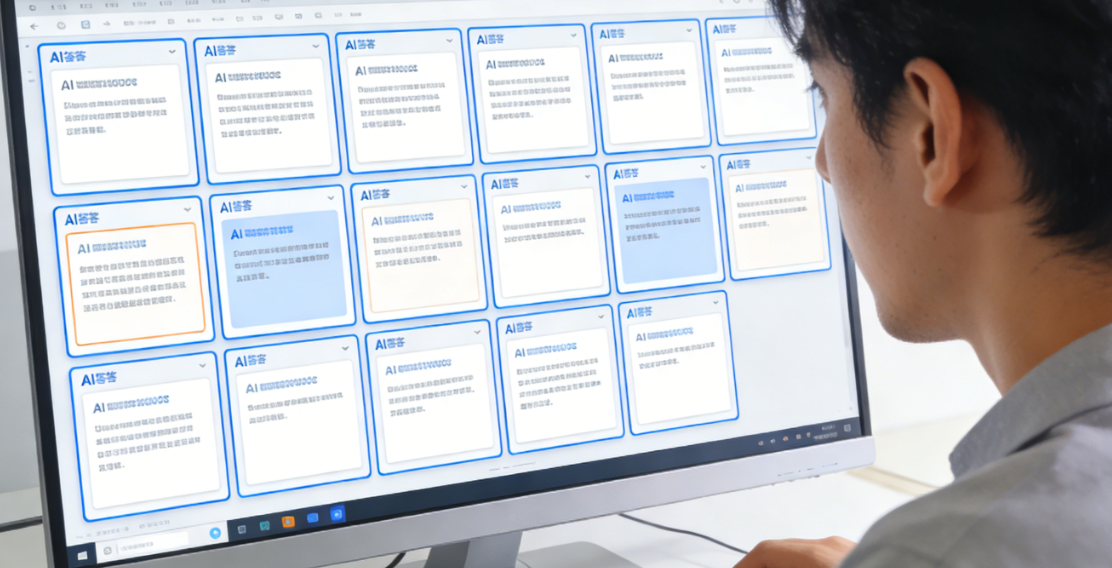
The tone of an appeal letter is difficult to strike: too soft and it sounds guilty, too hard and it sounds rude. In DiffMind, let... GPT-4o 和 Claude 3.5 Simultaneously generated:
- GPT-4o: It is logically sound and suitable for appeals that emphasize procedural errors.
- Claude 3.5: The tone is more empathetic, making it suitable for appeals due to illness or family changes. Practical skills: Compare the two versions and choose the one that clearly expresses the message and is easy to listen to.
3. AI simulates "appellants" to find loopholes.
This is the most crucial step.
- instruction: “"You are now a member of the university's Academic Appeals Board. Please carefully review this appeal email, identify any logical flaws, missing evidence, or inappropriate tone, and provide reasons for rejection." Through this "red-blue team" approach, you can address all potential weaknesses before sending the email, greatly increasing your chances of success.
Conclusion
Receiving a "Fail" is not the end of the world; it's simply an administrative issue that needs to be addressed. With careful evidence gathering and the powerful multi-model assistance of DiffMind, you can absolutely write a high-quality report. appeal letterRemember, the school isn't trying to make things difficult for you. As long as your reasons are valid, your evidence is solid, and your expression is clear, there's a chance your grades can be salvaged. Take a deep breath and start preparing your evidence now.