If the past two years were a "frenzy" for generative AI, then we are now entering a "cooling-off period." After the shock of ChatGPT's sudden emergence, users and the industry are beginning to face an awkward reality: AI is not always right, and it is difficult for us to know when it is making mistakes.
This uncertainty surrounding AI output has spurred new market demands. Users are no longer satisfied with simply "having an AI that can answer questions," but are beginning to seek "an accurate, objective, and verified answer." Against this backdrop, with...DiffMindThe emergence of multi-model comparison tools, such as the one exemplified by [the tool], marks a new stage in AI applications, moving "from generation to discrimination."
I. The Inevitability of Model "Black Box" and Data Bias
From a technical perspective, any large learning model (LLM) is a product of its training data. OpenAI has its data preferences, Google has its algorithm weights, and domestic models have the unique advantage of the Chinese language context. This determines that no model is an omniscient and omnipotent "hexagonal warrior".
- Knowledge gaps: Some models perform well in mathematical logic, but appear stiff in literary creation;
- Delay in delivery: Different models have different knowledge base deadlines, resulting in time lags in the interpretation of news events;
- Safety fence: Different manufacturers have different security strategies, which leads to inconsistent responses to the same sensitive questions.
This technological "non-standardization" makes relying on a single model a high-risk activity. The industry urgently needs a mechanism to overcome the shortcomings of a single model, and "multi-model aggregation and comparison" is currently the lowest-cost and most effective solution.
II. Aggregation Platform: The "Barrier Breaker" that Disrupts Ecosystems“
The current AI ecosystem is clearly fragmented. To get the best experience, users often need to maintain multiple accounts, pay for multiple subscriptions, and navigate between different web pages.
Platforms like DiffMind act as "middleware" or "aggregators" in the industry. They solve problems on two levels:
- Connection layer: By integrating mainstream models through APIs, the ecosystem barriers between various manufacturers are broken down, allowing users to access all top computing power through a single entry point.
- Experience layer: This unifies the previously fragmented interactive experience. This "one-stop" service aligns with the evolutionary trend of "simplifying" internet products—users always prefer fewer steps and more centralized information display.
III. Redefining Human-Computer Relationships: From "Human-Computer Dialogue" to "Human-Computer Review"“
The widespread adoption of multi-model comparison tools is subtly changing the way humans collaborate with AI.
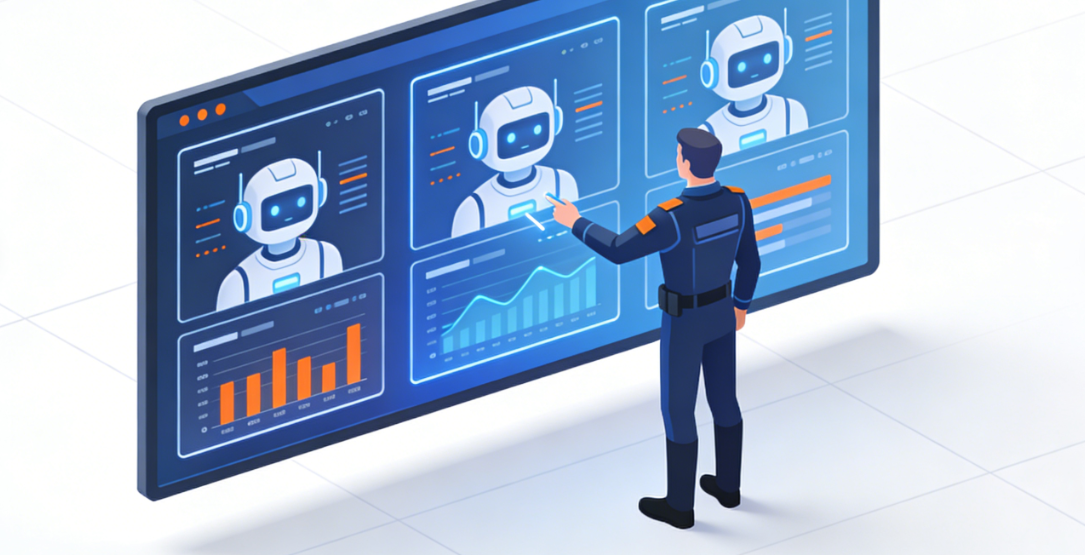
In the era of single-model comparison, humans were the "questioners" and AI was the "responders," a vertical and unidirectional relationship. In the era of multi-model comparison, humans have become the "reviewers" and "arbitrators," while AI groups have become "think tanks."
This shift in relationship has profound industry implications:
- It enhanced human subjectivity: Humans are no longer passively receiving information, but need to actively use their cognitive abilities to judge what is good and bad.
- This forces model manufacturers to improve: When comparisons become so easy, the merits and demerits of models will be laid bare. This will force model manufacturers to focus more on the accuracy and logic of their output, rather than just generation speed or text fluency.
IV. Explosive Growth in Essential Demand in Vertical Sectors
We predict that multi-model comparison will first become standard practice in the following vertical sectors:
- Education and research: The tolerance for error here is extremely low, making cross-validation a necessity.
- News and Media: Verification from multiple sources is necessary to avoid fake news.
- Medical Law: It is highly specialized and requires comprehensive advice from a knowledge base of different models.
DiffMind's current focus on learning and writing scenarios aligns with this trend. In the future, we may see more vertical applications based on "comparative logic."
V. Conclusion: Embracing a Future of "Multimodal Coexistence"
The AI industry will not converge on a single approach; the future will inevitably see a flourishing of diverse models. Different models will excel in different fields. For users, learning to use tools like DiffMind to manage multiple models will become a fundamental digital literacy skill.
In this era of information overload and difficulty in distinguishing truth from falsehood...“"Comparison" is the shortcut to "truth". Whoever can more efficiently leverage the differences between multiple models to aid decision-making will gain a competitive edge in the AI-enabled race. DiffMind represents more than just a tool website; it represents a more mature and rational paradigm for using AI.