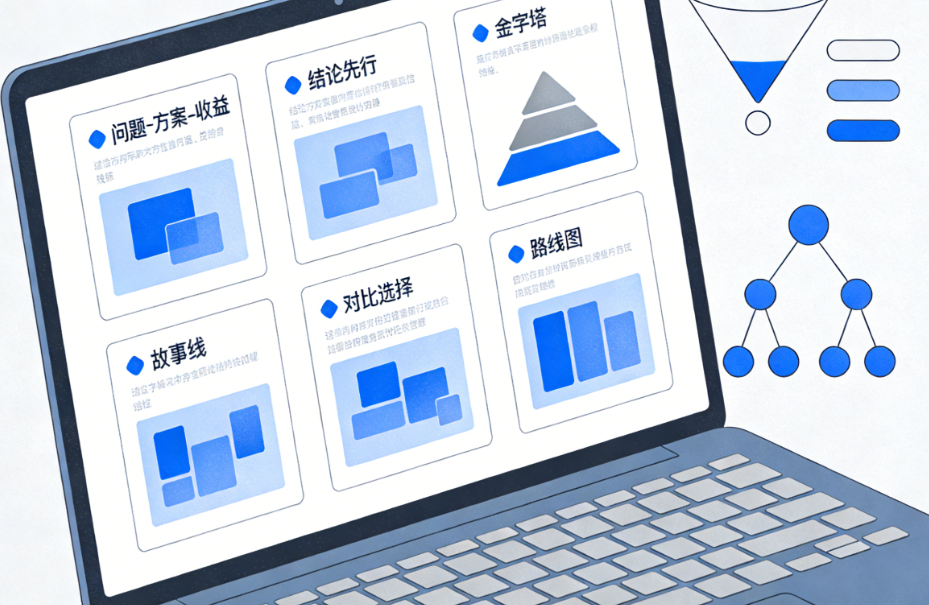

For most people, AI tools have moved from the initial trial phase to everyday practical use. The challenge now is no longer "how to use AI," but rather "how to use AI efficiently to produce high-quality results." Many users find that to get a satisfactory answer, they often have to switch back and forth between multiple platforms such as ChatGPT, Claude, and Wenxin Yiyan, repeatedly pasting prompts, which is not only time-consuming but also disrupts the thought process.
DiffMindAs a tool for aggregating and comparing multiple models, its core value lies in transforming a linear "serial workflow" into an efficient "parallel workflow." Below, we will delve into its core applications in specific scenarios.
Scene 1: Academic and Creative Writing – Breaking Free from Fixed Mindsets
What writers fear most is not a lack of writing talent, but a lack of ideas (Writer's Block). When you face a topic and your mind goes blank, a single AI can often only provide a standardized template.
DiffMind Practical Tips: Enter your research topic into DiffMind, such as "The Impact of Artificial Intelligence on Modern Education." You'll instantly see the different approaches offered by various models:
- Model A It may focus on technological ethics and privacy protection;
- Model B It may focus on the implementation of personalized learning paths;
- Model C It could be discussed from the perspective of the transformation of the teacher's role.
Value proposition: You don't need to rack your brains over three directions yourself; AI has already listed three possibilities for you. You can quickly determine which angle is more novel, or combine the arguments of A with the structure of B to create an article that is both in-depth and comprehensive. This "collision of multi-dimensional perspectives" is the best catalyst for sparking inspiration.
Scenario 2: Rapid Understanding of Complex Concepts – Building a Three-Dimensional Cognitive Framework
When learning new knowledge (such as quantum computing, blockchain, or complex philosophical concepts), explanations from a single source often have limitations. Some explanations are too obscure, while others are too simplistic.
DiffMind Practical Tips: Enter "Please explain the principle of zero-knowledge proof".
- You might find that a certain model is good at using the classic metaphor of "Ali Baba's cave" to explain things in a simple way;
- The other model provides a rigorous mathematical definition and application scenarios;
- The third model lists its advantages and disadvantages.
Value proposition: By reading horizontally, your understanding of this concept instantly becomes more comprehensive. You don't need to choose which teacher explains it best, because DiffMind presents the best explanations to you, complementing each other.
Scenario 3: Decision Support and Analysis – Reducing the Risk of Misjudgment
The accuracy and objectivity of information are crucial in business analysis or personal decision-making (such as purchasing electronic products or planning travel itineraries).
DiffMind Practical Tips: The question asks for recommendations on laptops currently available for university students.
- If all three models recommend a particular computer, it means that it is a widely recognized high-performance, cost-effective choice.
- If a particular model emphasizes the heat dissipation issue of a certain computer while other models do not, this is a key warning sign that warrants further investigation.
Value proposition: This is the power of "cross-validation." DiffMind acts as a "jury" here, helping you filter out potential marketing interference or data lag issues from a single source.
Scenario 4: Programming and Code Debugging – Finding the Optimal Solution
For programmers, AI-written code is commonplace. However, different models employ different optimization strategies.
DiffMind Practical Tips: Paste a piece of the error code and ask for a solution.
- Model A may have directly fixed the syntax error;
- Model B might indicate that this code has potential vulnerabilities in a concurrent environment;
- Model C may offer a more elegant reconstruction solution.
Value proposition: You not only fixed the bug, but also got a free code review and learned better programming practices.
5. Why is DiffMind more efficient than browser plugins?
While some browser plugins on the market support multiple models, DiffMind, as an independent official website platform, provides a more immersive and stable experience.
- Uninterrupted environment: Focusing on the questions and answers themselves, without any unnecessary information distractions.
- Standard format: Forcing the output formats of different models to be aligned greatly reduces the visual reading burden.
- Extremely simple operation: No complicated API configuration is required; it can be used simply by opening a webpage, truly achieving "lowering the technical threshold and improving judgment efficiency."
Conclusion
The evolution of tools always aims to enable humans to do things more effectively and efficiently. DiffMind doesn't replace human thinking; rather, it uses parallel processing and intuitive comparison to save us a significant amount of mechanical labor in collecting, organizing, and comparing data. Whether you're a creator seeking inspiration or a researcher pursuing rigor, mastering multi-model comparison methods will elevate the quality of your output to a new level.