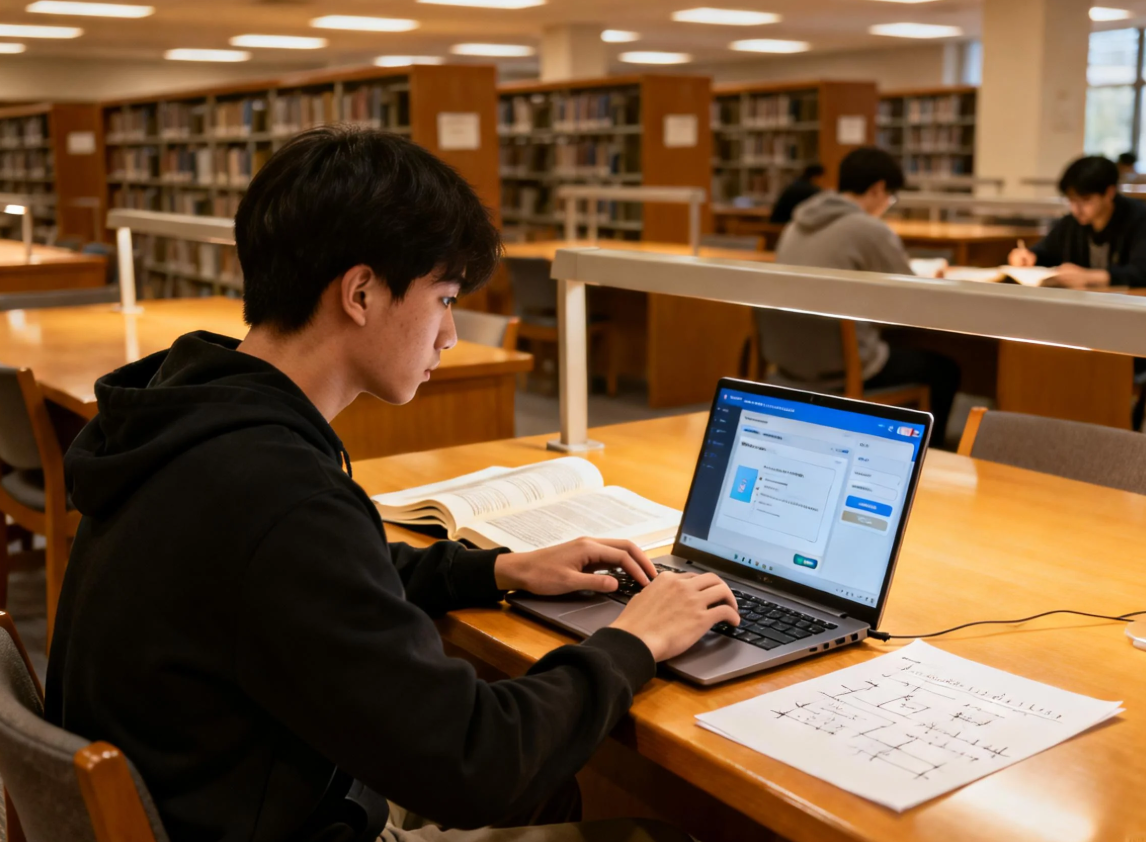
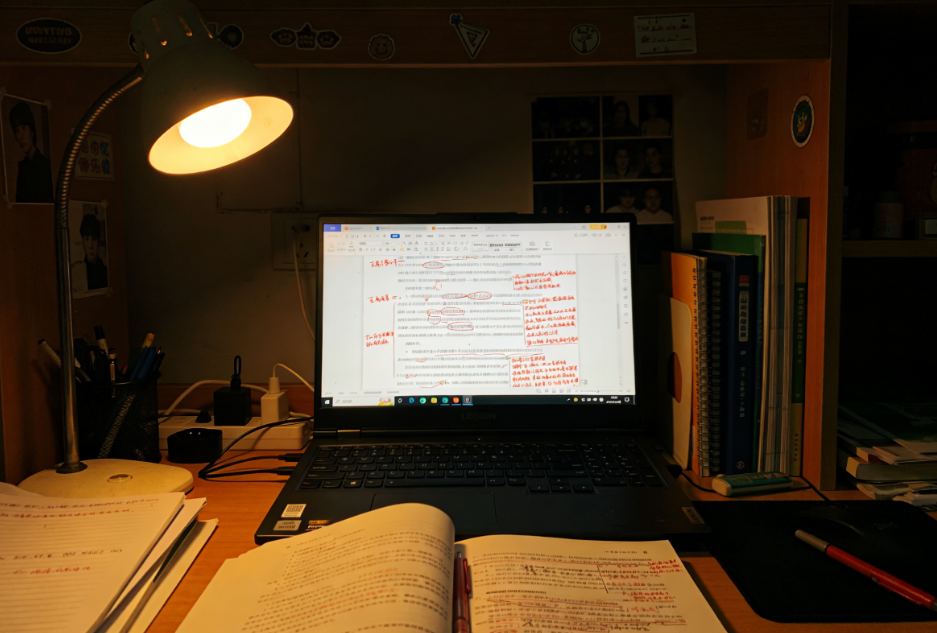
For international students, the most frustrating moment in essay writing isn't the inability to express their viewpoint, but rather receiving feedback. You submit your paper full of confidence, only to receive comments on the canvas that say:
- “"Good ideas, but the expression is clumsy."”(The point is good, but the expression is clumsy.)
- “Awkward phrasing / Sentence structure is confusing.”(Awkward wording/incoherent sentence structure.)
- “Too informal for academic writing.”(Too colloquial.)
You stare at the screen, with only one thought in your mind: "I checked every word in the Oxford Dictionary, and the grammar check was all green, so why is it still 'Awkward'?"“
The root cause lies in "translation thinking": Many students think of the Chinese in their heads first and then translate it into English. This results in correct vocabulary but incorrect collocations. You need more than just... proofreading for international studentsIt was not a complete "academic reshaping".
01. Avoid the pitfalls: Four major traps in academic paraphrasing
When using tools or making modifications yourself, it's easy to make more mistakes if you don't pay attention to the following points:
- Thesaurus Syndrome: Blindly changing simple words like "use" to "utilize" or "show" to "demonstrate" results in completely mismatched contexts and sounds pretentious.
- Meaning Shift: In order to reduce the plagiarism rate (Turnitin), the sentence structure was forcibly changed, resulting in "A causes B" being changed to "A and B are related", which directly changed the original hypothesis (Hypothesis).
- Logical gaps: The sentences are beautiful on their own, but when put together they sound like loose sand, lacking transition words, and they don't flow smoothly when read.
- Robotic Tone: Over-reliance on certain one-click rewriting tools may generate perfect sentences, but they lack any "human touch" and are highly likely to arouse professors' suspicion that AI generation was used.
02. Personal safety net process: Rewriting a thesis like surgery
In search AI paraphrase academic Before using any tools, it is recommended to first establish your own rewritten SOP (Standard Operating Procedure):
- Original sentence diagnosis: What is the core purpose of this section? Is it to describe the phenomenon, analyze the causes, or refute the viewpoint?
- Rewrite the goal setting: Are the sentences too long and need to be broken down? Or are they too colloquial and need to be made more formal?
- Multiple version candidates: Don't just focus on one revision method. Try writing a version using the active voice, a version using the passive voice, and a version using nominalization.
- Original meaning verification: Compare with the original text to check if any core variables and logical relationships are missing.
- Terminology consistency: Ensure that the terminology used for the same concept is consistent throughout the text; avoid using "Customers," "Clients," and "Consumers" interchangeably.
03. DiffMind Practical application: It's not just about changing sentences, but also about "refining logic".“
If you think the manual process is too slowDiffMind These advanced AI-assisted tools can serve as your "24/7 Writing Tutor." Their biggest difference from other tools is:It understands logic and can comprehend your needs.
A. Integrate Feedback and rewrite it in an "explainable" way.
Traditional rewriting tools only give you the result, not the reasoning behind it.
- Pain points: The teacher said this passage "lacks critical thinking."
- DiffMind usage: Enter the following in Prompt: "This is my original text, and this is the professor's comment: 'lack of critical analysis.' Please retain my core data, but rewrite this passage, adding comparative arguments and considerations from opposing perspectives to make it more critical."“
- Effect: It doesn't just change the words; it adds logical transitions like "However" and "Conversely," truly responding to the teacher's requirements.
B. Fill in the logical gaps (Logic Flow)
Often, the problem isn't with your sentences themselves, but with the paragraph transitions.
- DiffMind usage: Upload two paragraphs and enter: "Please check if the transition between these two paragraphs is natural. If not, please generate a transition sentence to logically connect the two."“
- Effect: It can help you fill in the gaps in your train of thought, making your writing flow smoothly like silk.
C. Standardize Academic Voice
- DiffMind usage: “"Please rewrite the entire text in standard APA format academic tone. Requirements: objective, third person, avoid abbreviations (e.g., can't -> cannot), and enhance the precision of verbs."”
- Effect: Eliminate all colloquialisms and make the entire article sound like it was written by a single, well-trained academic author.
04. Self-Help Checklist: The Last Line of Defense Before Submission
Before uploading your assignment to Canvas, please take 10 minutes to review this table:
- [ ] Core word meaning check: Does the rewritten sentence retain the original academic definition?
- [ ] Citations are reserved: Did the citations (source references) get accidentally deleted during the rewriting process? Please add them back.
- [ ] Topic Sentence: Does the first sentence of each paragraph clearly summarize the main idea of the entire paragraph?
- [ ] Glossary checklist: Are the key concepts consistently worded throughout the text?
- [ ] Tone check: Do we still use subjective or vague terms like "I think," "In my opinion," "huge," and "good"?
Conclusion: There are no shortcuts to improving academic writing, but there are useful tools. The key to progressing from "Chinglish" to "authentic academic style" lies in understanding the logic of academic expression and making good use of it. academic paraphrasing tool Use it as a supplement, not a substitute for thinking. Only when you stop worrying about "how to say it" can you truly focus on "what to say".