When a user visits the DiffMind website for the first time,
The most common questions are usually:
- What can DiffMind do?
- What are the differences between it and ordinary AI tools?
- In what situations do I really need it?
This article will begin fromReal-world use casesStarting with a systematic overview of real-world problems that DiffMind's official website can solve.
First, many AI tools are "usable," but not necessarily "good to use."“
The number of AI tools has grown rapidly over the past period.
From writing and learning to content creation,
Users have more and more choices.
However, in actual use, many people have gradually discovered that:
- The quality of responses from different AIs varies greatly.
- Asking the same question at different times yields inconsistent results.
- It's difficult to determine which answer is more reliable.
- Switching between multiple platforms is very costly.
The issue is not whether or not there is AI. The key lies in "how to judge the results given by AI".
two,DiffMind What is the core problem that the official website addresses?
The core value of DiffMind's official website is not providing "more AI".
Instead, it addresses a more fundamental problem:
When AI provides multiple possible answers, How can users make judgments faster and more reliably?
To address this issue, DiffMind focused on three aspects:
- Ask a question and get answers from multiple AIs.
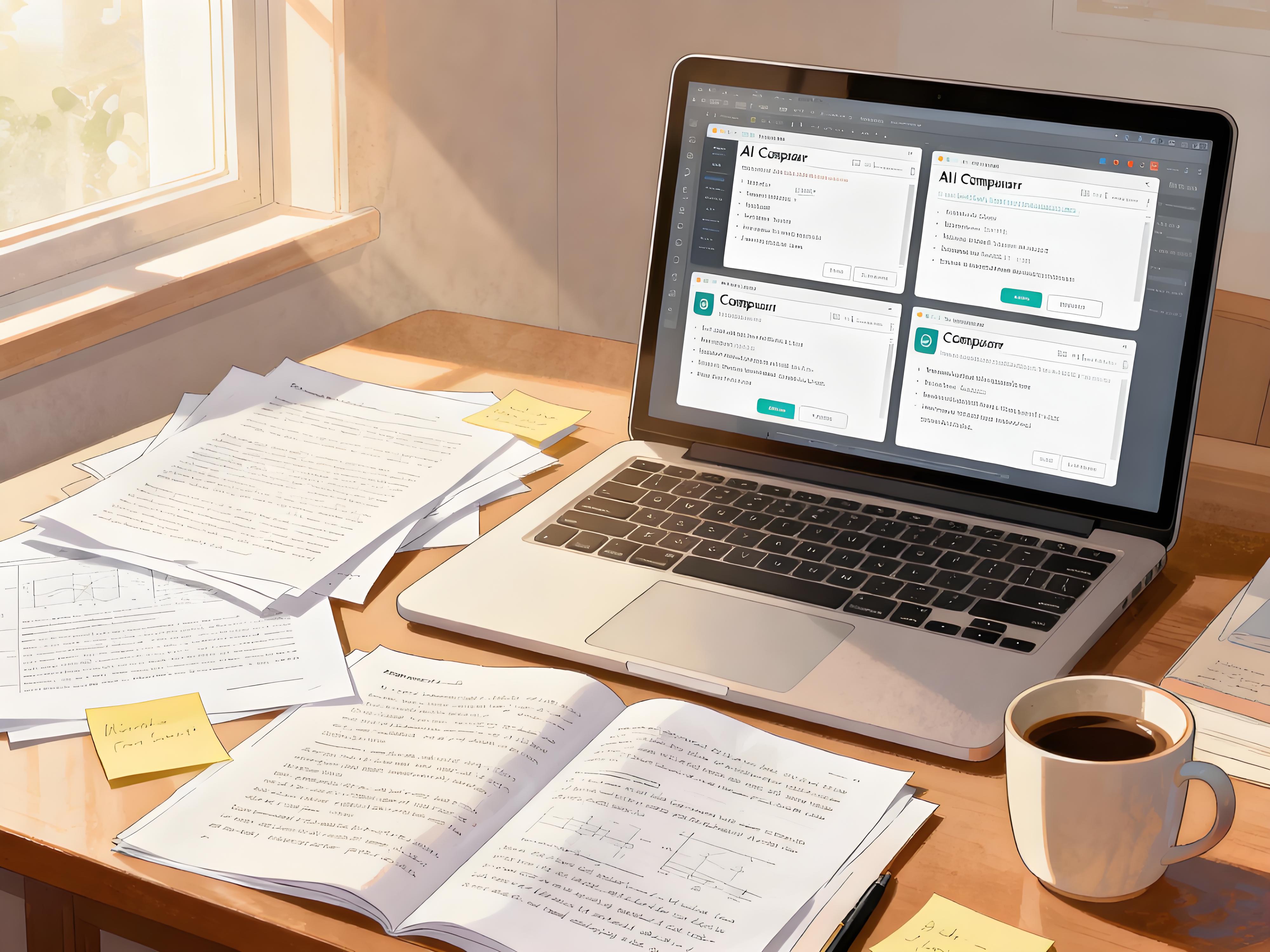
- Display the results of different models side by side.
- Help users understand the differences through comparison, rather than making blind choices.
III. Typical Use Cases of DiffMind
- Reference for ideas in learning and writing
When doing homework, writing reports, or preparing papers
Many users are not "unable to write".
Instead, it's stuck on:
- I don't know where to start.
- Whether the structure is reasonable is uncertain.
- Worried about whether the way of expressing it is appropriate
With DiffMind, you can see writing ideas and structural suggestions from multiple AIs with just one question.
Users can compare:
- Understanding different expansion paths
- Choose a way of expression that suits you better.
- Reorganize the content instead of copying it directly.
- A multi-faceted understanding of complex problems
When faced with conceptual or analytical problems,
A single AI's answer often only provides one perspective.
Through multi-model comparison, users can see:
- Different AI approaches to problem decomposition
- Different focuses and logical order
- Which conclusions are highly consistent across multiple models?
This helps users to understand the problem more comprehensively.
- Cross-validation of AI output results
When using AI to assist in decision-making or learning,
Many users are most worried about:
“Is this answer reliable?”
By simultaneously referencing the outputs of multiple AIs,
Users can more easily make a judgment:
- What content constitutes consensus?
- Which parts have obvious disagreements?
- Is further investigation or manual judgment required?
This cross-validation method can significantly reduce the risk of being misled by a single answer.
- Contrast in Content Creation
In content creation scenarios,
Different AIs often provide different styles of expression.
Through DiffMind, users can:
- Comparing different writing styles
- Choose a more natural direction of expression
- The final text is formed by combining multiple approaches.
This approach is closer to "creative reference".
Instead of simply generating content.
IV. Differences between DiffMind and traditional AI tools
Compared to traditional single AI tools,
DiffMind has one significant difference in how it's used:
- It's not about "asking once and believing once".“
- Instead, it's about "asking once and seeing multiple results".“
This design is naturally more suitable for:
- Learning and Writing
- Tasks requiring judgment and understanding
- Scenarios where high reliability of answers is required
DiffMind does not make decisions for users.
Rather, it helps users make better decisions.
V. Who will benefit most from DiffMind?
Based on current usage, DiffMind is particularly suitable for:
- Users who use AI in learning or writing
- People who want to reduce the risk of AI output misjudgment
- Users who don't want to frequently switch between multiple AI platforms
- People who hope to form their own judgment through comparison
If what you care about is not just "whether there is an answer", but...Is the answer trustworthy?Therefore, DiffMind would be a suitable tool.
6. How do I get started using DiffMind from its official website?
You can visit the DiffMind official website directly.
Experience the practical use of multi-model AI comparison within a single interface.
? DiffMind official website:https://www.diffmind.ai/
No complicated settings required.
You can get multiple AI responses from a single question.
It helps you understand through comparison and make judgments based on references.
In conclusion
AI is changing the way we access information and complete tasks.
But this does not change one fact:
Judgment is always more important than the answer itself.
The existence of the DiffMind official website
This is precisely to help users in the process of using AI.
Make clearer and more prudent judgments.