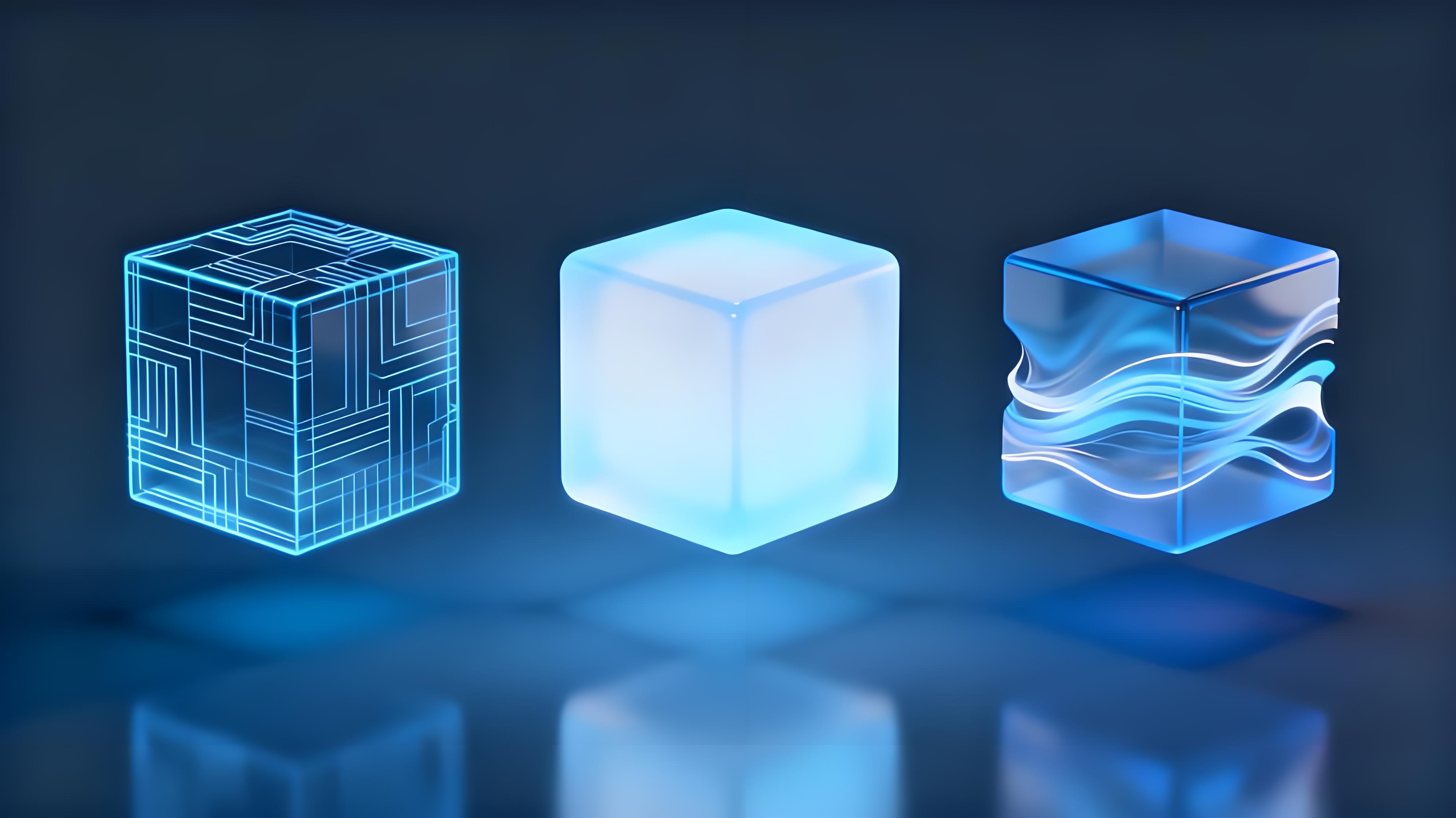
Last week, I helped a newly hired intern revise an event plan. She used ChatGPT to write a "campus anti-competitive event plan" and only gave "giving lectures and distributing flyers" as suggestions. When I switched to Claude, she wrote "using jokes about 'slacking off to fight the competition' to make students laugh out loud." Finally, she used Gemini and directly tagged "the classmate who is a procrastinator"—the three answers sounded like three different people talking.
It turns out that large AI models are not "omnipotent tools," but rather "thinkers with different personalities."“Some AI excel at logic, some at emotion, and some at capitalizing on trending topics. Understanding these differences is key to getting AI to truly help you.
I. The "Personality Differences" of AI: Examining Their "Specialties" from Four Dimensions“
Just as some people excel at writing reports, others at storytelling, and still others at building relationships in the workplace, AI big data models also have their own "capability map." Focus on these four dimensions:
1. Language style: Some are "very formal," while others are "like you're having a chat."“
- GPTLike a "rigorous academic," it speaks clearly and logically, making it suitable for writing reports and breaking down frameworks. International student Claire said, "Using it to write the logical chain of a paper, even the 'data sources' and 'citation formats' are clearly marked, which is more detailed than I could think of myself."
- ClaudeLike a "warm storyteller," it excels at touching people with details. When influencer Ava used it to write pet-related captions, she directly wrote, "The loneliness of scooping cat litter at 3 a.m. is like the computer screen left on after working overtime," which made fans comment that they "cried."
- GeminiLike a "lively internet celebrity," she speaks with witty remarks and is good at capturing the attention of young people. Content editor Jason said, "Using it to write short video scripts, the opening line is '@Your deskmate who loves to roll, please keep this anti-rolling guide,' and the completion rate is 30% higher than what I wrote before."
2. Reasoning ability: Some are good at accurate calculations, some are good at deep thinking, and some are good at divergent reasoning.“
- DeepSeek (similar to GPT in terms of precision)It's like a "data calculator," incredibly reliable at calculating costs and prioritizing tasks. Ethan, a user operations specialist, uses it for event budgeting, accurately calculating even the most basic details like "whether shipping costs include tax" and "whether labor costs should be shared."
- GPTLike a "framework builder," it excels at breaking down complex problems clearly. Entrepreneur Eric said, "When analyzing the 'pet market,' it first explains 'user profile → pain points → competitor comparison,' with a logical chain as clear as building blocks."
- GeminiLike a "brainstorming machine," it excels at association and innovation. Short video blogger Lily used it to write an "anti-involution" script, connecting "slacking off" to "using 'slacking-off learning' to defeat involution," which made her exclaim, "I never even thought of this idea myself."
3. Creativity: Some are "profound," while others "know how to use internet slang."“
- ClaudeLike an "artistic creator," it has a particularly vivid imagery when writing emotional copy and brand stories. Advertising planner Mia said, "When we used it to write the brand copy for 'Midnight Diner,' the line 'Instant noodles at 2 a.m. are the tenderness of working people' was immediately approved by the client."
- GeminiLike a "trend catcher," they excel at combining popular memes. For example, in 2024, the "PetShaming" meme became popular, and they used it to write "pet product copywriting," directly playing on the meme with phrases like "Don't let your cat's 'shame' turn into 'shedding,'" doubling the product's appeal.
- GPTLike a "framework creative specialist," they excel at building "logically sound creative ideas." However, their creative ideas tend to be more "positive." For example, when writing about "anti-involution in the workplace," they would break it down into "mindset adjustment → time management → skill improvement," making it suitable for scenarios that require "rational persuasion."
4. Knowledge Coverage: Some are "old and comprehensive," while others are "new and specialized."“
- GPTLike an "encyclopedia," it covers a wide range of fields, including history, science and technology, and everyday knowledge, but it lags behind in new data. International student Claire complained, "It talks about 'VR classroom cases from 2020,' but it knows nothing about new university cases from 2023."
- ClaudeLike a "humanities observer," it possesses a deep understanding of psychology and sociology. Product manager Leo used it to write "Why Users Dislike Involution," approaching the topic from the perspectives of "social comparison theory" and "self-determination theory," providing an analysis even more thorough than the academic papers I consulted.
- GeminiLike a "trendsetter," it is particularly sensitive to internet hotspots and youth culture. Entrepreneur Eric said, "I had never considered this angle before: using it to analyze the 'pet-owning psychology of Generation Z' and directly stating that 'young people use pets as 'emotional confessions'."
II. How to Choose the Right AI? Tailor your approach to the specific scenario.“
Stop making all AI do the same work. Understanding their characteristics is key to doubling efficiency:
- For writing reports/papers: choose GPT (rigorous logic, helps you build a framework);
- When writing emotional copy/stories: choose Claude (the details are touching and evoke empathy from the reader);
- For short videos/social media: choose Gemini (strong online appeal, captures the attention of young people);
- Calculate data/prioritize: Select DeepSeek (precise and error-free).
III. Use DiffMind Let "AIs with different personalities" serve you.
Previously, I had to switch back and forth between three AI platforms to revise a solution. Now, with DiffMind, I can see GPT's logic, Claude's emotions, and Gemini's jokes in one window—it's like having three friends with different personalities "help me come up with a solution together." Entrepreneur Eric said, "It's not about speed, but because 'my vision has been broadened.' When different thinking paths are put together, the answer is naturally more comprehensive."“
The difference in AI is not the problem; the problem is how to use that difference to solve problems.DiffMind lets you ask a question once, and multiple AIs "compete" to select the most reliable answer and make the smartest decision.